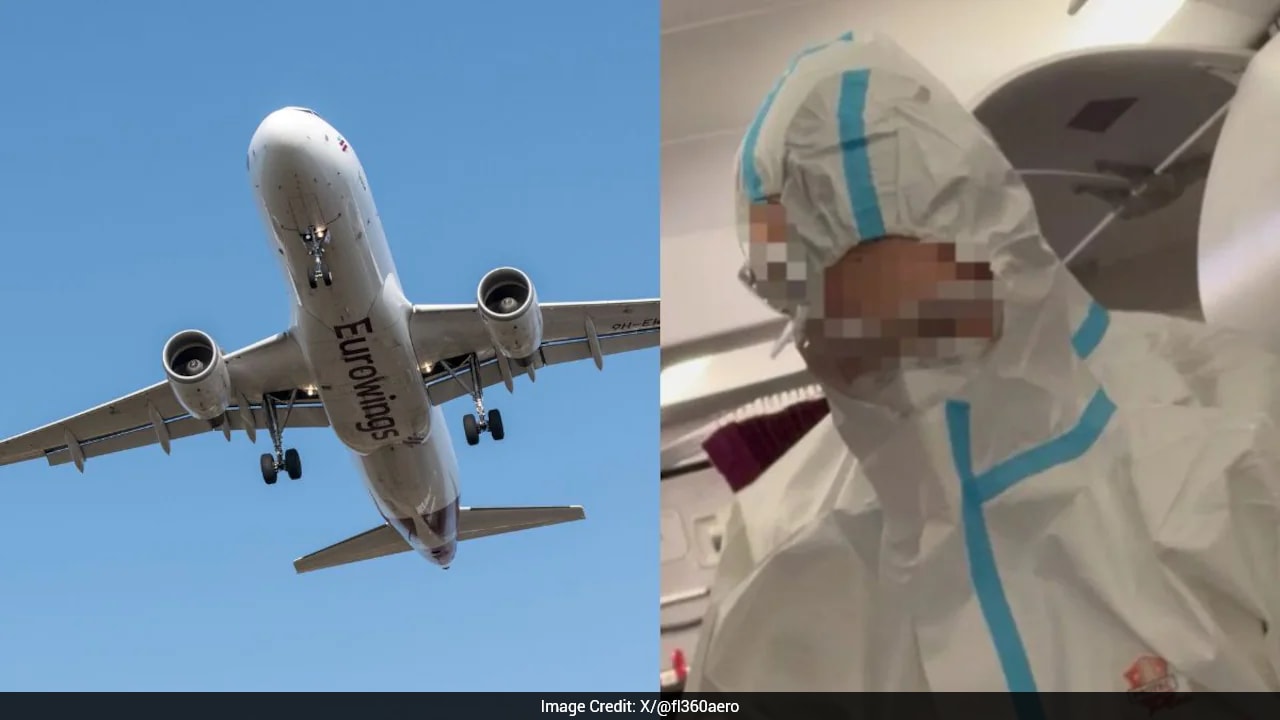
Tube cabins are basically flying metal tubes recirculating air and hosting hundreds of strangers in tight quarters. When a stomach bug enters that mix, things turn ugly fast. That exact nightmare played out on Eurowings flight EW9631 from Rhodes to Dusseldorf, where a suspected norovirus outbreak triggered a mid-air vomiting frenzy, emergency tarmac responses, and medics marching on board in full hazmat gear.
If you fly frequently, incidents like this spark instant panic. Can a stomach bug really ground a commercial flight? How vulnerable are you when someone three rows down starts throwing up? Let's break down what actually happens when contagious pathogens take to the skies and how you can protect yourself.
What Happened on Flight EW9631
The flight left the Greek island of Rhodes with holidaymakers returning home, but the trip quickly derailed. Passengers started falling violently ill shortly after takeoff. According to traveler accounts, multiple people began vomiting in the cabin, turning a routine European hop into a chaotic emergency.
The pilots requested a priority landing at Dusseldorf Airport as the situation deteriorated. When the aircraft touched down, passengers weren't allowed to rush off. Instead, emergency services and medical staff wearing protective hazmat suits boarded the plane. Three passengers went straight to the hospital, while everyone else sat trapped on board for roughly 90 minutes while authorities assessed the biohazard threat.
Airlines later confirmed the health emergency, pointing fingers at a suspected norovirus strain. This wasn't an isolated incident either. The Greek island of Rhodes had been battling an escalating norovirus surge, with local hospitals treating over 1,400 patients showing similar gastrointestinal symptoms in the preceding weeks. Travelers were unknowingly carrying the infection off the island and straight into pressurized cabins.
Why Airplanes Are Breeding Grounds for Norovirus
Norovirus spreads with terrifying ease. You don't even need direct contact with an infected person. Ingesting just a few microscopic particles is enough to trigger violent vomiting and diarrhea within 12 to 48 hours.
Confined aircraft spaces make containment nearly impossible. Here is why airplanes act as amplifiers for stomach bugs:
- Shared Surfaces: Tray tables, seatbelt buckles, overhead air vents, and lavatory door handles are touched by hundreds of hands daily. Airlines clean planes between flights, but deep disinfection cycles rarely happen during quick turnarounds.
- Recirculated Air: Modern commercial jets use HEPA filters that capture most bacteria and viruses, but localized droplet spread in a cramped row happens instantly before air ever reaches the filtration system.
- High-Touch Lavatories: As passengers cram into tiny aircraft bathrooms during a multi-hour flight, shared contact points turn into transmission hubs.
When someone projectile-vomits in an aisle, aerosolized particles spread across nearby rows. Flight attendants lack proper personal protective equipment to handle biohazards safely mid-flight, which is why ground crews in hazmat suits are called in the moment wheels touch down.
How to Protect Yourself From Cabin Contagion
You can't control what other passengers bring onboard, but you can drastically lower your odds of catching a bug at 35,000 feet.
Stop treating airplane tray tables like clean surfaces. Studies show tray tables harbor more bacteria than toilet flush buttons. Wipe down your seat area, armrests, and buckle with disinfecting wipes the second you sit down. Never eat food directly off a tray table without a wrapper or napkin barrier.
Wash your hands relentlessly. Hand sanitizer is great for everyday use, but norovirus has a tough outer shell that alcohol-based gels struggle to neutralize completely. Soap and water mechanics matter. Wash your hands thoroughly every time you visit the lavatory, and avoid touching your face, mouth, or eyes during the flight.
Pack your own supplies. Airlines cut corners on turnaround times, meaning cabin cleaning is often a quick sweep rather than a deep sanitary scrub. Bring your own sanitizing wipes, a small pack of tissues, and disposable gloves if you want an extra layer of defense during a suspected outbreak.
Norovirus outbreaks on planes remind us that public transit remains a shared microbial ecosystem. Stay vigilant, keep your hands clean, and always wipe down your space before settling in for the long haul.