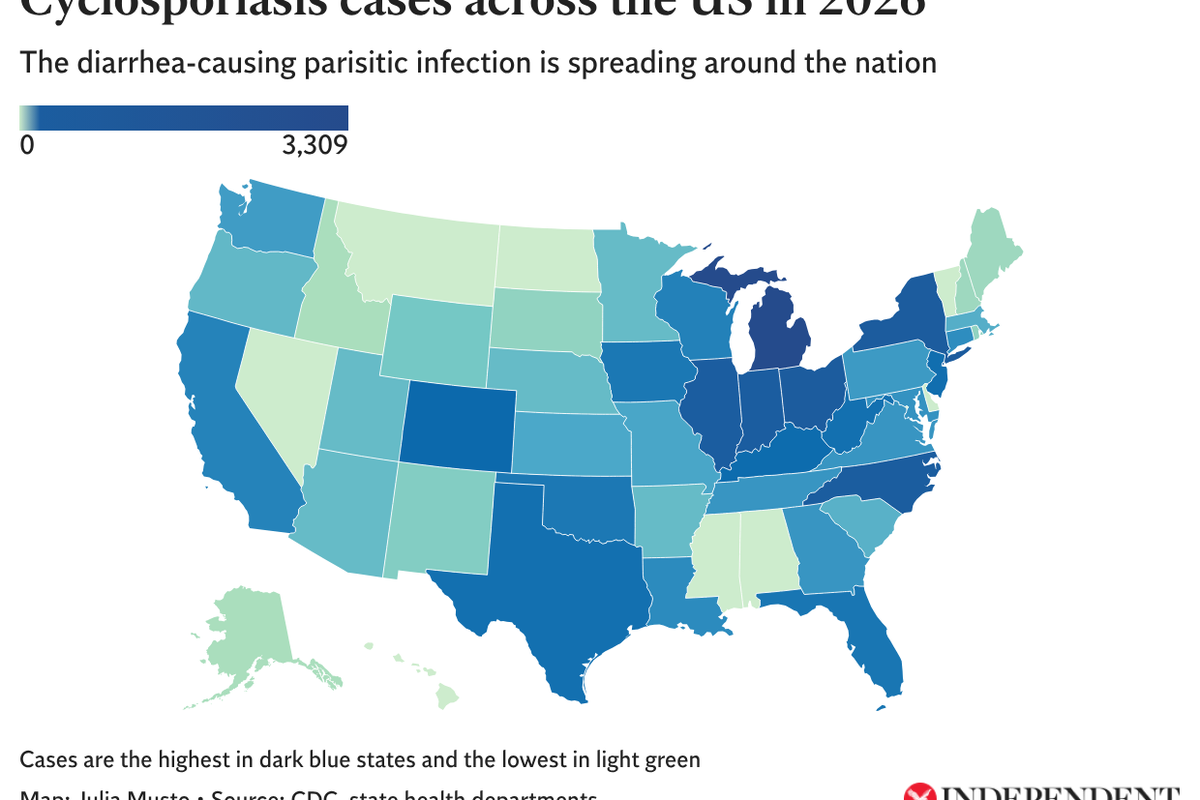
Right now, a microscopic parasite is tearing through the United States, causing some of the most grueling gastrointestinal symptoms imaginable. If you live in Michigan, Ohio, or the surrounding Midwest, you are sitting squarely in the splash zone. The CDC calls the illness cyclosporiasis, but most patients know it as the nightmare behind weeks of explosive watery diarrhea, violent stomach cramps, and a bone-deep exhaustion that leaves you flat on your back. We are currently staring down a massive Cyclospora outbreak that is on track to break national records, and federal health agencies are struggling to keep up with the real-time data.
If you think a quick rinse of your pre-washed salad mix keeps you safe, you are sorely mistaken. The reality of how this parasite spreads—and why it is so difficult to track—proves that our food safety systems have a massive blind spot.
The Midwest is Getting Hammered by This Parasite
While the CDC has officially logged around 1,645 domestically acquired cases across more than 30 states, those numbers are just the tip of the iceberg. The federal tracking system has a notorious lag. Local state data paints a far more alarming picture.
Michigan is the absolute epicenter of this outbreak, reporting an astonishing 3,300-plus cases. To put that in perspective, Michigan usually only sees about 50 cases of cyclosporiasis in an entire year. Neighboring Ohio is also getting slammed, with local health officials counting well over 1,100 cases. New York City, Illinois, Kentucky, and West Virginia are also reporting significant spikes.
So why is the Midwest getting hit so hard?
Health investigators believe a single, contaminated domestic distribution chain is likely responsible for the massive cluster of cases across Michigan, Ohio, Kentucky, and West Virginia. While the FDA and CDC have not officially named a specific brand or issued a recall yet, Michigan health department officials have pointed their fingers directly at lettuce and packaged salad greens.
What Makes Cyclospora Such a Nightmare
This is not your average 24-hour stomach bug. Cyclospora cayetanensis is a single-celled parasite that infects the small intestine. It is typically spread when people consume food or water contaminated with microscopic traces of infected human feces.
Once the parasite enters your body, it does not make you sick right away. The incubation period is typically about a week, though it can range from two days to more than two weeks. This delay is precisely why identifying the source of the outbreak is such a headache. By the time you start getting sick, you probably cannot remember every ingredient in the salad you ate ten days ago.
When the symptoms do hit, they hit hard. The hallmark is watery, explosive diarrhea. Other symptoms include:
- Extreme loss of appetite and rapid weight loss
- Severe bloating, gas, and stomach cramps
- Nausea and low-grade fever
- Disproportionate, overwhelming fatigue
Left untreated, the infection can follow a relentless, relapsing path. You might feel better for a few days, only for the symptoms to return with a vengeance. This exhausting cycle can drag on for six weeks or more.
Why the CDC is Lagging Behind the Actual Case Counts
You might wonder why there is such a massive gap between the CDC’s official count of 1,645 cases and the 3,300-plus cases reported by Michigan alone.
First, there is a built-in bureaucratic lag. Local clinics report to county health departments, which report to the state, which eventually logs the data with the federal government.
Second, and more importantly, standard stool tests do not look for Cyclospora. If you go to an urgent care clinic with severe diarrhea, the doctor will likely order a standard ova and parasite (O&P) test. This test will completely miss Cyclospora unless the doctor specifically requests a modified acid-fast stain or a specialized PCR test.
If you have been suffering from watery diarrhea for more than three days, you must advocate for yourself. Ask your doctor explicitly to test for Cyclospora cayetanensis. If you test positive, the standard treatment is a course of the double-strength antibiotic trimethoprim-sulfamethoxazole, commonly known as Bactrim or Septra.
How to Protect Your Produce and Your Gut
Because Cyclospora is a tough, sticky parasite, standard chemical washes and sanitizers used on commercial produce often fail to kill it. The parasite often hitches a ride on irrigation water, embedding itself deeply into the crevices of fresh foods.
Until the FDA identifies the exact source of this outbreak and removes it from grocery shelves, you need to change how you handle fresh food.
- Ditch the bagged salad kits. Skip pre-washed, bagged lettuce mixes. Instead, buy whole heads of lettuce. Discard the outer two or three layers of leaves entirely, and wash the inner leaves thoroughly under cold, running water.
- Wash herbs with extreme care. Herbs like cilantro and basil are frequent culprits in Cyclospora outbreaks because their delicate leaves are rarely cooked. Separate the leaves and scrub them under running water. If possible, cook them into your dishes.
- Be smart with green onions and snow peas. Trim the root ends and strip off the outer layer of green onions. Rub the outer surfaces of snow peas under running water.
- Avoid fresh raspberries for now. The bumpy, textured surface of a raspberry is the perfect hiding spot for microscopic parasites. Rinsing them rarely gets rid of the threat. Opt for frozen raspberries or cook them down into jams or pies.
- Cook when you can. Heating food to 158 degrees Fahrenheit (70 degrees Celsius) is the single most effective way to kill Cyclospora. When in doubt, cook your greens and veggies.
If you develop a sudden onset of watery diarrhea and fatigue, do not wait it out. Contact your doctor, demand a Cyclospora-specific stool test, and report your symptoms to your local health department to help epidemiologists track down the source.