Most people complain about turkey prep or family drama on Thanksgiving. Firefighters in Hillsborough County often spend the holiday inside a station bay, listening for a tone to drop while everyone else passes the gravy at home.
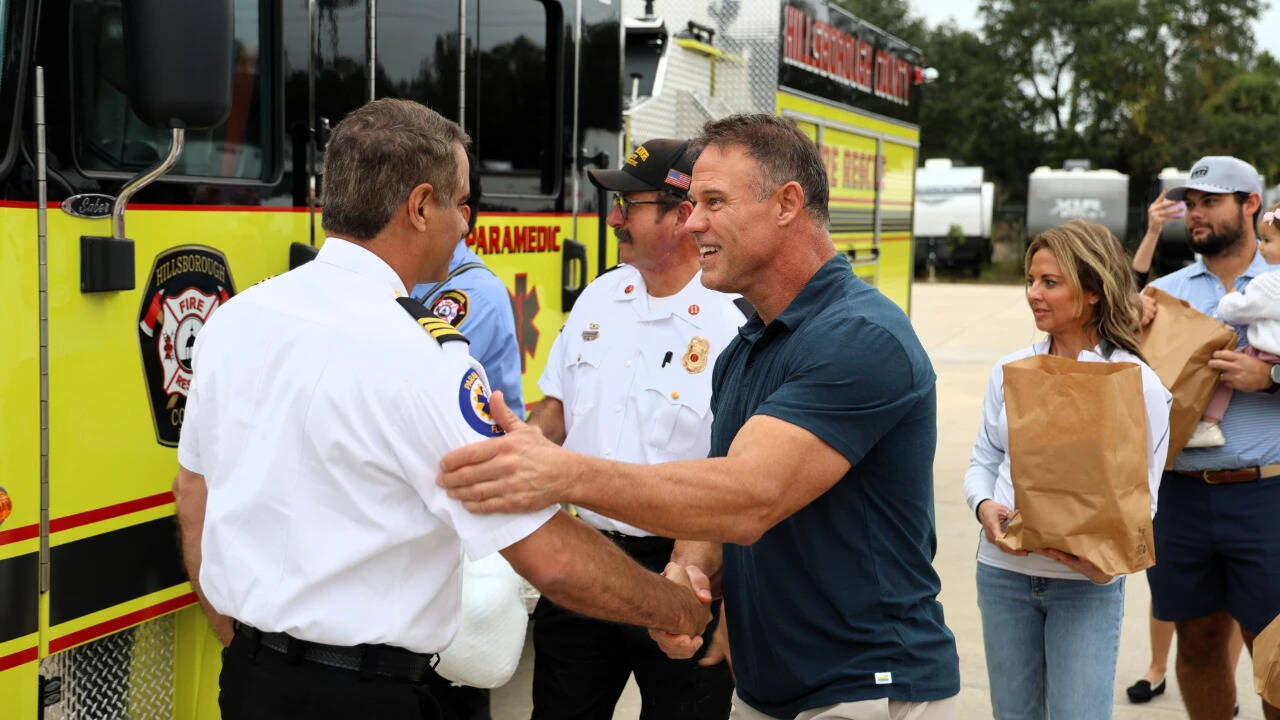
That's why it matters so much when the Mike Alstott Family Foundation shows up with real holiday groceries instead of a quick photo op. For eight straight years, Alstott's foundation has delivered Thanksgiving meal packages to crews across all 48 Hillsborough County fire stations, the county's emergency dispatch center, and stations in neighboring Pinellas County. Each bundle includes turkey, stuffing, mashed potatoes, vegetables, gravy, cheesecake, and ground coffee so crews working 24-hour shifts can cook a proper meal together on duty.
Short news briefs love to treat stories like this as feel-good fluff. Honestly, that misses the point. Feeding a crew on shift isn't just about calories or a nice gesture from a former Tampa Bay Buccaneers fullback. It changes how exhausted people feel when they're separated from their families on one of the hardest days of the year to be at work.
What Mike Alstott Actually Brings to the Table
When you hear about a retired pro athlete doing charity work, it's fair to stay a little skeptical. Plenty of foundations slap a famous name on a press release once a year and call it a day.
Alstott founded his family foundation back in 2007 to give back to the community that backed him through his NFL career. With this Thanksgiving drive now in its eighth consecutive year for Hillsborough County Fire Rescue, it's clearly not a one-off stunt. Having local partners like Warner Logistics, Tito's, Bill Currie Ford, Jeoffrey's Coffee, and Bassano's pitching in shows that the effort has real roots in the Tampa Bay area.
Still, what sticks with me isn't the sponsor list. It's the handshake.
Alstott has talked about how much it counts to shake each person's hand and say thank you face-to-face. Anyone who has spent time around working crews—whether in emergency services, hospitals, or industrial plants—knows the difference between a box left by the door and someone actually looking you in the eye. A handshake takes five seconds. When you're away from your own kids on a holiday, five seconds of genuine recognition goes a long way.
Hillsborough County Fire Chief Rob Herrin made a point that's easy to overlook from the outside. Firefighters spend their careers giving to strangers without expecting applause in return. Getting an entire Thanksgiving meal handed to them by a local sports figure isn't something crews take for granted, because frankly, it doesn't happen every week.
Why Holiday Shifts Hit Harder Than People Think
People who work standard nine-to-five schedules sometimes picture a holiday shift at a fire station as quiet downtime. Sometimes it is. Often it isn't.
Thanksgiving week brings its own mix of calls. You get kitchen fires from distracted cooking, highway crashes from heavy holiday travel, medical emergencies involving visiting relatives, and calls tied to seasonal stress or substance use. Even when the call volume stays manageable, the emotional weight of missing family traditions sits right there in the room.
Crews on 24-hour rotations don't get to just pop in for an hour of pie and head back. You pack a bag, kiss your family goodbye knowing a tone could interrupt dinner at any second, and make the station your home for the day.
- Shared station meals keep morale steady. Cooking together with the people you trust to pull you out of a bad situation builds cohesion when everyone is missing home.
- Practical food beats generic treats. A full spread—turkey, sides, dessert, and coffee—lets a crew cook a real meal rather than grabbing fast food between calls.
- Dispatchers need the same care. Emergency dispatchers are the unseen lifeline before a truck ever rolls, and including the dispatch center acknowledges the whole system.
There's a real limitation to keep in mind, though. A Thanksgiving grocery drop doesn't solve chronic staffing strain, burnout, or the long-term toll of shift work. Public data on first responder retention and mental health consistently shows that appreciation helps morale in the moment, while structural support—fair schedules, recovery time, and access to care—is what keeps people healthy over a 25-year career. Pretending a holiday meal fixes everything would be dishonest. Appreciating it for what it is—a thoughtful, consistent act of care—is much closer to the truth.
The Mistakes Communities Make When Thanking First Responders
I've seen plenty of well-meaning community drives miss the mark over the years. Good intentions don't automatically translate into useful help.
One common mistake is dropping off perishable food without coordinating with the station. If a crew gets called out on a structure fire or a multi-car wreck, food left sitting out gets wasted or turns into a chore for someone to clean up later. Working through the fire department and leadership—like the Alstott foundation does with Hillsborough County Fire Rescue—keeps logistics realistic.
Another trap is treating first responders like props for a holiday campaign. Nobody on shift wants a camera crew hovering over them while they're trying to eat a bite of mashed potatoes between calls. Respecting their time and space matters just as much as the donation itself.
People also forget that "first responders" isn't just the person holding the hose. Firefighters, paramedics, and emergency dispatchers all carry the load together. Leaving out dispatchers or support staff is an easy oversight when outsiders only think about fire trucks.
How You Can Actually Support Local Crews This Holiday
You don't need an NFL pension or a major corporate sponsorship to do something meaningful for the people keeping your town safe this Thanksgiving. Small, thoughtful actions work best when you keep them practical.
- Call the non-emergency line or department outreach office first. Ask what a specific station or dispatch center actually needs—shelf-stable coffee, tea, bottled water, or simple snacks—before buying anything perishable.
- Keep timing flexible around shift schedules. Crews work around calls and rotations, so coordinate ahead rather than showing up unannounced expecting a big gathering.
- Remember the quieter holidays too. Thanksgiving gets plenty of attention, yet Christmas, New Year's, and ordinary Tuesday nights in February are just as long when you're on duty.
- Back long-term support, not just November gestures. Pay attention to local budget votes, equipment needs, and wellness programs for fire and EMS crews in your own county.
Feeding crews across 48 stations for eight years straight takes follow-through. Most people talk about gratitude once a year; Mike Alstott's foundation keeps showing up with groceries and a handshake.