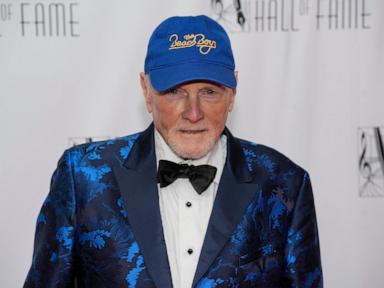
Mike Love never pretended to be rock's misunderstood tortured genius, and that stubborn refusal is precisely why music fans spent decades arguing over his legacy. When the co-founder and baritone anchor of The Beach Boys passed away at age 85, he left behind a catalog that soundtracked American optimism alongside a deeply complicated reputation. He was the voice behind the nasal, driving hooks that defined sunshine pop, yet he spent half his life playing defense against a fanbase that worshipped his cousin Brian Wilson and cast Love as the villain.
Let's clear the air right away. You can't separate the history of The Beach Boys from Mike Love, no matter how many alternative timelines indie rock purists prefer to imagine. Born in Los Angeles in 1941, Love stood at ground zero when American youth culture shifted toward surfboards, hot rods, and endless summers. Alongside Brian, Dennis, and Carl Wilson, plus their friend Al Jardine, Love helped forge a sound that changed popular music forever. He co-wrote massive anthems like "California Girls," "I Get Around," and "Help Me, Rhonda." Those weren't just catchy tunes. They were structural blueprints for how radio pop could sound punchy, bright, and utterly inescapable. Also making headlines in this space: Why Russell Brand's Wife Pledging To Honor Prison Rules Doesn't End The Row.
Yet, public perception curdled during the band's psychedelic and post-Pet Sounds era. Fans wanted Brian to chase cosmic orchestral masterpieces without interference, while Love famously pushed back against the challenging, uncommercial directions his cousin wanted to take. People forget that pop bands have bills to pay and radio formats to satisfy. Love understood the commercial engine of the band better than anyone else in the room. When critics label him a conservative force who held back artistic growth, they ignore the reality of what kept the lights on and the touring machine running for over six decades.
Love was also the only constant member who stayed with the brand through every single era. While other members drifted away, battled addiction, or stepped out of the spotlight, Love kept touring. Even into his eighties, he played over a hundred shows a year, dragging the Beach Boys legacy across casino stages, state fairs, and cruise ships. Sure, his voice weathered with age, and seeing him perform seated in his final years broke the illusion for some longtime fans. But you have to respect the sheer physical grit required to haul an octogenarian body onto a stage night after night just to deliver "Kokomo" to people who wanted a slice of 1960s nostalgia. Additional information regarding the matter are covered by Associated Press.
The friction with Brian Wilson remains the most picked-over scab in rock history. Lawsuits over songwriting credits in the 1990s permanently damaged Love's standing among die-hard aficionados. He fought hard for what he believed were his rightful writing contributions—including classic tracks where his lyrical stamp was undeniable—and won substantial back royalties and credits. To his defenders, he was merely protecting his legacy and financial livelihood. To his detractors, he was a litigious corporate interloper profiting off a genius's fragile state. The truth, as usual, lived somewhere messy in the middle. Love wasn't a saint, but he wasn't a cartoon villain either. He was a practical, sharp-elbowed survivor who operated in a cutthroat business.
We also need to talk about his lyrical contributions. While Brian provided the celestial chord progressions, Love brought the physical world into focus. He wrote about cars, girls, surfing, and hanging out. He understood that simple, direct imagery connects faster than abstract poetry. When he pivoted decades later to co-write "Kokomo," it became a massive chart-topper that introduced a whole new generation to the band, even if the high-art crowd rolled their eyes. Love didn't care about snobbery. He cared about hooks, crowds, and performance.
His personal life was equally sprawling, marked by six marriages and eight children, alongside a lifelong dedication to Transcendental Meditation which he picked up alongside the band during their famous 1968 trip to India with the Maharishi Mahesh Yogi. That meditative streak sat in fascinating contrast with his sharp, sometimes combative public persona. He was a man of strict discipline who outlasted contemporaries who burned out decades earlier.
Now that the final original Beach Boy has left the stage, the debate over his place in music history will shift from live reviews to historical reassessment. Love gave his entire adult life to a band name he legally fought to protect and physically fought to sustain. Whether you view him as the guardian angel who kept the music alive or the friction that fractured a golden family tree depends entirely on how you view rock and roll itself—as high art meant to be preserved in amber, or as a working-class job built for the stage. Mike Love chose the stage, every single day, for eighty-five years.