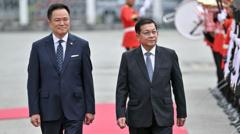
Min Aung Hlaing just touched down in Bangkok. It is his first official trip to Thailand since shedding his military fatigues to become Myanmar's president. If you have been following the civil war that has torn Myanmar apart since the 2021 coup, this red-carpet welcome feels jarring. But international politics rarely rewards moral purity.
Thailand’s leadership is betting on a strategy of normalized engagement. They want stability on their shared border. They want economic cooperation. Most of all, Bangkok wants to act as the primary bridge back into the Association of Southeast Asian Nations (ASEAN) for a regime that spent years isolated as a global pariah.
The Rebranding Playbook
Swapping a green general's uniform for a tailored civilian suit does not erase five years of bloody conflict. Following elections organized in late 2025 and early 2026—condemned by Western governments and watchdogs as a tightly controlled sham—Min Aung Hlaing assumed the presidency.
Critics call it image laundering. They are right.
The transition is designed to provide a legalistic veneer of legitimacy. By holding elections and creating a nominally civilian government, Naypyitaw aims to tick diplomatic boxes. This trip to Thailand marks the fourth foreign destination on his post-inauguration tour, following stops in China, India, and Laos.
What Thailand Gains From the Visit
Bangkok walks a tightrope here. Border instability, refugee flows, and illicit trade networks directly threaten Thai security. By maintaining open lines of communication, Thai leaders believe they can influence the situation on the ground better than shouting from the sidelines.
During this two-day visit, scheduled meetings with Thai Prime Minister Anutin Charnvirakul and a joint business forum aim to tighten economic bonds. Analysts note that Thailand's proactive stance gives Bangkok an outsized role within ASEAN. They want to shape regional policy rather than let the crisis fester indefinitely.
Yet, this engagement comes with heavy diplomatic baggage. ASEAN has barred Myanmar's top leadership from high-level summits ever since the putsch, largely because Naypyitaw refuses to implement the stalled five-point consensus peace plan. Meeting the man responsible for an estimated 100,000 deaths risks validating an administration built on violence.
The Reality of Regional Recognition
Does this trip mean the regime has successfully rehabilitated its global image? Not entirely.
Western nations continue to enforce biting economic sanctions. Activist groups like Justice For Myanmar are loud in their condemnation, arguing that welcoming the former general grants unearned status to a brutal authority.
Even so, regional heavyweights are signaling that practical cooperation matters more than ideological opposition. With tacit acceptance already secured from economic partners like China and India, getting cozy with Thailand is the next logical milestone. Re-entering the broader regional fold is basically a matter of accumulating enough stamps on the diplomatic passport to render Western isolation toothless.
Keep an eye on how other ASEAN members respond over the coming months. If Bangkok's gamble pays off, expect other hesitant neighbors to follow suit.
Myanmar junta chief set for first Thailand visit as self-appointed president
This news article provides a detailed look at Min Aung Hlaing's arrival in Thailand and the regional reactions surrounding his controversial diplomatic push.