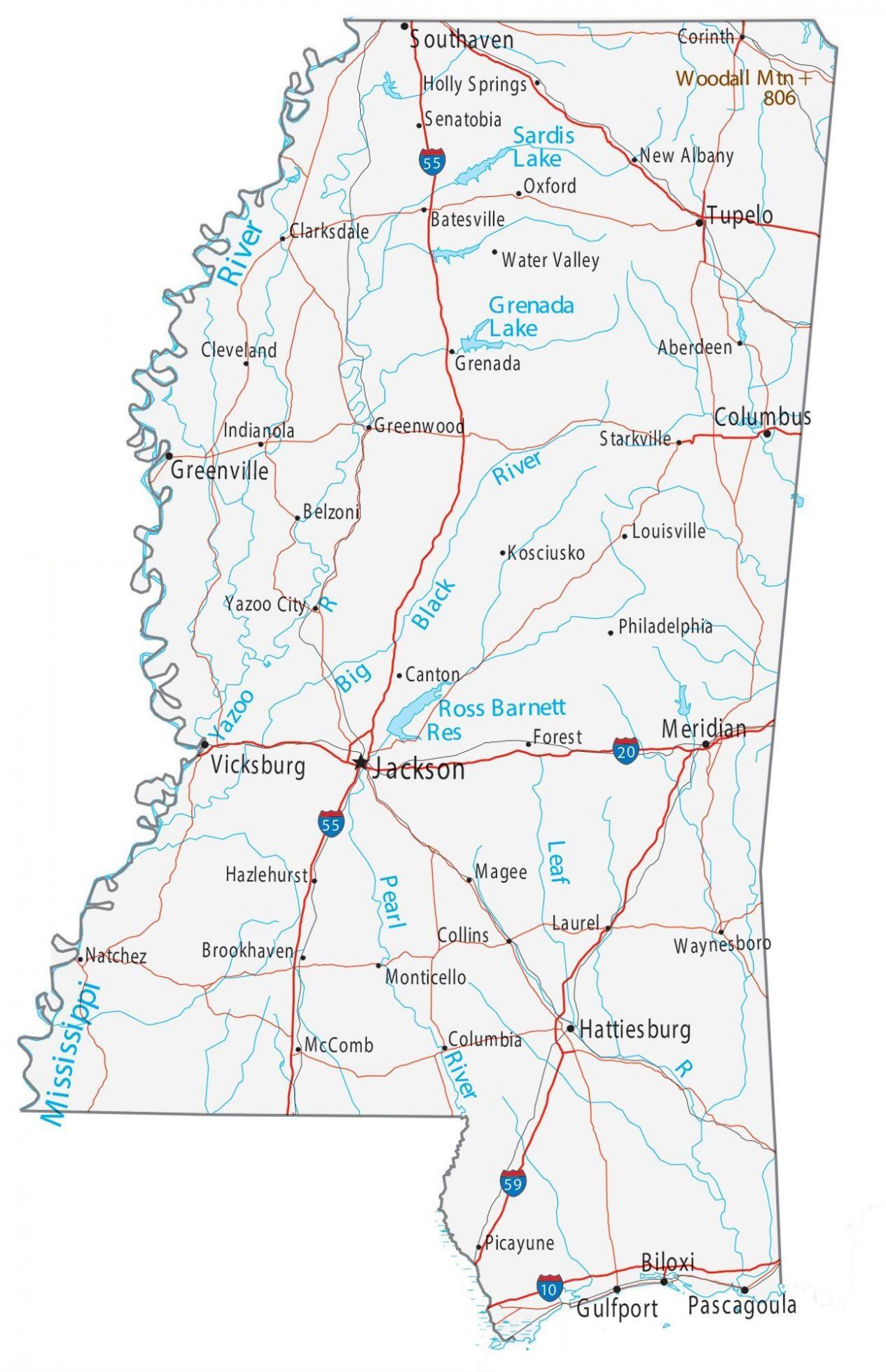
Most political pundits wrote off Mississippi before a single ballot was cast in 2026. Donald Trump carried the state by roughly 20 points just two years earlier, and Democrats hadn't won a Senate race there since 1982.
They were dead wrong.
When Mississippi elects first Black Senator since 1874, it doesn't just break a 152-year streak—it upends every lazy assumption national strategists hold about the Deep South. On November 11, 2026, after eight days of painstakingly counting absentee and provisional affidavit ballots, the Associated Press called the race for 43-year-old Democratic District Attorney Scott Colom, who unseated Republican incumbent Cindy Hyde-Smith.
If you only glanced at a quick news clip, you probably missed the actual mechanics of how this happened. You wouldn't know about the judicial nomination grudge that sparked Colom's run, the critical constitutional difference between how Reconstruction-era senators were chosen versus today, or the specific kitchen-table issues that cracked open a supposedly solid-red electorate.
Let's break down what actually happened in Mississippi, why the history books matter here, and what this upset means for the political map moving forward.
The History Behind the 152-Year Gap
To understand why Scott Colom's victory is such a massive deal, you have to look at the timeline. Headlines say Mississippi hasn't elected a Black U.S. senator since 1874, and while that's accurate, the real story has an extra layer most coverage skips.
During Reconstruction, Mississippi actually sent two Black men to the U.S. Senate—the first in American history.
- Hiram Rhodes Revels took his oath of office on February 25, 1870, filling an unexpired term after Mississippi was readmitted to the Union.
- Blanche Kelso Bruce, who had been born into slavery, was chosen in 1874 and served a full six-year term from March 1875 to March 1881.
Here's the catch that almost nobody mentions. Neither Revels nor Bruce was elected by everyday Mississippi voters. Before the 17th Amendment was ratified in 1913, state legislatures picked U.S. senators. That makes Scott Colom the first Black person popularly elected to the U.S. Senate in Mississippi history, and the first Black candidate to win any statewide race in the state since the 1870s.
It's also worth looking at who the last Democratic senator from Mississippi was. John C. Stennis won his final re-election in 1982 after first entering the chamber in 1947 as a staunch segregationist. Decades of violent voter suppression, Jim Crow laws, and racial polarization turned Mississippi into one of the most rigidly divided states in the country. Even though Mississippi has the highest percentage of Black residents of any U.S. state, statewide office remained completely out of reach for Black candidates for a century and a half.
That's why watching Colom walk out to T.I.'s "Let 'Em Know" at his victory celebration on the Woodworth Chapel Lawn at Tougaloo College—a historic Black college in Jackson—felt less like a normal midterm night and more like a structural shift in American politics.
How Scott Colom Built an Unlikely Coalition
If you're trying to figure out how a Democrat wins in a state where national party leaders barely spent a dime early on, look at Colom's resume. He wasn't parachuted in from Washington, and he didn't run like a coastal progressive.
Colom is a seventh-generation Mississippian who spent a decade serving as the District Attorney for Mississippi's 16th Judicial District in the northeastern part of the state. That's a swing district where he won election in 2015 and got re-elected twice by pulling votes from Republicans, independents, and Democrats alike. He ran on a tough-on-crime prosecutor's record—highlighting high-profile murder convictions and the prosecution of a corrupt local sheriff—while simultaneously championing restorative justice and alternatives to incarceration for non-violent young offenders.
Honestly, his path to the Senate started with a personal roadblock from the very person he just defeated.
Back in November 2022, President Joe Biden nominated Colom to serve as a federal judge on the U.S. District Court for the Northern District of Mississippi. Under Senate tradition, home-state senators hold a "blue slip" veto over district court picks. Cindy Hyde-Smith refused to return hers, single-handedly blocking Colom's confirmation until the nomination expired. Colom insisted during the campaign that his Senate run wasn't about getting even, yet the irony wasn't lost on anyone in Jackson.
Instead of waiting for national donors to rescue him—Colom admitted at his victory party that early on, donors wouldn't even return his phone calls and fewer than ten people showed up to his first town hall in Jackson—he outworked the incumbent on the ground.
- Relentless town halls. Colom held more than 50 public town halls across the state, showing up in rural counties where Democrats usually don't bother campaigning. By contrast, Hyde-Smith hadn't held a public town hall in over six years.
- Walking straight into Trump rallies. In one of the boldest moves of the 2026 cycle, Colom physically attended Donald Trump's October rally in Mississippi—not to protest, but to introduce himself to Republican voters in line, listen to their complaints about inflation, and ask for their consideration.
- Refusing to let culture-war attacks stick. Hyde-Smith's campaign spent millions labeling Colom a "Transgender Defender" and "the most radical liberal" in Mississippi history because he had signed a 2021 letter opposing the criminalization of transgender people. Colom neutralized the attack by stating plainly that he opposed gender-affirming surgeries for minors and focused relentlessly on grocery bills, hospital closures, and healthcare costs.
The Kitchen-Table Issues That Tipped the Scale
National media outlets love framing Southern elections purely around identity or national party wave dynamics. While voter anger toward the Trump administration's economic policies and redistricting battles clearly energized the Democratic base across the South in 2026, local bread-and-butter frustrations actually closed the deal in Mississippi.
Colom hammered Hyde-Smith over rural healthcare and everyday living expenses. Mississippi has struggled for years with hospital solvency, and Colom pointed out that eight rural hospitals were at risk of shutting down while tens of thousands of residents lost marketplace health insurance coverage after federal Affordable Care Act tax credits lapsed. He promised to fight to cancel Medicaid cuts, restore those tax credits, and incentivize the state to expand Medicaid.
He also tagged the incumbent with a nickname that stuck: "Cindy High Prices."
When voters were furious about the cost of groceries, utilities, and gas—compounded by broad tariffs raising consumer prices—Hyde-Smith drew sharp criticism for comments that seemed to brush off rising beef prices. At Trump's Mississippi rally, when invited onstage, she spoke for just six seconds, asking the crowd, "Is this not the best president in our lifetime?" before walking off. Meanwhile, she refused Colom's repeated challenges to a televised debate, having avoided debates altogether since 2018.
In a razor-thin race where independent candidate Ty Pinkins also pulled a small slice of the electorate, that contrast mattered. Voters saw one candidate answering questions in 50 town halls and another avoiding debates while leaning entirely on partisan loyalty.
Inside the Eight-Day Ballot Count Drama
If you thought Election Night was tense, the week that followed in Mississippi was pure political theater.
Because the margin between Colom and Hyde-Smith hovered around half a percentage point—dipping as tight as 0.1% at points during the tally—the race couldn't be called on November 3. Under Mississippi law, there is no automatic recount process, meaning every single absentee ballot and provisional "affidavit" ballot became critical.
For eight days, county election commissioners across the state verified eligibility for thousands of affidavit ballots, with intense scrutiny centered on Hinds County, Mississippi's most populous county and a Democratic stronghold encompassing Jackson. Both campaigns dispatched teams of election lawyers to monitor the process. Tempers flared publicly on Monday night when Republican observers accused election workers of trying to evade observation, signaling potential groundwork for a post-election court challenge.
Ultimately, the math held for Colom. Once the bulk of the remaining ballots were processed and The Associated Press called the contest on Wednesday, November 11, Colom had secured a narrow edge of roughly 4,600 votes out of nearly 962,000 cast. Hyde-Smith released a video statement acknowledging the end of her time in the Senate without launching an immediate scorched-earth legal battle, capping an upset that gave Democrats their eighth Senate seat flip of the 2026 midterms.
Why National Strategists Keep Getting the South Wrong
I've watched election cycles come and go for years, and there's a predictable pattern whenever a surprising result drops in a Southern state. National commentators immediately call it a fluke, a pure anti-incumbent wave, or an accident of candidate quality.
Look closer at the data from 2026, though, and you see a massive blind spot in how both parties allocate money and attention.
First, rural Black turnout and suburban crossover aren't mutually exclusive. When a candidate speaks fluently in the language of local faith, law enforcement accountability, and pocketbook economics, they don't have to water down their identity to appeal to moderate independents. Colom's background as a churchgoing prosecutor who coached high school mock trial gave him credibility with skeptical voters who normally tune out national Democratic messaging.
Second, neglecting a state guarantees defeat. For decades, national Democrats treated Mississippi like an ATM for other states' races rather than a place worth investing in. They assumed the racial polarization was permanent and unmovable. Colom proved that when you actually fund local organizing, register voters in the Delta and metro Jackson, and show up in small towns across northeastern Mississippi, the ceiling for Democrats is way higher than conventional wisdom says.
Third, incumbency isn't invincible when voters feel ignored. Skipping debates and skipping town halls works fine when your party wins by 20 points every time. The moment economic anxiety hits hard, refusing to face constituents looks like arrogance.
What Happens Next for Mississippi and the Senate
Scott Colom won't take the oath of office until January 2027, when the new Congress convenes, bringing Democrats to a strengthened Senate majority following flips across states like North Carolina, South Carolina, Texas, Ohio, Iowa, Kansas, and Maine. Before he ever steps onto the Senate floor, however, his win sets off immediate political consequences.
- Watch the state certification timeline. County election boards in Mississippi still have to finalize their official canvasses and transmit certified results to the Secretary of State's office. Given how tight the margin was, expect election law analysts to keep a close eye on any lingering provisional ballot disputes until the final certification is signed.
- Follow committee assignments in January. Colom campaigned specifically on securing a seat on the Senate Agriculture Committee—a vital post for Mississippi's farming economy that Hyde-Smith previously held. Whether Democratic leadership rewards him with that slot will be an early test of how seriously Washington takes his coalition.
- Pay attention to Mississippi's 2027 state elections. Mississippi holds its gubernatorial and statewide elections in odd-numbered years, meaning the next major test of this newly energized voter base happens in 2027, not 2028. Community organizers who built the turnout machine for Colom now have less than twelve months to prepare for governor, lieutenant governor, and attorney general races.
- Track rural healthcare legislation. Colom made saving rural hospitals and restoring ACA tax credits the centerpiece of his pitch. Watch whether his arrival in a 55-seat Democratic Senate majority translates into immediate federal funding bills aimed at states that haven't expanded Medicaid.
If you want to understand where American politics is actually heading over the next decade, stop staring exclusively at swing states in the Midwest. Keep your eyes on Jackson, Columbus, and the Mississippi Delta—because the political map just got a whole lot bigger.