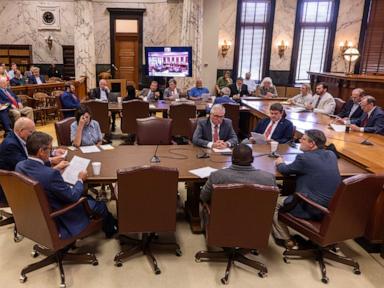
Mississippi lawmakers are back at the Capitol starting a massive, high-stakes overhaul of the state's political boundaries. If you think map-drawing is just boring administrative paperwork, look closer. This process dictates who holds power, who gets silenced, and how millions of dollars in state policy get shaped for the next decade.
The Joint Redistricting and Reapportionment Committee met in Jackson to kick off a two-month listening tour spanning eight regions. They are evaluating legislative, congressional, and judicial districts. But this isn't happening in a vacuum. It's a direct scramble following sweeping changes handed down by federal courts.
The Supreme Court Shift That Triggered Everything
Let's talk about why this is happening right now. The U.S. Supreme Court's ruling in Louisiana v. Callais pulled the rug out from under decades of voting rights precedents. That decision narrowed how race can be factored into drawing district lines, effectively weakening Section 2 of the Voting Rights Act.
Before that federal shift, lower courts forced Mississippi to alter its maps. Federal judges previously ordered the state to redraw its ancient state Supreme Court map—untouched since 1987—to give Black voters a fair chance to elect candidates of choice. Lower courts also pointed out flaws in legislative maps, leading to new districts and competitive elections that briefly cracked old political monopolies.
Once the high court ruled on Callais, the 5th U.S. Circuit Court of Appeals moved fast, vacating orders that required the creation of new majority-Black judicial districts. Gov. Tate Reeves praised the rollback, while voting rights groups watched hard-won gains evaporate overnight. Now, lawmakers are holding public hearings across the state through August and September to figure out what comes next.
Why Critics Call the Hearings a Smoke Screen
You can't understand this political battle without looking at the severe distrust on the ground. State leadership insists these public meetings are designed to capture authentic voter sentiment. Republican Sen. Dean Kirby, elected chairman of the committee, and Vice Chair Rep. Noah Sanford are steering the ship alongside veteran legislative players.
Yet voting rights advocates aren't buying the outreach. Amir Badat, senior adviser for Fair Fight Action, didn't mince words, calling the committee's listening tour a cosmetic exercise designed to dress up an effort aimed at diminishing Black political power.
In a state where nearly 40 percent of the population is Black, the intersection of race and partisan politics is impossible to ignore. Political scientists point out that partisan map-drawing in Mississippi routinely overlaps with racial lines. When lines shift, representation shifts. That is why every single public hearing scheduled over the next two months is drawing packed rooms of angry, hopeful, and anxious residents.
What Happens Next Before the 2027 Elections
The timeline is punishing. Lawmakers have to wrap up their public input sessions, draft new proposals, and potentially approve maps before candidate qualifying deadlines hit on February 1, 2027. Gov. Reeves has strongly hinted that a special legislative session could happen before the regular session kicks off, forcing legislators back to Jackson to vote on finalized boundaries.
If you live in Mississippi, pay attention to these regional hearings. Watch the live streams on the legislature's YouTube channel. Submit public comments while the committee is in your area. Map lines dictate school funding, infrastructure, healthcare access, and economic development.
Don't wait until election day to care about the borders. By then, the game is already rigged.