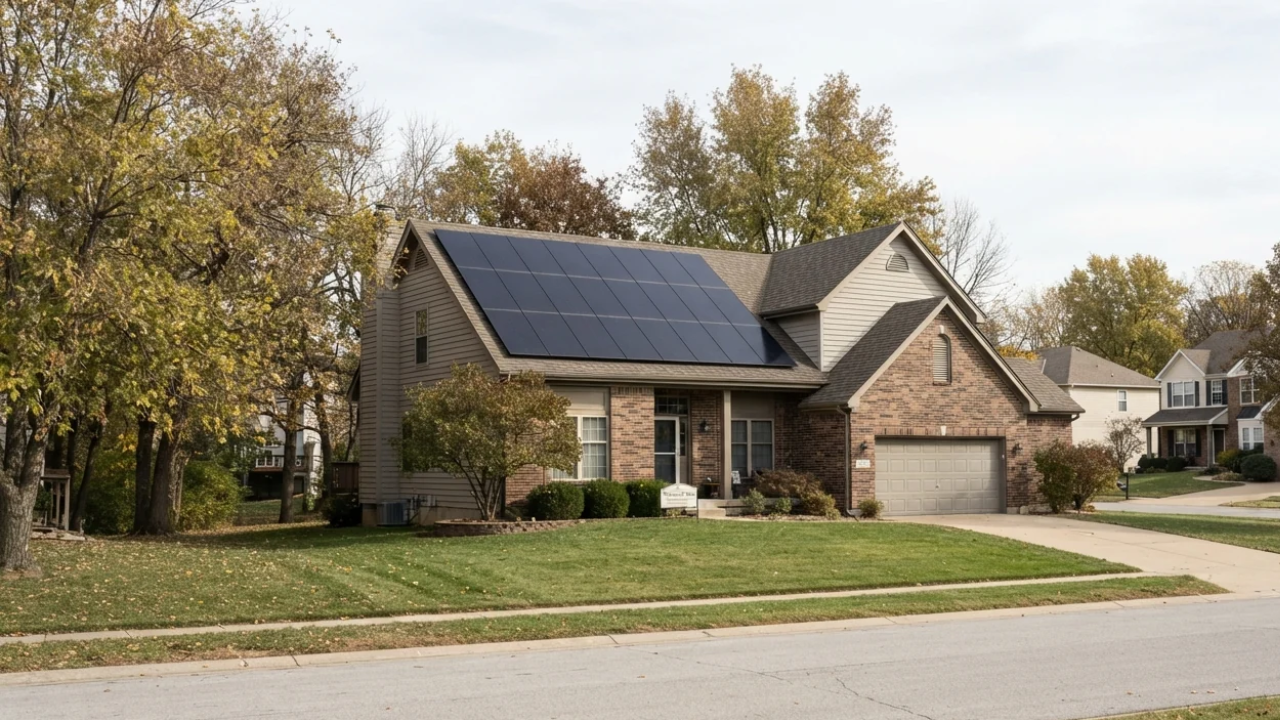
Asking five neighbors for permission just to put twelve solar panels on your own roof sounds absurd. For a couple in Parkville, Missouri, that demand turned into a three-year legal battle over Missouri solar panel rules, HOA overreach, and who pays the lawyers when homeowners ask a judge to clarify their rights.
On November 24, 2026, the Missouri Court of Appeals for the Western District wiped out a lower-court order that had forced homeowners Laurie McGuire and her co-owner to pay legal fees to the Thousand Oaks Association, Inc. in case number WD88802. Judges Alok Ahuja, Thomas N. Chapman, and Janet Sutton ruled unanimously that the homeowners had not violated any community covenant. Simply asking a court what the rules mean does not make you a rule-breaker.
If you live in a managed neighborhood and want rooftop solar, this ruling is a big deal. It shows that HOAs can face pushback when they pile hurdles onto solar requests, and it strips away a scary financial threat—getting stuck with the association's legal bill just for asking a court to review a rejection.
How a 12-Panel Application Turned Into a Court Fight
Back in January 2023, the couple submitted a plan to install 12 solar panels on their roof in the Thousand Oaks subdivision in Parkville. Three months later, the association rejected the application. According to the appellate record, the rejection pointed to two issues: the homeowners had not gathered five neighbor consent forms required under the Architectural Control Committee Policy, and the panels would be visible from the street.
Rather than redrawing their plans to fit the association's wishes, the couple went to court. They argued that parts of the HOA's declaration and architectural policy conflicted with Section 442.404.3 of the Revised Statutes of Missouri, asking for declaratory and injunctive relief to stop enforcement of those restrictions against their property.
In June 2023, the association pushed back in circuit court, defending its rules, filing a counterclaim for its own interpretation of the covenants, and asking for attorney's fees under the property agreement. After a summary judgment hearing in July 2025 was not ripe for ruling, the parties reported in November 2025 that they had resolved their disputes except for attorney's fees.
In January 2026, the Platte County Circuit Court sided with the HOA on fees, concluding the association could recover costs tied to defending the suit and prosecuting its counterclaim, and treating the lawsuit itself as a covenant breach because enforcing or construing the declaration was involved. Once the remaining claims were dismissed, the homeowners appealed the fee award.
What Missouri Solar Panel Rules Actually Allow
At the center of the fight is Missouri Revised Statutes Section 442.404, which took effect on January 1, 2023. Under subsection 442.404.3, property restrictions and similar covenants cannot prohibit or effectively prohibit homeowners from installing solar panels or solar collectors on rooftops that the homeowner owns, controls, and maintains.
That does not mean HOAs have zero say. The statute allows associations to adopt reasonable rules about placement, provided those rules do not prevent installation, impair how the system functions, restrict its use, or adversely affect its cost or efficiency.
In practice, that last phrase is where friction happens. Putting panels on a north-facing or shaded rear slope might hide them from the street, yet cut energy output or raise installation costs. When a rule forces a compromise that hurts efficiency or drives up price, it runs straight into the statutory limit.
The Street-Visibility Trap and the Eikmeier Ruling
While the Parkville case was pending, the Supreme Court of Missouri weighed in on the solar statute in Eikmeier v. Granite Springs Home Owners Association, Inc., decided January 23, 2026 (reported in Missouri Bar coverage and Sandberg Phoenix analysis). Homeowners Colleen Eikmeier and William Love had challenged covenants and rules restricting solar panels, including a ban on panels facing the street.
The state Supreme Court reversed the lower court and ruled in favor of the homeowners. It held that Section 442.404.3 applies retrospectively to existing restrictive covenants—not just brand-new subdivisions—and barred enforcement of the street-facing roof restriction where it conflicted with the statutory protections on cost and efficiency.
For the Thousand Oaks dispute, that high-court precedent loomed large. The Court of Appeals noted that the association would have lost on the merits had the January 2026 Supreme Court decision governed the underlying solar issue.
Why the Appeals Court Killed the Legal Fee Award
Even though the underlying solar claims were dropped rather than decided on the merits, the fee order still had to stand or fall on contract and case law. The association relied on Article VIII, Section 2 of its declaration, which allowed fee recovery for actions taken against owners who breached or threatened to breach covenants.
The Western District panel found a basic flaw in that theory: there was no violation. The homeowners had not installed solar panels, had received no violation notice, and were in good standing—a point acknowledged in an HOA representative's deposition testimony stating there is no covenant infraction until an infraction occurs and no solar panels were on the property.
The judges also rejected the idea that filing a declaratory lawsuit was a breach or an anticipatory breach of the declaration. Homeowners have a right to ask a court to construe their property rights without automatically being penalized as contract breakers, absent clear language making that a breach. Citing Hague v. Trustees of Highlands of Chesterfield, the court reinforced that an HOA cannot bootstrap a fee award out of a covenant where no violation occurred.
One practical caveat matters here: overturning the fee order cancels the financial penalty against the couple, but it does not serve as a standalone order approving the original 12-panel installation.
Lessons From Hands-On Solar and HOA Battles
Having watched plenty of property disputes and permitting headaches play out, I find two things keep tripping people up. First, homeowners often assume a state right-to-solar law means an HOA board will simply wave a project through. Boards routinely lean on architectural guidelines, neighbor sign-offs, or aesthetics out of habit or caution.
Second, people sometimes skip straight to litigation or, conversely, cave to informal demands because they fear legal costs. Neither move is ideal on day one. What works better in real life is building a clean engineering and financial record early—showing roof orientation, shading, production estimates, and cost impacts—so any placement demand can be evaluated against real numbers rather than guesswork.
At the same time, there are legitimate counterarguments on the association side. Boards worry about inconsistent neighborhood appearance, roof maintenance responsibilities in townhome or shared-roof setups, and rising legal budgets funded by every dues-paying neighbor. Where the statute draws the line is clear: legitimate architectural oversight cannot cross into an end-run around solar cost, efficiency, or access.
Practical Next Steps If You Want Solar in an HOA
If you are planning rooftop solar in a community with covenants, take a methodical approach before signing a final installation contract:
- Pull your exact governing documents and architectural policy. Check who owns and maintains the roof, what submission steps apply, and whether rules require neighbor notices, sightline reviews, or specific hardware finishes.
- Check your state's solar statute and recent court rulings. Look up the exact statutory text—such as Missouri Revised Statutes Section 442.404—and verify whether state courts have ruled on retroactivity or street-facing visibility limits.
- Ask your solar installer for a layout comparison. Have the installer document how a preferred layout performs versus an HOA-requested layout, including system output, cost differences, and shading or efficiency impacts.
- Keep every submission and response in writing. Track application dates, committee letters, and any claims of rule violations so you have a clear record if a dispute stalls.
- Consult a real estate or HOA attorney before escalating. If a board rejects a compliant plan or threatens fees, get advice on your state's fee-shifting rules and declaratory options before spending thousands on a fight.