When the avalanche warning reads "moderate," most backcountry skiers breathe a sigh of relief. That single word creates a dangerous illusion of safety. It makes you feel like the mountain is giving you a green light, or at least a cautious yellow. But as testimony at a Canmore court inquiry recently showed, moderate hazard ratings are often present on the exact days fatal slides happen.
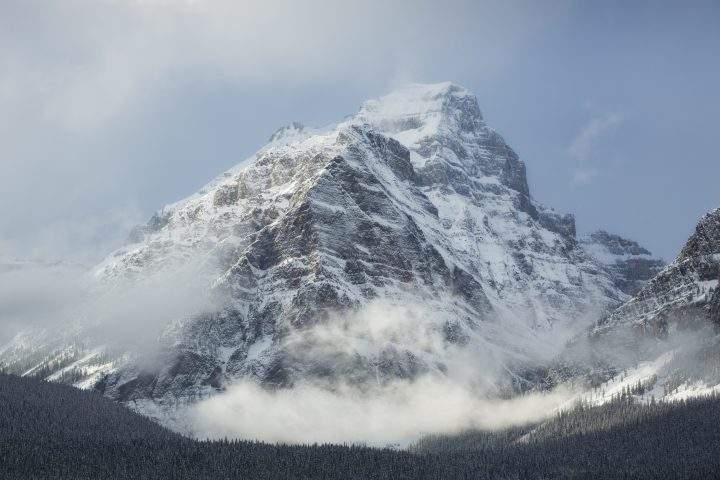
The fatality inquiry into the April 2021 death of 26-year-old Spencer Postman on Haddo Peak near Lake Louise highlights a grim truth about mountain safety. Postman and his partner set out under conditions forecast as moderate in the alpine. Yet, a skier-triggered slab avalanche carried him over an 850-metre drop down steep cliffs.
Why do tragic accidents keep happening when official bulletins don't show high hazard levels?
The fatal gap between region forecasts and micro terrain
Official avalanche bulletins cover massive regional areas. Parks Canada forecasters gather data from field reports, weather stations, and partner agencies to build a daily bulletin. Brian Webster, manager of visitor safety for Banff, Yoho, and Kootenay national parks, testified that forecasters act like detectives synthesizing huge amounts of information. On the morning Postman died, Webster confirmed the moderate rating was accurate based on all regional data available.
Regional accuracy isn't the problem. The issue is scale.
A regional forecast tells you what's happening across hundreds of square kilometers. It can't tell you what's happening on a specific 35-degree slope under a thin, sun-exposed snowpack right in front of you. Extreme terrain—like the steep, cliff-lined face of Haddo Peak—leaves zero room for error. When you step onto extreme slopes, even a low or moderate hazard rating can turn lethal in seconds.
Small missteps add up fast
Postman was far from an amateur. He had completed advanced avalanche training and spent years in the backcountry. His ski partner that day, Kevin Rohn, is a fully certified mountain guide with the Association of Canadian Mountain Guides (ACMG). They weren't acting casually or ignoring basic precautions.
They started before dawn at 3:30 a.m. to beat daytime warming. They stopped to dig a snow pit and test the snowpack layers before committing to the final summit slope. The test revealed a thin, sun-hardened crust over weak, grainy snow about 40 centimeters down. The snow broke under testing, but only after significant force. It seemed stubborn. It didn't trigger immediate alarm bells.
They made a few subtle misjudgments:
- Underestimating how much thin snow cover weakened the slope near the summit.
- Moving too close together on an exposed section with severe terrain traps directly below.
- Relying on a stubborn test result on a slope with massive cliff drop-offs.
Rohn later described these decisions as small missteps at the wrong spot. In benign terrain, a small misstep means a minor scare or a bad slide into soft snow. On Haddo Peak, a small misstep meant a fall over cliffs where no one could survive.
The problem with public communication
The inquiry brings up tough questions about how mountain safety data reaches the public. Parks Canada puts out daily bulletins, but reaching everyday skiers remains a hurdle. People check social media, informal forums, or private chat groups, which don't always reflect current hazard updates.
There's also a legal and professional gray area under review. Rohn was skiing recreationally as Postman's friend, not as his hired guide. The inquiry is examining whether professional guide codes of conduct should apply during private recreational trips. While that distinction might matter to legal boards, snowpack doesn't care whether you're on the clock.
What you need to do before your next backcountry trip
If you plan to head into the alpine, stop relying solely on the headline color or danger word on the daily forecast. Moderate danger means avalanches are still human-triggerable. In fact, statistically, a large number of avalanche fatalities occur during moderate hazard ratings because more people venture into risky terrain.
Here is how you should adjust your approach immediately:
- Treat moderate as a warning, not a green light. Moderate hazard means natural avalanches are unlikely, but human-triggered slides remain entirely possible on specific features.
- Evaluate the terrain trap first. Before evaluating the snow, look at what lies below you. If a slide will carry you over cliffs, into gulleys, or through dense trees, treat the slope like it's high hazard regardless of the bulletin.
- Space out aggressively. Never travel tight together on exposed slopes. Maintain distance so a single slide cannot catch multiple members of your group.
- Turn back when reality misses your expectation. If the snowpack looks thinner, weaker, or more wind-affected than you anticipated, turn around. Don't let momentum carry you into high-risk zones.