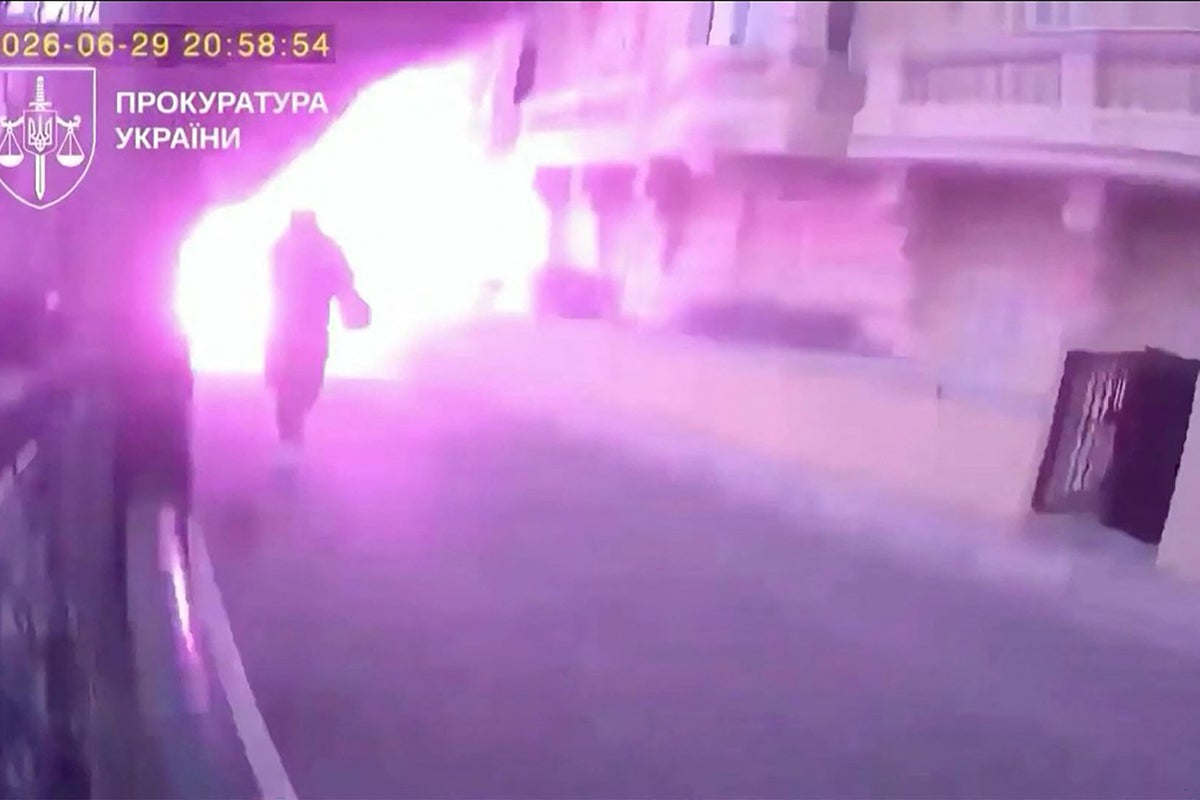
You think of Monaco, and you picture superyachts, high-stakes casinos, and hyper-rich expats living in a tax-free bubble of absolute security. It’s the kind of playground where the wealthy assume the messy, brutal reality of global conflict can't touch them.
That illusion shattered on June 29, 2026, at roughly 9:00 PM on a quiet hillside street.
A backpack left on the stone steps of a beige apartment building detonated right as Ukrainian-born tycoon Vadym Iermolaiev stepped outside with his partner, Anna, and their 13-year-old son. The blast ripped through steel railings and turned stone into shrapnel. It didn't just injure a controversial oligarch; it left his partner fighting for her life with irreversible, catastrophic injuries and hospitalized his young son with severe burns and fractures.
This wasn't a warning shot. It was a calculated, cold-blooded execution attempt on an entire family.
But what started as a shocking piece of high-society violence has quickly spiraled into a dizzying international espionage thriller. With the prime suspect dead in a Ukrainian forest and fingerprints pointing straight at elite intelligence agencies, this case is exposing a dark, untamed underbelly of the war’s spillover into Western Europe.
The Anatomy of an Explosive Hits the Riviera
Monaco doesn't do blind spots. The principality is blanketed in closed-circuit surveillance, which quickly allowed French and Monégasque investigators to track the movements of the bomber.
CCTV footage captured a figure wearing a black jacket, light trousers, and a black bucket hat pacing the area, waiting specifically for Iermolaiev’s family to emerge. After the explosion, the suspect fled on foot up a flight of public stairs, crossing the border into the neighboring French town of Beausoleil.
At first, police thought they were looking for a man. They were wrong.
Interpol soon issued a Red Notice for 39-year-old Anastasiia Berezovska, a Ukrainian national who had disguised herself to plant the bomb. But before European police could track her down, she vanished. She didn't hide in Western Europe; she caught a bus straight back into Ukraine, entering the country on July 1.
By July 3, she was dead.
Her body was found buried in a shallow grave in the woods near the village of Yuriv, just west of Kyiv. The hitman had been cleaned up by her own handlers.
Spies, Rogues, and Dead Ends
If the bombing shocked the French Riviera, the arrests that followed Berezovska's murder sent shockwaves through Kyiv.
Ukrainian authorities acted with blinding speed, arresting two men for the murder. One was Vitalii Zhykovych, a former law enforcement officer. The other was Vladyslav Reut, a 33-year-old serving officer within Ukraine’s ultra-elite military intelligence agency, the GUR.
Investigators found that Reut and Zhykovych had been funneling cryptocurrency and bank transfers to Berezovska to fund the Monaco operation. When she returned to Ukraine, they allegedly forced her into a car at gunpoint, drove her to the forest, and executed her to keep her quiet.
Monaco Blast (June 29) -> Suspect Flees to Ukraine -> Suspect Murdered (July 3) -> GUR Officer Arrested
Kyiv prosecutors are working overtime to frame this as a rogue operation. They claim Reut acted entirely on his own, concealing his contacts from agency leadership.
Honestly, Iermolaiev isn't buying that story for a second.
Breaking his silence from an intensive care unit, the tycoon released a scorching statement through his lawyers. He explicitly accused the GUR of orchestrating the hit, stating that the conspiracy stretches deep into the agency and involves individuals close to its current and former leadership.
"If serving members of an intelligence service use their positions, their resources or their networks to organise the attempted murder of a family on European soil," Iermolaiev warned, "then this is no longer simply a crime against my family. It is a matter of international security".
Why Target Vadym Iermolaiev?
The motive remains a massive black box, but there are three distinct possibilities driving the rumor mill in intelligence circles:
- The State Sanctions Angle: With a net worth estimated by Forbes at over $220 million, Iermolaiev built a massive empire in real estate, agriculture, and manufacturing. He renounced his Ukrainian citizenship back in 2017 for a Cypriot passport. In late 2023, President Volodymyr Zelenskyy slapped personal sanctions on him, accusing his companies of trading alcohol in Russian-occupied Crimea and funneling taxes into the Kremlin's treasury. Iermolaiev called those claims surreal, but it put a massive target on his back.
- The "Monaco Battalion" Backlash: In Ukraine, Iermolaiev was notoriously grouped into the "Monaco Battalion"—a derogatory term used by local journalists for ultra-wealthy oligarchs who fled the country to live in obscene luxury while ordinary citizens dodged Russian missiles. Driving a quarter-million-pound Bentley through the streets of Monte Carlo while your home city of Dnipro gets bombed doesn't win you many fans.
- The Criminal Underworld Dispute: Some sources close to the oligarch whisper that this wasn't geopolitical at all. They point to his adult son, Artur, who was heavily implicated by European authorities in a massive multimillion-euro telephone fraud and call center scam operating out of Dnipro. One theory is that a massive criminal dispute over protection money boiled over, and corrupt intelligence officers were simply hired as muscle.
The Geopolitical Fallout Is Already Here
Let's look at the bigger picture because this goes way beyond a localized blood feud.
Ukraine has run highly effective, lethal sabotage operations inside Russia and occupied territories for years, taking out military commanders and collaborators. But pulling off a sloppy, high-profile bomb attack in Western Europe that critically injures an innocent woman and a child? That is an entirely different, incredibly dangerous sandbox.
French President Emmanuel Macron has already privately pressed Zelenskyy for total transparency. European allies are quietly panicking that internal Ukrainian rivalries—or rogue elements within their security apparatus—are taking their shadows wars to the streets of Western cities. The sheer speed with which the SBU (Ukraine's domestic security service) arrested the GUR military intelligence officer suggests an ugly, bitter turf war playing out inside Kyiv’s own defense framework.
What Happens Next
If you are a high-net-worth expat or an executive tied to Eastern European business capital, the rules of engagement just changed. The Monaco bubble has popped.
If you are evaluating your own security posture in Western Europe, you need to take immediate, practical steps:
- Audit Your Perimeter Footprint: Relying on municipal security or the reputation of a safe neighborhood is dead. Monitored access points, blast-resistant glazing for ground-level residences, and strict parcel-screening protocols are no longer optional for high-risk targets.
- Vet Your Digital and Legal Ties: Iermolaiev’s public sanctions and his family's legal battles in Estonia drew the blueprint for his targeting. Understand that financial visibility and public blacklists directly correlate to physical vulnerability.
- Monitor the Investigation: Keep a close eye on the joint French-Monégasque-Ukrainian judicial proceedings. The degree to which Kyiv allows a transparent trial for Vladyslav Reut will tell us exactly how deep the rot goes, and whether Western Europe remains a viable sanctuary for targeted elites.