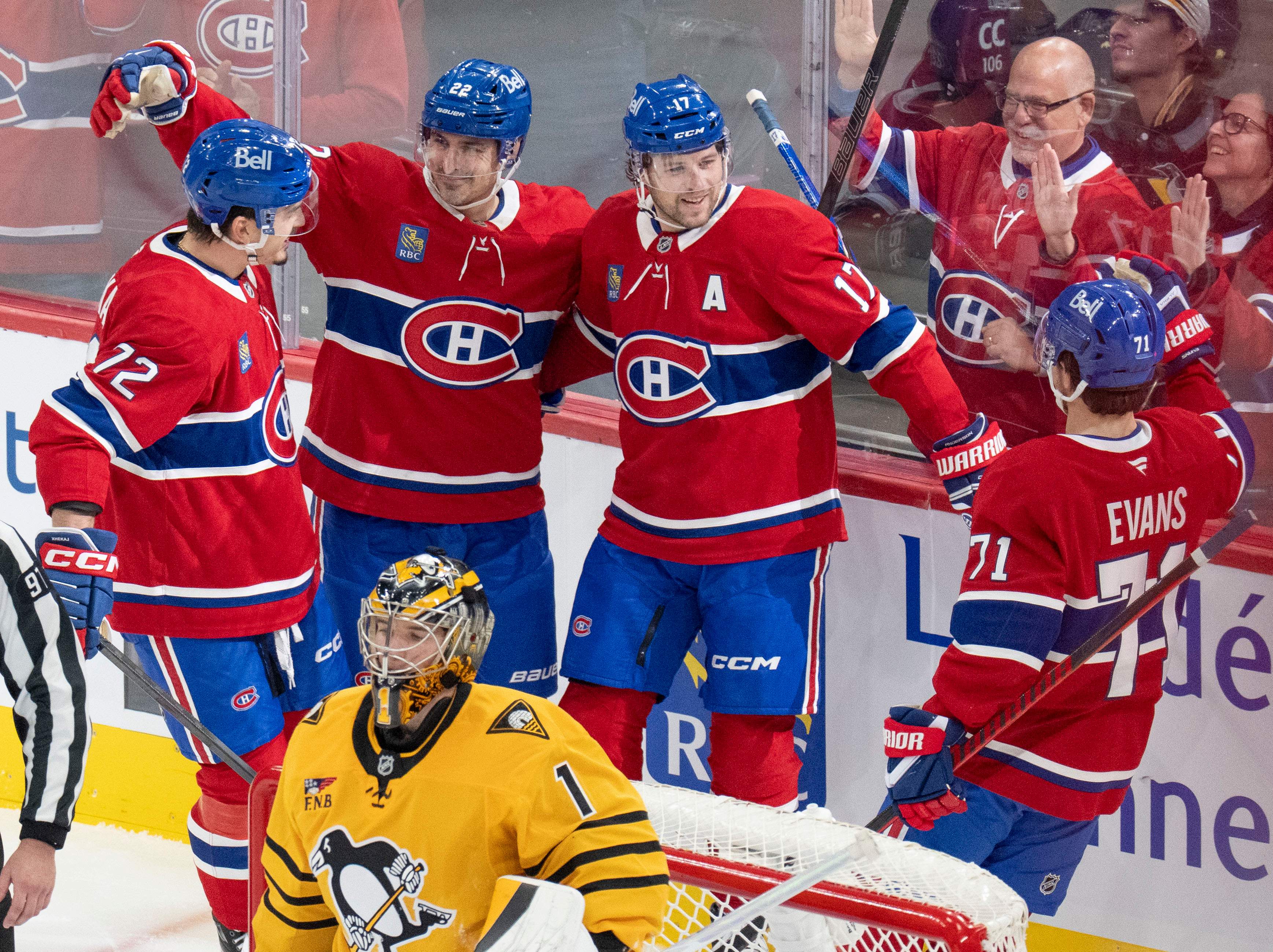
Winning in the National Hockey League is hard enough, but winning while throwing defensive structure out the window is a recipe for a heart attack. The Montreal Canadiens just pushed their winning streak to five games with a chaotic 5-4 victory over the Pittsburgh Penguins at the Bell Centre. If you watched the game, you know the scoreline doesn't tell half the story. Montreal is stacking up points, yet their habit of turning home games into wide-open track meets is exposing massive cracks in their armor.
Let's look past the glossy win column. There is a distinct split personality developing in this Canadiens roster right now, and it's worth examining why playing in front of their home crowd is triggering such chaotic hockey.
The Offensive Explosion and Fourth-Line Spark
You can't deny the sheer firepower Montreal put on display early against Pittsburgh. The offence was flying right from the drop, catching a flat-footed Penguins squad completely off guard. What stood out most was the contribution from the bottom of the lineup.
With Kirby Dach sidelined due to an illness, the fourth line stepped up and delivered a masterclass in role execution. Florian Xhekaj jump-started the sequence by feeding Owen Beck, who quickly shifted the puck over to Oliver Kapanen for a crisp one-timer—marking Kapanen's first goal of the campaign. Just 24 seconds later, Josh Anderson hammered a rocket into the top corner just underneath the crossbar.
Lane Hutson also put on a clinic, orchestrating the transition game with elite vision, including a sublime spinerama pass to set up Alexandre Texier. When your depth scoring clicks like that, it covers up a lot of mistakes. But relying on an offensive shootout every single night isn't a sustainable path forward.
Home Ice Chaos Versus Road Discipline
Why does this team look so controlled on the road and completely frantic at home? During their recent four-game road trip, Montreal swept all eight available points by playing tight, disciplined hockey. They protected the blue line, limited odd-man rushes, and forced opponents to grind for every inch of ice.
Back at the Bell Centre, that discipline evaporates. The players get caught up in the energy of the crowd, leading to reckless pinches and high-risk gambles all over the ice. Alexandre Carrier got caught pinching deep early in the match, setting off a chain reaction of clumsy defensive errors. It looks like the skaters are trying to settle the outcome in the opening ten minutes, and it constantly backfires.
This Jekyll-and-Hyde split explains why Jacob Fowler faced an absolute barrage. Even the top goaltender in the league saw his elite numbers tested, as he surrendered four goals on 29 shots. While Fowler's Goals Saved Above Expected climbed to a league-leading 10.2, his save percentage took a dip. You can't lean on your goaltender to bail out high-risk defensive gambles indefinitely.
Managing the Matchups and Roster Depth
Another glaring issue in this matchup was the top-line deployment. The trio of Alex Newhook, Cole Caufield, and Juraj Slafkovsky had a brutal night trying to contain Sidney Crosby. They managed an expected goals share of just 20 percent, getting physically overwhelmed and hemmed into their own zone for long stretches. Until Nick Suzuki returns to anchor the top lines, head coach Martin St. Louis has to find a way to insulate his primary scorers against elite veteran matchups.
On the bright side, the front office's long-term roster construction is finally bearing fruit. General manager Kent Hughes has managed the salary cap with enough precision to ensure scoring depth across multiple lines, a luxury past regimes rarely enjoyed. If management can blend that financial flexibility with a return to the rigid defensive structure we saw on the road trip, this five-game run could turn into something special.
Clean up the defensive zone turnovers, stop trading high-danger chances, and let the depth scoring win games without the defensive chaos.