You don't expect a 250th birthday party to go smoothly, but nobody predicted a chaotic mix of triple-digit heat waves, sudden police evacuations, and a highly partisan late-night speech on the National Mall.
On July 4, 2026, the United States hit its semiquincentennial milestone. It was supposed to be a polished, historic spectacle. Instead, severe weather swept across the East Coast, forcing event organizers in multiple states to completely rewrite their plans. If you think a little rain just dampened some fireworks, you're missing the real story. This weekend proved that planning a nationwide milestone event is completely at the mercy of shifting weather patterns, and political determination can turn a weather delay into a late-night campaign rally.
The Chaos That Emptied the National Mall
Washington felt like a furnace before the storms even arrived. Temperatures hit 101 degrees Fahrenheit, with the humidity driving the "feels like" index up to a punishing 107 degrees. The official daytime Washington Independence Day parade was canceled entirely because city officials knew letting thousands march in that kind of heat was a medical disaster waiting to happen.
By 7:00 PM, the situation shifted from oppressive heat to immediate danger.
The National Weather Service triggered severe thunderstorm warnings, forcing authorities to order an immediate evacuation of the National Mall. For hours, tens of thousands of people had been packed into the "Great American State Fair," an area fenced off near the Washington Monument. Security officers with flashlights suddenly began pushing massive crowds toward museum entrances, subway stations, and nearby federal buildings like the Ronald Reagan Building to seek shelter.
Key Weather Impact Across Major Cities:
- Washington DC: Daytime parade canceled (107°F heat index); National Mall evacuated for 2 hours.
- Philadelphia: Visitors braved triple-digit heat at Independence Hall; partial stadium evacuations.
- Boston: Concert and fireworks spectators briefly ordered to shelter mid-program.
- Connecticut & Pennsylvania: Full cancellations in Hartford, Harrisburg, and Wilkes-Barre.
- New York City: Fireworks delayed and rescheduled to match shifting storm windows.
The evacuation didn't go smoothly. While families with young kids ran for the subways, pockets of dedicated attendees refused to leave the gates. Chaos broke out when groups tried to surge past security barricades, chanting slogans. Police vehicles had to herd the remaining holdouts off the grass as lightning began to strike nearby.
Trump Defied the Warnings for a Late Night Address
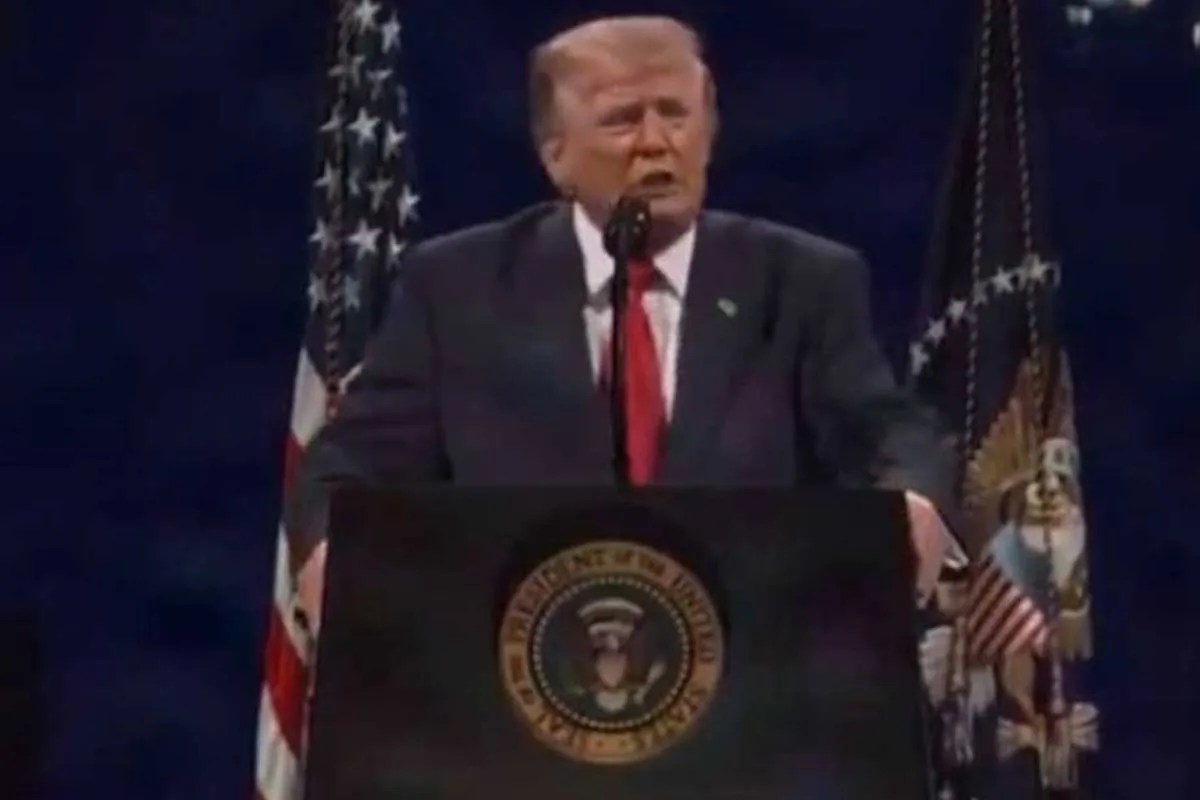
While local emergency management officials scrambled, Donald Trump took to social media to make his position clear. He wasn't going to let some rain stop the party. He posted that he didn't care if he had to wait until 2:00 AM to speak.
The strategy paid off for his base. By 9:00 PM, the storm cleared enough for security gates to reopen. The crowd rushed back into a muddy National Mall, and at roughly 11:00 PM, Trump finally took the stage.
What followed wasn't your traditional, unifying Independence Day speech. Presidents usually stick to standard patriotic script for major milestones, but Trump used the 250th anniversary to deliver a highly political message just ahead of the upcoming November midterm elections. He openly stumped for the SAVE America Act, a controversial voting bill facing pushback even within his own party. He spent large chunks of the speech attacking domestic political opponents, warning about a "resurgence of the communist menace," and aggressively defending the Second Amendment.
He didn't skip the pageantry, though. Introduced by country singer Lee Greenwood performing "God Bless the USA," Trump unveiled what organizers claimed was an authentic American flag from 1776. He honored aging World War II veterans and one of the first Black Special Forces officers from the Vietnam War. They stood next to historical relics, including a flag that flew on the Wright Brothers' airplane and the actual flag draped over Abraham Lincoln's casket.
How the Rest of the Country Salvaged the Milestone
Washington wasn't the only city forced to improvise. The storm system wreaked havoc all along the East Coast, turning the historic milestone into a logistical nightmare.
In Philadelphia, hundreds of tourists spent the morning baking in line outside Independence Hall just to catch a glimpse of the Liberty Bell. Later in the evening, severe weather warnings disrupted events near the Philadelphia Stadium, where holiday crowds had gathered to watch a World Cup knockout game between France and Paraguay.
Further north, cities like Hartford, Connecticut, along with Harrisburg and Wilkes-Barre, Pennsylvania, simply threw in the towel and canceled their public celebrations entirely. Boston officials managed to save their famous concert and fireworks display, but only after forcing spectators to evacuate and seek shelter during a sudden downpour mid-program. New York and Pittsburgh avoided total cancellations but had to constantly shift their fireworks timetables to exploit brief gaps in the storm clouds.
New York City managed to pull off the most impressive visual of the weekend before the weather soured. A fleet of 43 international tall ships sailed past the Statue of Liberty and up the Hudson River, mimicking the famous 1976 bicentennial fleet. A massive military flyover featuring a stealth bomber and the Navy's Blue Angels roared overhead, giving the city a textbook holiday moment before the rain set in.
The Real Takeaway from America 250
A recent Quinnipiac University poll leading up to the holiday revealed that 61 percent of Americans feel the country isn't living up to its original founding ideals. That division was on full display over the weekend. Near Capitol Hill, groups of masked men carrying white supremacist banners marched to shout political slogans, while religious and political groups ran competing events across the city.
The 250th anniversary showed us that national milestones aren't clean, unified moments anymore. They are messy, highly politicized, and entirely dependent on local weather tracking.
If you are planning major outdoor public gatherings or regional events this summer, don't rely on a single timeline. You need automated weather alert systems tied directly to your crowd management plan. Establish clear, pre-arranged indoor shelter partnerships with nearby commercial or municipal buildings before your gates open. Most importantly, ensure your security teams have a clear protocol for crowd refusal during an emergency evacuation, because a passionate crowd won't always move just because the sky turns grey.
[References: Google Search Query: "America 250th anniversary events disrupted storm heat Trump speech"]

.jpg)

