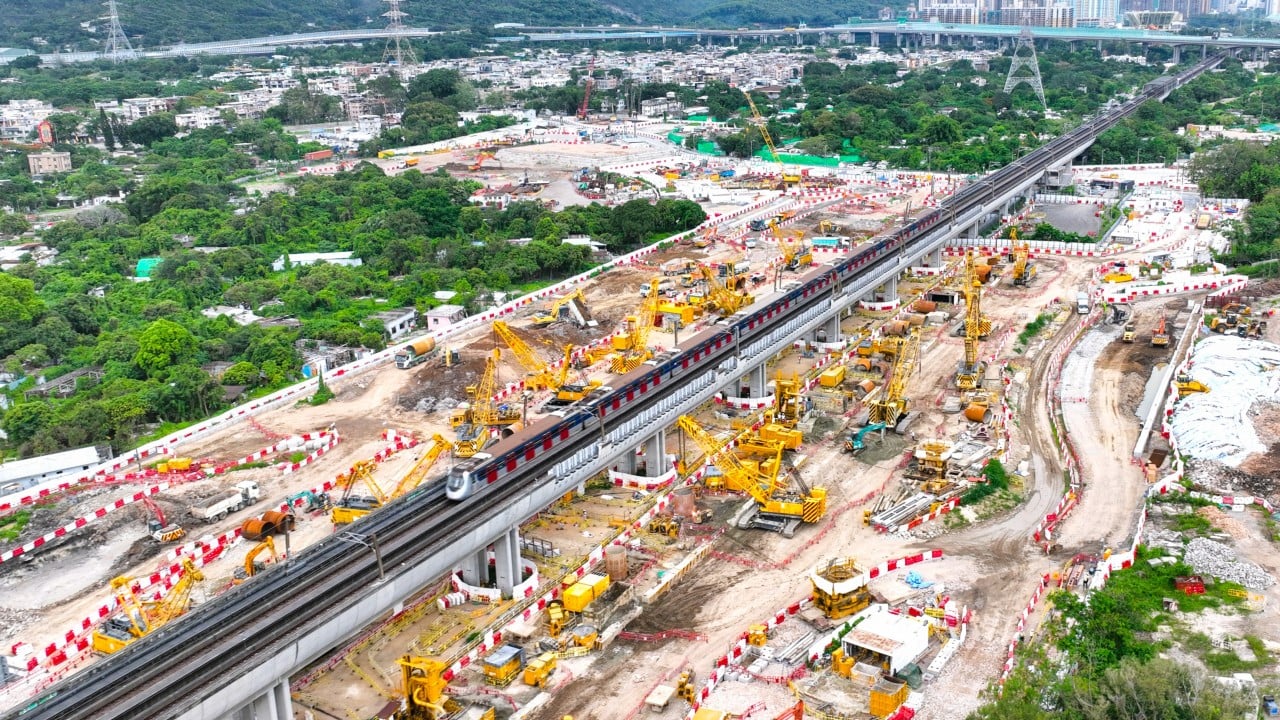
Building a brand-new transit hub over an active, roaring railway line sounds like an engineer's worst nightmare. Traditional in-situ construction demands that work crews cram their heavy lifting into the infamous overnight "golden two hours"—the tiny window after daily train services shut down and before morning commuters flood the turnstiles. It is a grueling, high-pressure routine that balloons safety risks and stretches project timelines to breaking point.
MTR Corporation is throwing that playbook out the window. If you liked this piece, you should read: this related article.
For the upcoming Hung Shui Kiu Station on the Tuen Ma Line, the rail operator is deploying a world-first engineering approach. Instead of building piece-by-piece directly over the tracks, they are constructing massive pre-assembled segments off-site and sliding them into place. It is heavy civil engineering executed with watchmaker precision.
The Mechanics of Moving a 10000 Tonne Station
How do you install a functional railway station without shutting down the entire line for months? You build it thirty meters away first. For another look on this story, check out the recent coverage from The Verge.
The strategy relies on a "build first, skid later" framework. The project team divides the core station structures into two giant sections. One serves the uptrack heading toward Tuen Mun, while the other handles the downtrack toward Wu Kai Sha. Each module measures an imposing 210 meters long, 15 meters wide, and tips the scales at a staggering 10,000 tonnes.
Components are manufactured in factories and assembled on a dedicated site sitting parallel to the existing viaduct. Once ready, hydraulic jacking systems take over. These massive mechanical pushers will incrementally slide the multi-thousand-tonne platforms into their exact final positions right alongside the operating Tuen Ma Line viaduct.
Carl Michael Devlin, MTR's Capital Works Director, notes that the translation shifting work for the platforms is slated for the late first quarter and third quarter of next year. Before any sliding begins, extensive rehearsals and stress tests take place. There is zero room for error when handling structures this heavy next to live rail assets.
Beating the Golden Two Hours Trap
If you've ever wondered why urban rail expansions take forever, blame the schedule. Traditional building methods require crews to mobilize, work frantically for 120 minutes overnight, pack up, and clear the tracks before the first morning train.
By shifting the heavy fabrication work thirty meters away from the active viaduct, MTR avoids this trap entirely. Most structural assembly happens during normal daytime hours without interfering with train operations or putting night workers under intense time crunches.
Over the past two years, crews have quietly chipped away at preparatory tasks during those overnight windows, such as removing viaduct parapet walls. But the heavy lifting of the actual station framing happens independently. When the final skidding phase arrives, service disruptions on the Tuen Ma Line—affecting key nodes like Tuen Mun, Siu Hong, and Tin Shui Wai—will be strictly capped at no more than two days per side.
What This Means for Future Urban Transit
Hung Shui Kiu Station is targeted for completion in 2030 to anchor the growing Hung Shui Kiu/Ha Tsuen New Development Area. But the real significance of the project stretches far beyond the New Territories.
Urban rail networks globally face the exact same bottleneck: how to expand capacity in densely packed cities without crippling existing transit arteries. Shutting down active lines for years to insert new stations is politically and economically unviable. If MTR pulls off this skidding technique smoothly, it sets a brand-new global benchmark for brownfield railway expansion.
Engineering teams from London to New York will watch these hydraulic pushers move 10,000 tonnes of concrete and steel next year. When convenience meets heavy infrastructure innovation, old limitations vanish.
Hung Shui Kiu Station Skidding Method Overview
This video provides an animated look at how the massive station components are assembled away from the active tracks and precisely shifted into position.
http://googleusercontent.com/youtube_content/1