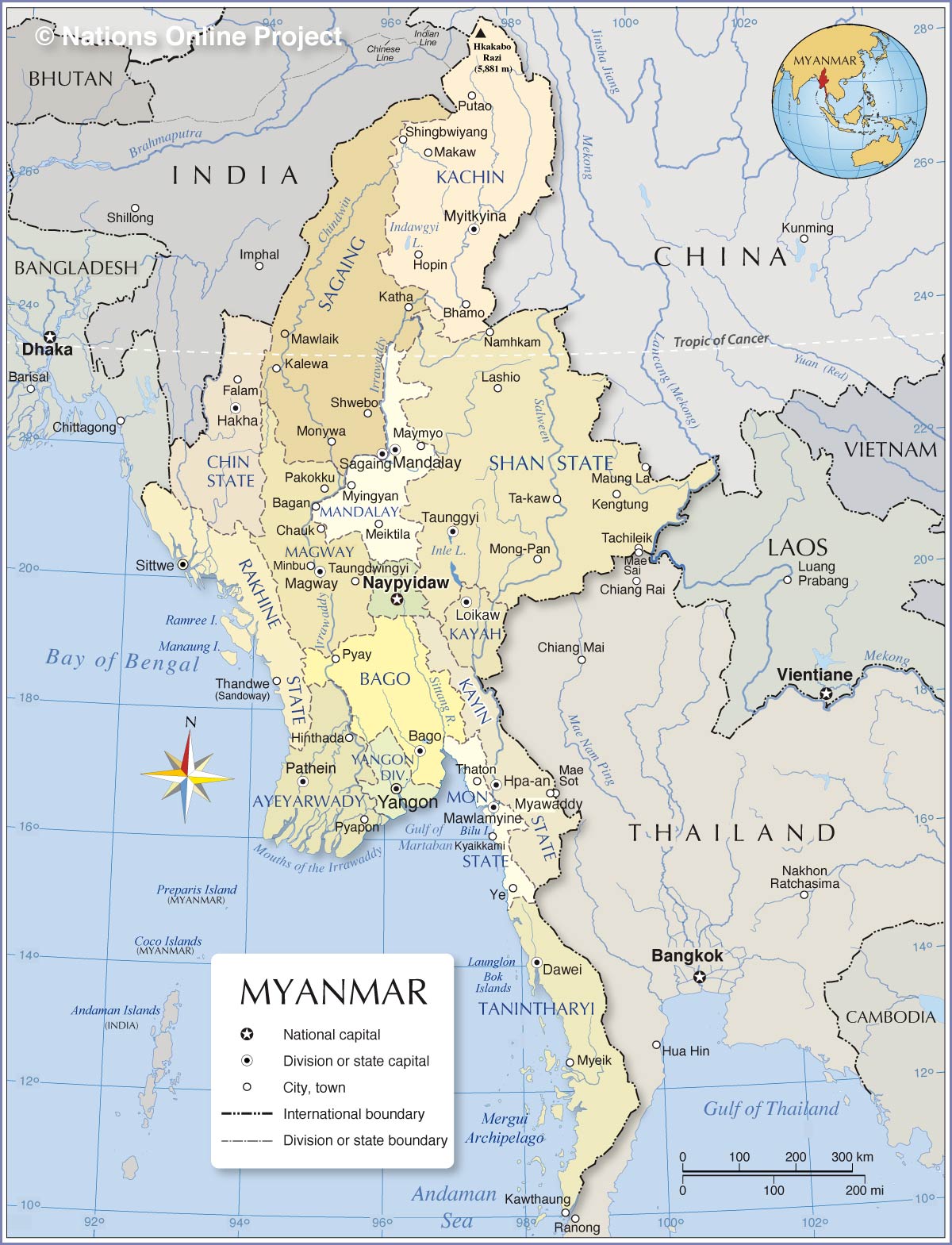
Myanmar says it will pick and choose which International Court of Justice genocide orders it follows. That stance isn't a surprise to anyone who has watched the Rohingya crisis for years. Still, hearing Myanmar President Min Aung Hlaing tell a meeting on Wednesday that his country won't comply with requirements it considers "inappropriate" hits hard just days after a historic verdict.
On November 19, 2026, the ICJ ruled in The Gambia v. Myanmar that Myanmar committed genocide against the Rohingya during its brutal 2016–2018 military operations in Rakhine State. It's the first time the UN's top court has held a state directly responsible for genocide under the 1948 Genocide Convention. A landmark ruling arrived. Defiance followed almost immediately.
If you're searching for what this refusal means, the short answer is blunt. The judgment is final and legally binding, yet the court has almost no teeth of its own to force compliance. What happens next depends on politics in the UN Security Council, shifting power on the ground in Rakhine State, and how neighboring countries treat roughly 1.2 million Rohingya refugees living in sprawling camps in Bangladesh.
What the ICJ Genocide Orders Actually Require
News headlines often reduce a complex court ruling to a single line. Let's look at what the court actually told Myanmar to do after seven years of proceedings and final hearings in January 2026.
First, the judges found that Myanmar's security forces committed genocidal acts—including killings, widespread sexual violence, and severe harm—with specific intent to destroy a substantial part of the Rohingya population. The court rejected Myanmar's long-standing claim that its operations were simply counter-terrorism campaigns against insurgents. It also found Myanmar failed to enact domestic laws to codify the Genocide Convention and breached earlier provisional measures from January 2020 meant to preserve evidence.
Second, the court laid out concrete remedies. Myanmar must facilitate the safe, voluntary, and dignified return of displaced Rohingya. It has to protect them from ongoing discrimination and persecution, investigate and prosecute perpetrators, restore or replace lost property, help locate missing people, provide physical and psychological rehabilitation, and pay reparations for harm that restitution can't fix. Myanmar also has to report back within two years on its steps and proposed compensation.
Min Aung Hlaing called the case a "one-sided accusation" and pointed out that six of the 15 judges dissented on parts of the judgment. True, there were split votes on remedies—such as 10–5 on restitution and reparations and 9–6 on guarantees of non-repetition. Yet several core findings had overwhelming backing, including 14–1 and 13–2 votes on specific points regarding private incitement and domestic legislation. Pretending a split on remedies erases a historic finding of state genocide is wishful thinking on Myanmar's part.
Why Compliance Faces Massive Roadblocks
On paper, a binding ICJ judgment sounds unstoppable. In reality, enforcing it against a defiant government is messy and slow.
Security Council Vetoes and Geopolitics
Under Article 94 of the UN Charter, if a party fails to perform obligations under an ICJ judgment, the other side can turn to the UN Security Council, which has authority to decide on measures to give effect to the ruling. France has already signaled plans to request a Security Council meeting following the November 19 decision.
Don't hold your breath for a sweeping enforcement resolution. As the Council on Foreign Relations notes, major powers with veto power—China and Russia—have strong reasons to block binding Security Council enforcement against Myanmar, while Washington's diplomatic posture has shifted toward selective engagement even alongside existing sanctions. When veto-wielding states protect their own strategic interests or shield themselves from legal precedents, Security Council gridlock is the default outcome.
Who Actually Controls Rakhine State Now?
Here is a practical detail plenty of commentators gloss over. The court ordered Myanmar's government to facilitate returns and protect people in Rakhine State, yet the military government doesn't even control most of Rakhine State anymore.
Following the 2021 coup that ousted Aung San Suu Kyi's elected government, Myanmar plunged into a wider civil war. Over that time, the Arakan Army seized control of large swathes of Rakhine. Legal scholars at Oxford's Border Criminologies blog and Human Rights Watch have pointed out that the Arakan Army itself has been accused of serious abuses against Rohingya, including forced labor, arbitrary detention, and village destruction. Telling Naypyidaw to guarantee safe returns to territory it doesn't hold creates a massive gap between legal orders and battlefield reality.
Statelessness and the Citizenship Question
Another big debate centers on citizenship. Rohingya have been stripped of effective citizenship rights for decades under Myanmar's 1982 citizenship law, leaving them stateless.
Analysis on Just Security highlights that while the judgment links statelessness to the broader genocidal process, it stops short of explicitly ordering citizenship for all Rohingya in its operative paragraphs—a point raised in the joint declaration of Judge Leonardo Brant and Judge ad hoc Navi Pillay. Without real legal status and freedom of movement, "return" can easily mean returning to open-air confinement rather than safety.
What This Means for Refugees and Global Accountability
For the roughly 1.2 million Rohingya in Bangladesh's camps, a verdict in The Hague doesn't magically open the border or restore food rations. Aid funding has been strained, and desperation pushes people onto dangerous smuggling boats across the Andaman Sea.
Still, calling the ruling toothless misses how international law actually works over time. Even without UN troops or Security Council enforcement, a formal ICJ finding changes political and legal leverage. Fourteen countries—including the UK, Canada, France, Australia, and The Gambia—issued a joint statement underscoring that the judgment is binding, while London announced new sanctions on five senior military officials, pledged legislation targeting aviation fuel exports, and committed £5 million in humanitarian aid.
Meanwhile, individual accountability is a separate track. The ICJ rules on state responsibility, whereas the International Criminal Court handles individual criminal liability—and the ICC prosecutor previously sought an arrest warrant for Min Aung Hlaing. Other pending genocide cases at the ICJ, such as South Africa v. Israel and Ukraine v. Russia, will also watch closely how judges weigh evidence of genocidal intent and compliance with international humanitarian law.
Practical Next Steps for Following and Supporting Accountability
If you're tracking this story, researching international law, or looking for credible ways to stay informed or help, skip the sensational threads and take these steps:
- Read primary legal and policy summaries. Check the ICJ's official case page and analyses from groups like the International Commission of Jurists to separate binding court orders from political spin.
- Track territorial control, not just capitals. Watch developments involving both Myanmar's government and the Arakan Army in Rakhine State, because safe return is impossible if local armed actors aren't part of the equation.
- Support verified humanitarian relief. If you want to help Rohingya families facing aid shortfalls in Bangladesh or displacement in Rakhine, donate directly to established humanitarian agencies with transparent field operations rather than unverified social media fundraisers.
- Watch regional maritime and asylum policies. Pay attention to how neighboring states in South and Southeast Asia handle refugees at sea and at borders—that's where legal rulings meet real human lives first.