The narrative that Myanmar's ruling generals are down and out is falling apart. After suffering staggering territorial losses to a coalition of ethnic armed organizations and pro-democracy defense forces following the 2021 coup, the junta has adapted. If you look closely at the current conflict dynamics, you will see a military trying to claw back strategic initiatives through raw technological escalation, forced manpower, and foreign backing.
Understanding how the Myanmar military is clawing back lost ground requires looking past the glossy state media announcements and examining the brutal mechanics on the ground.
The Air War and Drone Dominance
When ground troops fail, air power takes over. The junta relies heavily on its air force, utilizing Russian- and Chinese-supplied aircraft to launch relentless bombardments on contested towns and civilian settlements. Fighter jets and weaponized drones now patrol the skies over regions like Kayah, Shan, and Rakhine states, attempting to break the defensive lines of resistance forces.
This shift to high-altitude destruction stems from a simple reality: the regular infantry lacks the morale and numbers to hold territory in close combat. By substituting ground maneuvers with constant aerial harassment, the generals try to render resistance-held towns uninhabitable. Villages are reduced to rubble, forcing populations to flee and making local governance nearly impossible for opposition groups.
Yet, military analysts point out a critical flaw in this approach. Bombing a town from the air does not translate to loyal citizens or functioning state institutions on the ground. It creates craters, not compliance.
Filling the Ranks with Conscripts
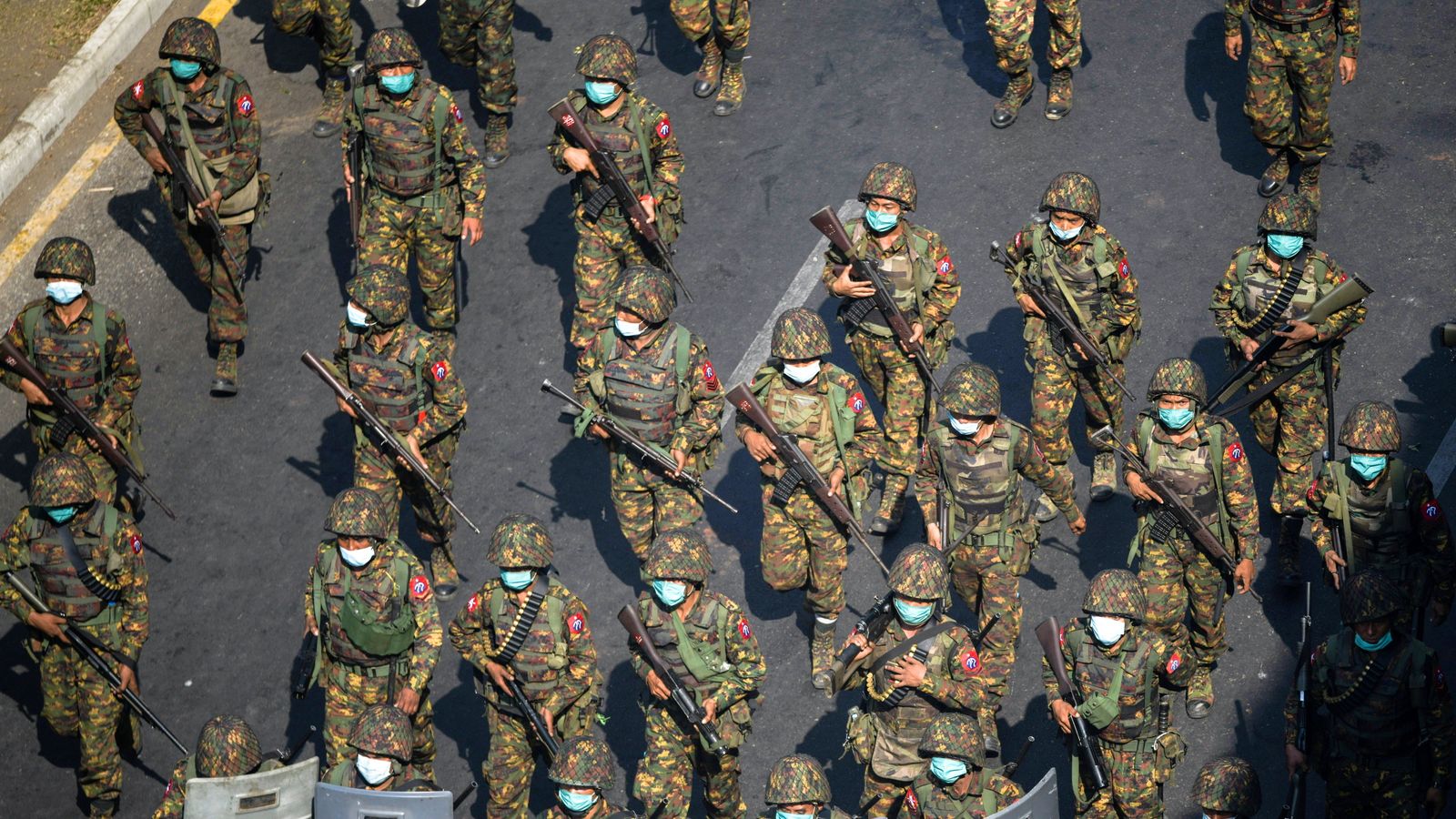
Manpower shortages nearly broke the military command structure in late 2023 and 2024. Thousands of soldiers deserted, surrendered, or died, leaving major bases unmanned. To plug these massive gaps, the junta instituted strict enforcement of a national conscription law.
Young men and women across urban and rural centers find themselves rounded up or pressured into service. These conscripts often receive minimal training before being thrown straight into the front lines as human shields for seasoned units. While this policy artificially inflates troop numbers on paper, it introduces severe internal vulnerabilities. Unwilling soldiers tend to defect or surrender at the first sign of heavy combat, lowering the overall cohesion of the army.
Despite these low morale issues, the sheer influx of bodies has allowed the military to secure vital logistics corridors and stabilize select urban centers, particularly as they push a controversial electoral roadmap meant to project domestic and international legitimacy.
External Geopolitics and Beijing's Calculus
No assessment of Myanmar's shifting battlefield momentum is complete without examining foreign intervention, especially from Beijing. Border stability remains a core priority for China, which shares a long, porous frontier with Myanmar.
When ethnic armies launched major offensives near the Chinese border, disrupting lucrative trade routes and threatening economic projects, Beijing applied pressure on various fronts. Negotiated handovers, such as the transfer of control in key northern towns, reflect this complex diplomatic balancing act. China wants stable borders and predictable economic corridors, leading it to engage pragmatically with whoever can secure those interests—even if it means offering tacit support or diplomatic breathing room to the embattled junta.
At the same time, regional neighbors like Thailand are engaging with military leadership to manage refugee spillover and cross-border crime. This diplomatic outreach gives the generals a veneer of normalization, even as vast portions of the countryside remain completely outside central government control.
The Illusion of Control
The junta's recent tactical advances and recaptured outposts create an illusion of a grand comeback. Foreign observers prone to mistaking temporary military repositioning for permanent victory often fall into this trap.
Holding a scarred, empty town surrounded by hostile territory isn't winning a war; it's surviving a siege. The underlying grievances that triggered the nationwide uprising remain raw. Resistance networks have decentralized, adapting their tactics to weather the airstrikes while maintaining control over vast swathes of rural administration and taxation.
Myanmar's civil war has shifted into a grinding war of attrition. The military can bomb and conscript its way into temporary tactical advantages, but it cannot manufacture political legitimacy or fix a shattered economy at gunpoint.
Watch the border regions and supply lines rather than official statements to gauge where this conflict is heading next. What's happening in Myanmar's civil war as military stages elections?
This video provides context on the ongoing civil war and the military's efforts to hold elections amidst widespread resistance.