You can tell a lot about a regime by who answers its phone calls. For years after the February 2021 coup that ousted Aung San Suu Kyi's civilian government, Myanmar's military rulers sat in deep diplomatic quarantine. Western governments slammed doors, imposed heavy sanctions, and refused to grant them any shred of legitimacy. But politics hates a vacuum. Fast forward to late 2026, and the diplomatic reality in Asia is shifting in subtle, practical ways.
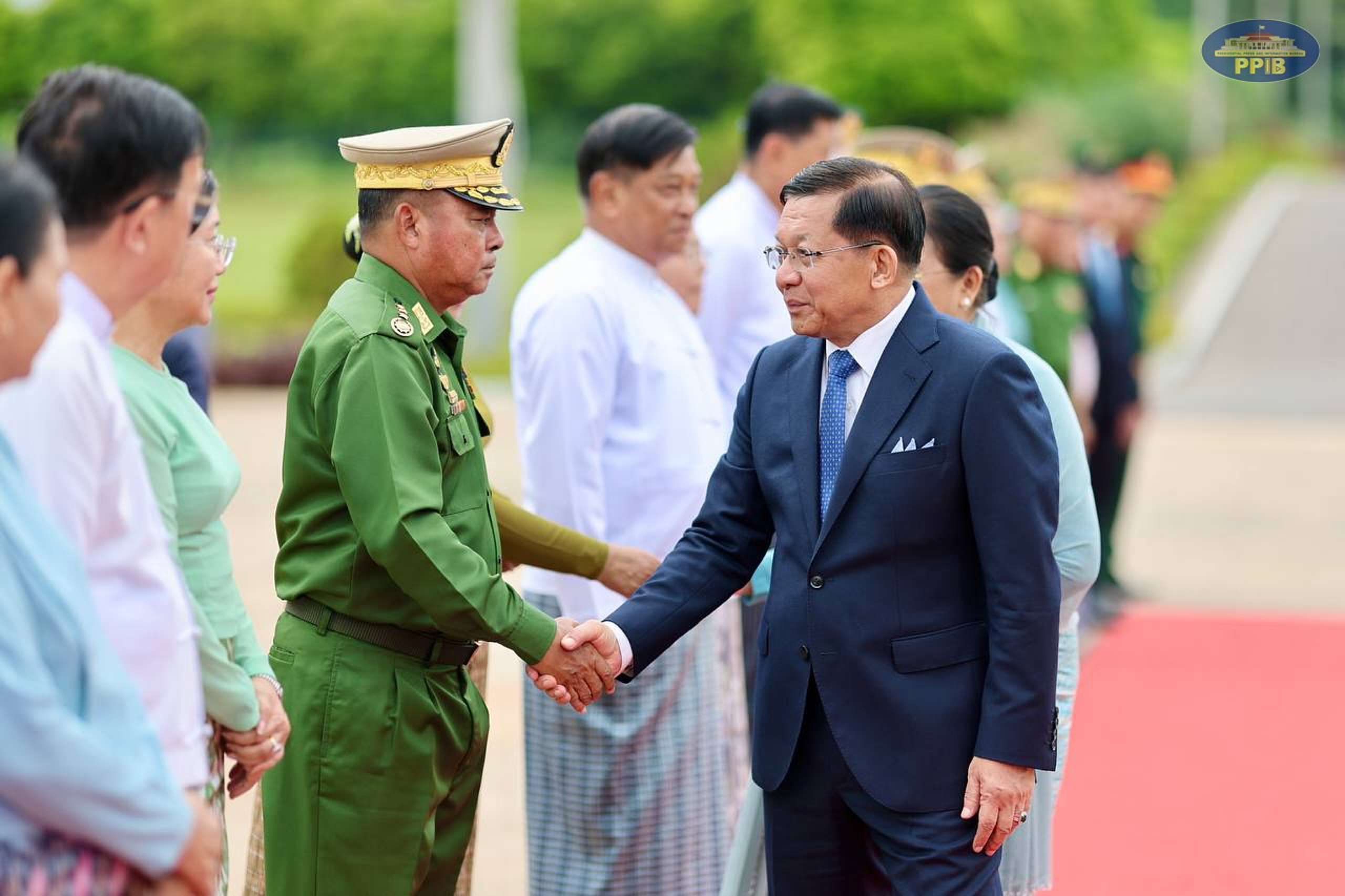
Min Aung Hlaing is stepping out. Having transitioned to the presidency following elections organized by the military, he is on a mission. His recent trip to Vietnam for talks with President To Lam marks his third visit to an ASEAN member state as president, following stops in countries like Thailand and Laos, alongside strategic visits to China, India, and Russia.
If you are wondering why Southeast Asian capitals are engaging with a leader accused of severe human rights violations and presiding over a brutal civil war, the answer comes down to economics, geography, and long-term security. Let's look at what is driving this regional diplomatic push and why it matters right now.
The Shrinking Trade Numbers Behind the Hanoi Visit
Diplomacy rarely happens without a balance sheet attached. When Min Aung Hlaing met with Vietnam's foreign minister in late August before flying into Hanoi's Noi Bai International Airport, the conversation centered heavily on a stark economic decline.
Bilateral trade numbers tell a clear story. Trade between Myanmar and Vietnam hit $853 million back in 2020 before the political upheaval. By 2025, that figure slid down to $590 million. Worse still, the first half of 2026 brought a drop to just $335 million.
For the military administration in Naypyitaw, these numbers are an emergency. Economic isolation combined with internal armed conflict has crippled the country's financial stability. Vietnam is not just a diplomatic partner; it is an active economic stakeholder. Consider Mytel, one of Myanmar's primary telecom networks, which involves deep operational ties with Viettel, Vietnam's military-run telecommunications group. Defense cooperation and shared telecom infrastructure mean both nations have historical ties that neither side wants to completely write off, regardless of western pressure.
Why ASEAN Remains Split on the Myanmar Crisis
The Association of Southeast Asian Nations has wrestled with the Myanmar crisis since day one, struggling to enforce its own five-point peace plan agreed upon in April 2021. While Western capitals keep their distance and enforce strict sanctions, ASEAN's internal approach has always been messy.
Some member states prefer quiet engagement over total isolation. They share borders, trade routes, and refugee spillover concerns. When Min Aung Hlaing travels to regional neighbors, he is attempting to carve out a functional working relationship that bypasses the formal bans from top-level ASEAN summits.
Analysts point out that these bilateral visits represent an aggressive strategy to diversify partnerships. Naypyitaw wants to project normalcy. They want foreign investment forums to succeed and foreign capital to flow back in, even if the domestic public rejects the military's hold on power and civil war rages across multiple states.
The Limits of Regional Legitimacy
Don't mistake neighborly handshakes for total acceptance. Regional experts note that while countries like Vietnam, Thailand, and Laos are willing to host the Myanmar president for bilateral business and security talks, it does not mean the broader regional block is ready to welcome him back to high-level summits.
The domestic reality inside Myanmar remains devastating. A nationwide armed resistance movement continues to contest military control, and airstrikes and fighting continue to displace civilians daily. Western nations remain entirely unmoved by these regional tours. For Washington, London, and Brussels, the recent elections remain a sham, and sanctions are firmly locked in place.
Min Aung Hlaing's charm offensive is calculated. It shores up trade with friendly neighbors, reassures security partners, and creates visual proof that the government isn't entirely cut off from the map. Yet, until domestic peace is achieved and the wider international community changes its stance, this normalization remains partial, fragile, and fiercely contested.