When a successful tech professional goes from leading a morning corporate presentation to losing his life in a matter of hours, something is fundamentally broken in the official narrative. That is the grim reality surrounding the July 30 death of Irfan Al-Hussaini[cite: 1], a 32-year-old senior data scientist at NVIDIA[cite: 1] whose family is fighting tooth and nail for a transparent investigation[cite: 1].
If you have been following the initial headlines out of Palo Alto, you know the local police initially filed this away as a standard medical emergency or suicide[cite: 1]. But when you look closer at the actual timeline, the official story falls apart completely. Families do not spend months demanding answers at city hall unless massive gaps exist in how authorities handled the case.
The Chronology That Does Not Add Up
Let us look at the timeline on July 22, the day that changed everything for the Al-Hussaini family[cite: 1]. Irfan delivered a routine work presentation at approximately 9:00 AM[cite: 1]. Just over an hour later, at 10:02 AM, a Slack message went out to his manager stating that his wife, Fabia Farlin Athena, was feeling unwell and he needed to take the rest of the day off[cite: 1].
Here is where the first major red flag pops up. Irfan’s colleagues later told the family they had no idea who "Athi" or his wife even was[cite: 1]. More alarming is the medical reality discovered later. Hospital scans indicated that Irfan had likely been starved of oxygen for nearly 30 to 60 minutes before emergency services arrived[cite: 1].
At 10:22 AM, a 911 call brought first responders to the Palo Alto apartment[cite: 1]. Twenty minutes. That is the narrow window between a Slack message sent from his account and emergency personnel treating him for an acute crisis[cite: 1]. His sister, Saah Al-Hussaini, has rightly questioned who actually sent that 10:02 AM text and whether it fits into the horrific medical timeline established by treating physicians[cite: 1].
Who Was Irfan Al Hussaini?
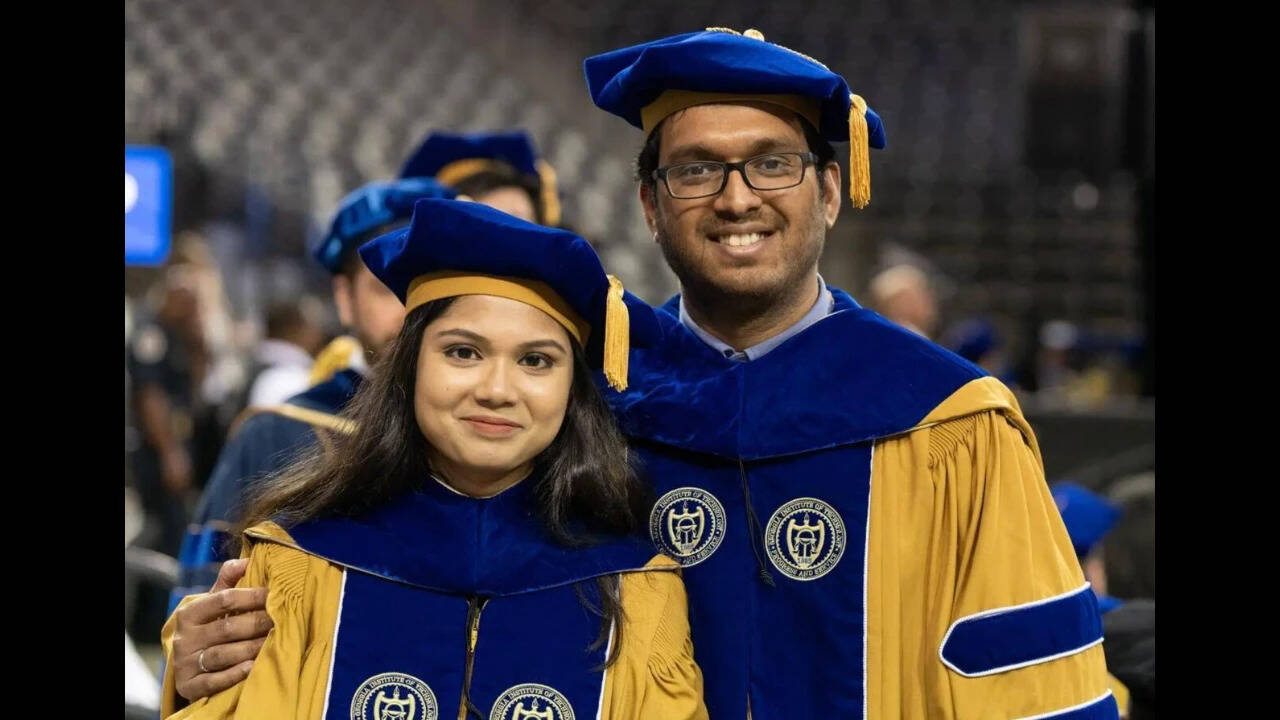
Understanding why this case has sparked international outrage requires looking at who Irfan actually was before he moved to the Bay Area. Born in Bangladesh[cite: 1], he graduated from the Bangladesh University of Engineering and Technology (BUET) in 2017[cite: 1]. He moved to the United States to pursue higher education at the Georgia Institute of Technology, earning his Master's degree in 2020 and completing his PhD in 2023[cite: 1].
His career trajectory was stellar. After an internship at NVIDIA working on unsupervised learning, he stepped directly into a senior data scientist role[cite: 1]. Friends and family describe a man deeply invested in his future, holding clear personal and professional goals[cite: 1]. The idea that he would suddenly take his own life[cite: 1] right after launching a major phase of his career simply does not compute with anyone who knew him well[cite: 1].
The Isolation and Marital Disarray
Beyond the physical timeline of July 22, close friends have stepped forward with disturbing details regarding Irfan's private life[cite: 1]. A public petition organized by peers highlights that his marriage to Athena—who was pursuing a postdoctoral fellowship at Stanford University[cite: 1]—was marked by severe isolation[cite: 1].
According to those who knew him for nearly two decades, Irfan experienced sudden radio silence with his inner circle[cite: 1]. Close friends report he was cut off from long-term contacts without explanation, a pattern of behavior completely out of character for a man known for his warmth and steady communication[cite: 1]. Family members have raised grave concerns regarding domestic distress behind closed doors[cite: 1], pointing to an environment that warrants a rigorous criminal inquiry rather than a quick dismissal by local law enforcement.
The Battle for Accountability
For months, the Palo Alto Police Department and the local medical examiner have pointed fingers at each other while offering few concrete updates to a grieving family[cite: 1]. Police officials have maintained that neither department found immediate evidence of foul play at the scene[cite: 1], treating it initially as a medical distress call rather than a suspicious death investigation[cite: 1].
Legal representation for the family, including attorney Tony Brass, has publicly challenged the logistical impossibility of the police narrative[cite: 1]. The theory that Irfan could have ended his life in a manner undetectable to someone else inside the apartment defies basic logic[cite: 1].
There is hope for hard digital evidence, however. Irfan was wearing an Oura smart ring on the morning of July 22[cite: 1]. Biometric data harvested from wearable tech like this can map physiological responses down to the second, potentially exposing the exact moment his body underwent catastrophic stress. Investigators have access to these materials, but public pressure remains essential to ensure the data gets evaluated independently rather than swept under the rug.
If you are tracking this case or looking to support accountability in high-profile tech hub investigations, keep an eye on independent forensic reviews rather than accepting early police statements at face value. Demand transparency from local agencies when timelines don't match medical evidence. Share factual updates and support open petitions for justice.