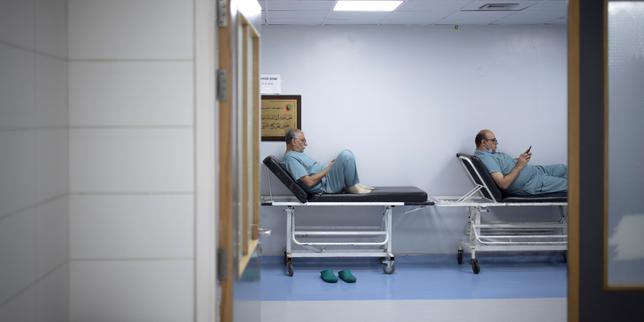
A missile strikes a few kilometers away, and the windows rattle in their frames. Nobody ducks anymore. In the hallways of the Secours Populaire Hospital—also known as the Najdeh Chaabiye Hospital in Nabatiyeh—the staff keeps moving. They don't look out the windows. They don't stop prepping syringes.
When you look at headlines about the conflict in southern Lebanon, you see casualty counts, drone strike coordinates, and geopolitical posturing. What you don't see is the quiet, grinding psychological collapse of the people expected to patch the victims together. For an alternative look, consider: this related article.
The emergency responders, nurses, and doctors in Nabatiyeh aren't robots. They live under the exact same threat of annihilation as the patients they treat. Yet, they're supposed to compartmentalize their own panic to save lives. It's a formula for deep, institutional trauma.
Understanding how these medical professionals handle extreme war trauma helps explain why the local healthcare system hasn't completely imploded yet. Similar analysis regarding this has been published by Al Jazeera.
The Mental Toll Nobody Documents
Most war reporting focuses on physical injuries, but the true crisis at Nabatiyeh is invisible. Dr. Mona Abu Zeid, the hospital director, has seen the shift firsthand. It isn't just about managing the shortage of blood bags or fixing shattered bones anymore. It's about looking at your colleagues and wondering if they're going to break down mid-surgery.
The staff works shifts that blur together for days. Many can't return home because the roads are death traps. They sleep on thin mattresses in offices or basement storage rooms.
[Trauma Cycle in War Zones]
Constant Shelling -> Adrenaline Spike -> Prolonged Stress -> Insomnia & Burnout -> Cognitive Fatigue
When doctors treat injured children who have lost entire families, the emotional weight sticks. They don't get debriefings or mental health days. They get a lukewarm cup of coffee and another incoming ambulance. This isn't sustainable.
When the Red Cross and Ambulances Lose Their Shield
International humanitarian law says hospitals and ambulances are off-limits. On paper, the medical emblem is supposed to protect you. In reality, that protection evaporated months ago.
Doctors and rescue workers are being killed in the line of duty. Dr. Ahmad Zreik, a physician in Nabatiyeh, recently recounted the loss of a colleague—an upbeat paramedic who left for a routine emergency call and was brought back in a body bag later that afternoon.
This reality destroys the mental safety net of medical teams:
- Vanishing trust: Paramedics no longer believe their flashing lights protect them.
- Calculated risks: Every single dispatch becomes a life-or-death decision before they even reach the patient.
- Patient hesitation: Families now fear calling an ambulance because the vehicle itself has become a magnet for strikes.
When those who save lives are targeted, the entire framework of medical ethics turns upside down. You are no longer just a doctor; you are a target.
Surviving on Less Than Bare Minimums
The Najdeh Chaabiye Hospital operates in a state of perpetual emergency. Decades of economic instability in Lebanon already left the public sector weak before the current escalation. Now, the facility relies heavily on donations from international groups like Médecins Sans Frontières (MSF) just to keep the lights on and the shelves stocked.
The daily math is brutal. Generators require diesel fuel that is increasingly expensive and hard to transport through active conflict zones. If the power fails, the ventilators stop. If the water supply gets cut off, sterilization fails. The medical teams face an uphill battle against logistical decay while handling mass casualties.
This isn't about lacking a specific fancy machine. It's about scrambling for standard antibiotics, basic gauze, and fuel to keep the surgical theater warm.
What Needs to Change Right Now
The current strategy of shipping emergency medical crates to southern Lebanon is a temporary fix for a permanent problem. If global health organizations want to keep these frontline hospitals functioning, the approach needs a massive overhaul.
First, medical aid must include direct, long-term funding for payroll. Local doctors and nurses are working for pennies due to currency inflation, all while risking their lives. Financial stability lets them secure safe shelter for their families, removing a massive layer of distraction and anxiety.
Second, international watchdogs must hold forces accountable for targeting medical transport. Statements of concern don't protect an ambulance on a rural road. Real diplomatic consequences for violating medical neutrality are required to restore any sense of safety for responders.
Finally, mental health support needs to be integrated directly into emergency aid packages. Sending trauma surgeons is vital, but sending teams trained to support the psychological wellbeing of the local staff is just as critical. If the caregivers collapse from PTSD, the hospital closes its doors, regardless of how many boxes of bandages are left in the storage room.