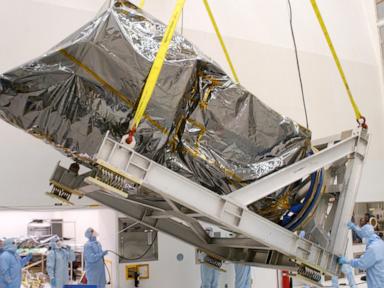
Twenty-two years is a lifetime in modern space exploration. Most hardware sent past our atmosphere breaks down, gets replaced, or simply runs out of fuel long before two decades pass. But the Neil Gehrels Swift Observatory defied the odds. Launched in 2004 with a modest two-year prime mission, this workhorse telescope spent more than twenty years hunting down the universe's most violent events. Now, its journey is officially over.
Swift made an uncontrolled re-entry into Earth's atmosphere over the northern part of Sumatra. According to data tracked by the U.S. Space Force and satellite specialists, the 1,450-kilogram, minibus-sized spacecraft plunged downward after an atmospheric descent accelerated by solar activity. While NASA expected most of the structure to burn up during the fiery plunge, the end of the Swift era leaves a massive hole in high-energy astrophysics. You might also find this similar coverage interesting: Why Voters Just Declared War On Ai Data Centers.
What Swift Actually Did for Astronomy
Before Swift arrived, studying gamma-ray bursts was a frustrating guessing game. These cosmic explosions—massive bursts of energy tied to collapsing massive stars or colliding neutron stars—flashed across the sky and vanished in seconds or minutes. Telescopes were simply too slow to catch them while they were happening.
Swift changed the entire playbook. It was built as a multiwavelength rapid-response machine. The moment a burst flashed in the cosmos, Swift's onboard instruments detected it, automatically pivoted within a minute, and beamed coordinates to observatories worldwide. As highlighted in latest articles by ZDNet, the results are widespread.
The numbers tell the story. During its operational lifetime, Swift recorded more than 2,000 gamma-ray bursts and tracked roughly 1,400 supernovae. Its data fueled thousands of scientific papers, transforming fleeting cosmic mysteries into deeply understood phenomena. Beyond deep-space explosions, it monitored active galactic nuclei, X-ray flares from aging stars, and even comets passing through our own solar system. In 2018, NASA renamed the observatory in honor of its first principal investigator, Neil Gehrels, who passed away a year prior.
The Failed Rescue and the Final Descent
Satellites don't come down overnight, and Swift's demise wasn't sudden. Recent solar activity expanded Earth's upper atmosphere, increasing atmospheric drag on satellites flying at low altitudes. Swift began shedding orbital height at an alarming rate.
What makes this ending particularly fascinating is that private industry tried to save it. A privately developed robotic servicing vehicle, Katalyst Space's LINK spacecraft, launched with hopes of executing a daring orbital rescue mission. The goal was to rendezvous with Swift and push it back into a stable orbit.
Unfortunately, the rescue failed. The LINK spacecraft suffered severe propulsion and attitude-control system issues, resulting in a chaotic spin and broken communications. The rescue ship itself re-entered Earth's atmosphere weeks ahead of Swift, sealing the telescope's fate. Swift made its final scientific observation on October 20, managed right up to the end by the dedicated operations team at Pennsylvania State University.
What Comes Next for High-Energy Astrophysics
The loss of Swift leaves astronomers scrambling. Fast-response astronomy relies on having eyes in the sky that can react instantly to transient events. NASA is currently examining how commercial space capabilities, existing hardware, and potential future missions can fill the gap.
Spacecraft come and go, but missions like Swift redefine how we see the universe. It proved that automated speed matters just as much as mirror size. As the remnants of the observatory scatter harmlessly over the Indonesian region, astronomy loses a legend, but the baseline of what we know about the violent universe is permanently higher.