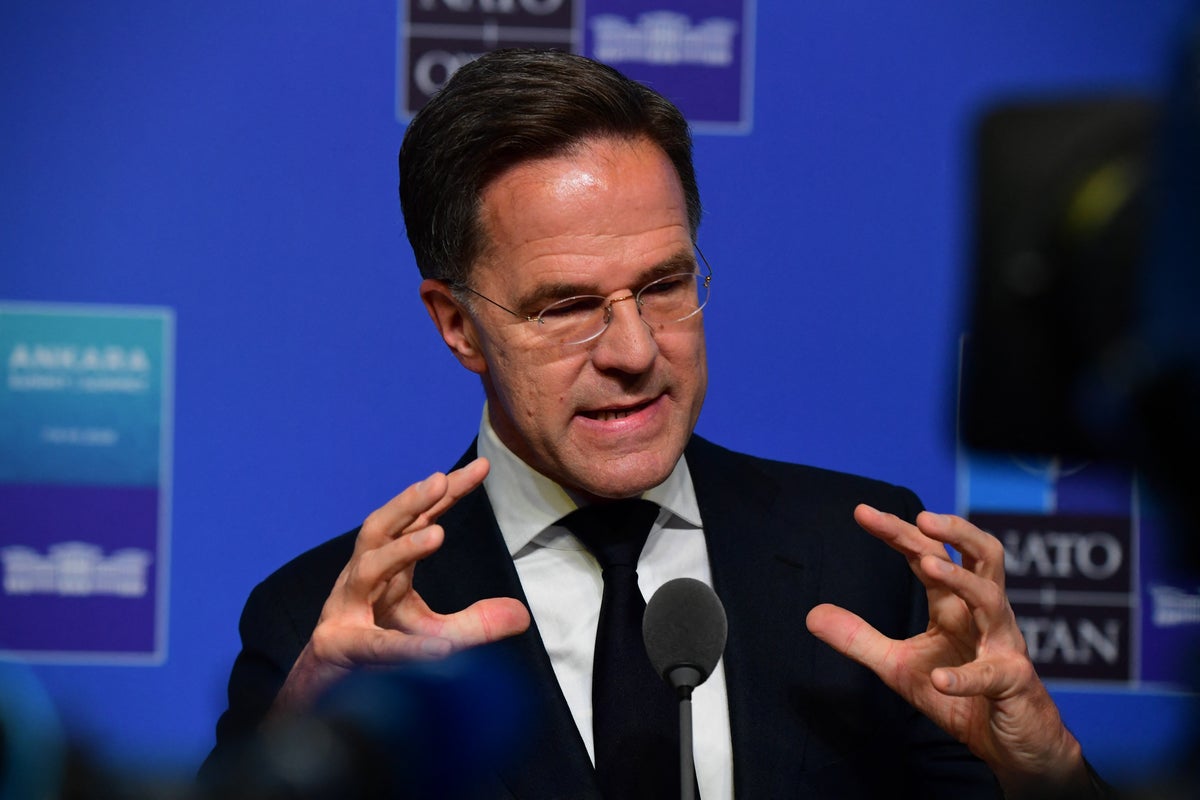
The Ankara summit was already turning into a circus before the first missile flew. Donald Trump rolled into Turkey on Wednesday, instantly declared the weeks-old June 17 ceasefire dead, and casually branded Iran's leadership as scum. Then came the overnight thunder. U.S. forces smashed more than 80 targets across Iran after a series of brazen drone and projectile attacks on commercial oil tankers.
While traditional diplomats in Brussels and Paris started sweating through their custom suits, the new NATO Secretary General did something unexpected. Mark Rutte didn't offer a lukewarm plea for de-escalation. He stood outside the summit gates and told the world that the American retaliation was completely justified.
When the Nato chief defends Trump’s strikes on Iran, he isn't just talking about military tactics. He's playing a high-stakes survival game for the entire Western alliance.
The Breaking Point in the Strait of Hormuz
You can't understand Rutte's blank-check endorsement without looking at what happened in the water 24 hours earlier. The mid-June Memorandum of Understanding (MoU) between Washington and Tehran was supposed to freeze hostilities. It didn't even last a full month.
On Tuesday, projectiles slammed into three separate merchant vessels navigating the narrow choke point of the Strait of Hormuz. We aren't talking about phantom targets. The vessels were real, heavily laden, and vital to global energy markets:
- The M/T Al Rekayyat, sailing under a Marshall Islands flag.
- The M/T Wedyan, a massive Saudi Arabian tanker.
- The M/T Cyprus Prosperity, operating under a Liberian flag.
Allowing rogue actors to drop drones on international shipping lines destroys the global economy. U.S. Central Command (CENTCOM) didn't hesitate. They launched a massive, coordinated offensive blitz targeting Iranian air defense networks, coastal radar sites, command facilities, and a fleet of over 60 Islamic Revolutionary Guard Corps (IRGC) fast-attack small boats.
Trump backed the play by instantly pulling the plug on temporary sanctions waivers that had let Tehran export a portion of its oil. The message was brutal and swift.
Why the NATO Chief Defends Trump’s Strikes on Iran
Rutte's immediate public backing wasn't a slip of the tongue. "When you have a ceasefire and Iran is basically violating the ceasefire, I think it is totally crucial that the U.S. forcefully react," Rutte told a scrum of reporters.
The new chief knows exactly who he's dealing with. Trump has spent months openly trashing NATO, threatening to pull the U.S. out entirely, and picking public fights with member states like Spain over defense budgets. European leaders were terrified that Trump would use the Ankara summit to rip up the alliance's Article 5 collective defense pledge.
By stepping up to validate the U.S. airstrikes, Rutte effectively handled Trump. He gave the American president the international validation he craves, framing the action not as a reckless escalation, but as a lawful enforcement of a broken agreement.
It worked. Behind closed doors just hours later, Trump completely flipped his script. He told European leaders he wanted to stay in the alliance, saying there was "a lot of love" and "a lot of unity" in the room. Rutte sacrificed a bit of traditional diplomatic neutrality to preserve the ultimate shield of European security.
The Transactional Reality of Modern Security
Let's be completely honest about how NATO operates now. The old days of relying on American goodwill without paying the tab are gone. Rutte explicitly acknowledged that Trump's anger over European defense spending is fair.
To seal the deal, European allies and Canada brought massive concessions to the Ankara table. They announced more than $50 billion in brand-new defense spending alongside an €70 billion military aid package for Ukraine through 2026. Rutte spin-doctored this as a massive political victory for Trump, keeping America anchored in Europe while the Middle East burns.
The Shadow of Tehran's Nuclear Program
There's a deeper terror driving this consensus. Iran's nuclear progress is accelerating while regional guardrails fall apart. Rutte noted that the main summit sessions would focus heavily on ensuring Tehran never achieves functional nuclear weapons capabilities. By supporting a conventional military hammer now, NATO hopes to deter Iran from taking the final step toward a nuclear warhead.
Rockets in Bahrain and Drones in Kuwait
The conflict didn't stop with the American airstrikes. Iran responded almost instantly, proving they aren't backed into a corner just yet. The IRGC deployed its own arsenal of missiles and drones, striking back at regional hubs where American forces are stationed.
According to local reports, Iranian forces targeted the U.S. Fifth Fleet base in Bahrain and the Ali Al Salem Air Base in Kuwait. Kuwaiti military officials stated they managed to intercept several incoming threats, but the message from Tehran was loud and clear. They also claimed to have downed an American MQ-9 Reaper drone over the Bushehr province to score a propaganda win.
This is no longer a localized proxy shadow war. We are looking at a direct, overt exchange of fire between state militaries across international borders.
What to Watch Right Now
Forget the vague political statements about peace. If you want to know where this crisis is actually heading, you need to monitor specific operational indicators over the next few days.
First, watch the maritime insurance premiums for the Persian Gulf. If commercial shipping companies decide the risk in the Strait of Hormuz is too high despite U.S. naval presence, oil supply lines will bottleneck, driving global energy prices through the roof.
Second, look at the diplomatic movements out of Pakistan. Quietly, behind the fiery rhetoric from Trump and the IRGC, Pakistani mediators are trying to salvage a baseline channel of communication between Washington and Tehran. If those back-channel talks fall apart entirely, expect the current cycle of tit-for-tat missile strikes to rapidly widen into a broader regional air war.
Keep your eyes on the actual troop deployments and naval movements in the Gulf, not just the talking heads in Ankara. The situation is moving fast, and the traditional rules of diplomatic engagement don't apply anymore.
You can check out the AFP coverage of the NATO summit to see Mark Rutte's live doorstep statement defending the actions.