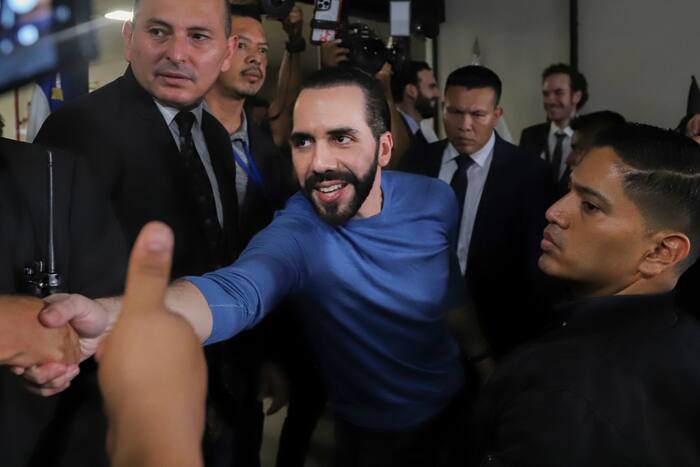
Power has a way of concentrating when the public feels desperate enough to hand it over. In El Salvador, that concentration is reaching its absolute zenith. President Nayib Bukele has officially filed his paperwork to seek an unprecedented third term, cementing a political trajectory that defies traditional constitutional boundaries while enjoying soaring approval ratings. Yet, Bukele isn't just focused on locking down his domestic political machine. His security forces are simultaneously fighting high-stakes battles thousands of miles away against violent gangs in Haiti.
It is a dual-front gamble. One front secures his legacy at home through unyielding authoritarian populism, while the other projects his brand of militarized crime-fighting onto the international stage. For a different perspective, see: this related article.
The Domestic Playbook and the Third-Term Push
To understand how Bukele reached this point, look at what happened after he took office in 2019. He dismantled traditional party dominance, sidelined the opposition, and pushed through a sweeping state of emergency in 2022 to crush El Salvador's notorious street gangs. That crackdown imprisoned tens of thousands of suspected gang members, transforming the country from the murder capital of the region into one with historically low homicide rates.
Ordinary citizens noticed the difference on the streets. When you can finally walk through your neighborhood without extortions or violence, constitutional technicalities start to matter a lot less. Further insight on the subject has been provided by Associated Press.
Critics and human rights organizations point out that this security came at a staggering cost. Courts were stacked with loyalists, term limits were effectively swept aside by legal adjustments and constitutional amendments, and civil liberties were suspended. Despite international outcry and warnings from human rights monitors about due process violations, Bukele’s popularity remains sky-high, hovering near ninety percent. With the political opposition rendered virtually irrelevant, his path to another term in the upcoming elections is practically unopposed by any viable electoral threat.
Expanding the Brand Into Haiti
While locking down his political future at home, Bukele has turned his gaze toward the Caribbean. Following the kidnapping of several Salvadoran aviation technicians serving with an international security mission in Haiti, Salvadoran forces deployed to the troubled island nation. What started as a targeted rescue mission quickly morphed into a broader, highly publicized military intervention.
Bukele has taken to social media to share footage of aerial attacks targeting gang hideouts in Port-au-Prince. Analysts note that this move is calculated to export his tough-guy image. By positioning himself as an international savior capable of fixing security crises that traditional multilateral organizations failed to solve, he elevates his status from a regional leader to a global icon of anti-gang warfare.
However, experts warn that these interventions lack a sustainable framework. Security forces can drop in, strike a target, and record dramatic footage, but establishing lasting institutional control requires tedious groundwork that quick-strike military raids cannot replace.
What Comes Next for the Bukele Model
The convergence of a third term and foreign military intervention shows a leader who thrives on high-stakes momentum. Bukele has convinced a massive majority of his population that exceptional threats require exceptional suspension of democratic norms.
As the election approaches, the bigger question isn't whether he will win—the political machinery is already built for a landslide victory. The real test is how long an entire nation can sustain governance under permanent emergency rule, and whether exported military operations can succeed where years of international intervention have repeatedly stalled. For now, Bukele is betting everything on the idea that results matter more than the rules.