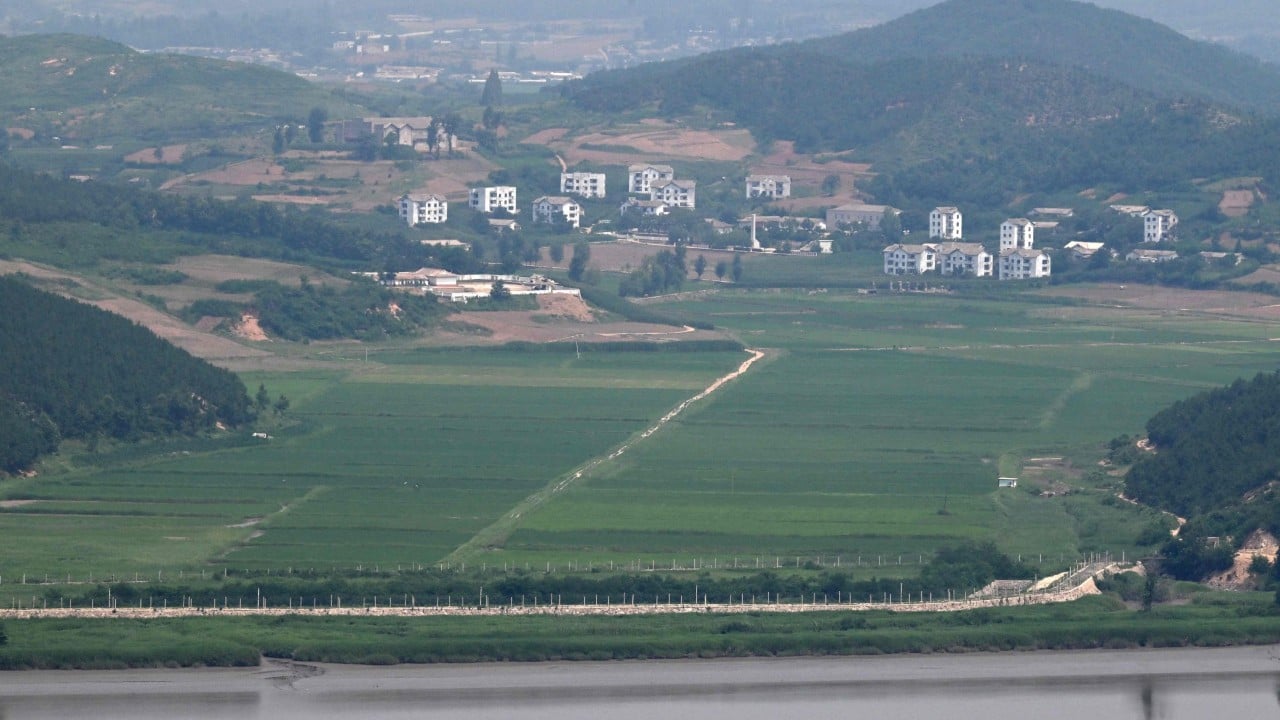
An allied reconnaissance drone nearly took fire from the very ground forces meant to protect it.
A routine joint military exercise near the heavily fortified inter-Korean border nearly turned catastrophic when South Korean front-line units mistook an American drone for an enemy incursion. Panic ensued, air defense systems locked on, and emergency evacuation messages went out to startled residents living near the Demilitarized Zone.
You would think integrated allied forces would have their communication locked down by now. Instead, a basic administrative slip-up almost caused friendly fire between Washington and Seoul.
What Actually Happened at the Border
The chaos kicked off on the afternoon of July 30, 2026, in Paju, Gyeonggi Province. U.S. Marines participating in the Korea Marine Exercise Program (KMEP) launched a small, fixed-wing reconnaissance drone—specifically a Lockheed Martin-manufactured "Stalker" series UAV—from the Story Shooting Range.
The drone was operating at roughly 700 feet to evaluate target accuracy for mortar practice. Sounds standard enough. But the South Korean Army's 1st Corps, which handles local front-line defense, had zero idea the flight was happening.
Spotting the unidentified aircraft via thermal observation devices (TOD), local commanders panicked. They assumed it was a North Korean infiltration. The military quickly activated "Durumi," an emergency air-defense posture normally reserved for active enemy drone incursions.
Anti-aircraft artillery was mobilized, helicopters were readied for an intercept, and text messages blared across civilian phones warning people to evacuate. For an hour and a half, the military tracked the target before cooler heads prevailed and the Joint Chiefs of Staff confirmed it belonged to the U.S. military. No shots were fired, but the margin for error was razor-thin.
The Blame Game: Who Dropped the Ball?
Whenever an alliance near-disaster happens, the finger-pointing starts immediately. This incident is no exception.
United States Forces Korea (USFK) maintains they did everything right. According to American officials, the training schedule and the specific drone flight plan were submitted to the South Korean side beforehand. USFK Commander Xavier Brunson expressed regret, noting that while the information was delivered to working-level personnel, it somehow evaporated before reaching higher-ups like the defense minister or the Joint Chiefs of Staff chairman.
South Korea's military establishment tells a different story. While acknowledging that a notice might have trickled into lower working channels, they argue that formal approval was never granted through proper operational channels like the Ground Operations Command.
Internal reporting failures within South Korea's armed forces are glaringly obvious here. When a tactical unit on the ground fails to pass vital allied operational data up the chain of command, you don't have a minor glitch. You have a systemic breakdown.
Why This Isn't Just a Isolated Mistake
If this were a one-off anomaly, people might shrug it off. But it is not.
Just a few months prior, a similar coordination breakdown occurred when South Korean command complained they were left in the dark about U.S. F-16 fighter training drills off the west coast. Back then, the U.S. insisted local teams had been notified, pointing right back at South Korea's sluggish internal dissemination.
When allied militaries train together dozens of times a year, basic coordination shouldn't feel like rocket science. If front-line troops are completely blind to allied assets flying right above a joint firing range, deterrence becomes a liability. The disconnect between South Korea's Army, Marine Corps, and the U.S. command structure creates dangerous blind spots.
Fixing the Alliance Pipeline
The Joint Chiefs of Staff scheduled immediate inspections of the 1st Corps to figure out exactly where the report got buried. That audit needs to go much deeper than a simple wrist-slap for a careless desk officer.
Clear fixes must happen immediately:
- Digitize and automate cross-branch flight clearances so field units see real-time allied tracking data instantly.
- Streamline the reporting chain between U.S. operational cells and South Korea's Ground Operations Command to remove bureaucratic bottlenecks.
- Mandate joint pre-briefings involving local Army units whenever drone assets operate near civilian control lines.
Communication failures in peacetime look like embarrassing headlines. In a crisis, they start wars. Both Washington and Seoul need to fix these structural loopholes before a future misunderstanding turns into actual bloodshed.
Military Nearly Shot Down U.S. Drone… Growing Possibility of a "Reporting Lapse"
This video provides an in-depth breakdown of the communication breakdown between South Korean front-line units and the U.S. military during the near-shootdown incident in Paju.