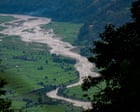
Thirty-four Australians are currently unaccounted for following a catastrophic flash flood along the Himalayan border between Nepal and Tibet. A wall of mud, rock, and water smashed through mountain villages on Wednesday, leaving a trail of destruction that caught trekkers and pilgrims completely off guard.
If you are tracking the crisis from home or trying to contact loved ones in the region, the official information coming out of Kathmandu is moving fast. At least 403 people are listed as missing, including 341 foreign nationals. Alongside the 34 missing Australians, authorities have confirmed that citizens from the United States, Britain, Canada, India, and several other nations are also unaccounted for.
What Triggered the Disaster
The disaster unfolded when an upstream landslide of rock and mud collapsed near the Tibetan border, creating a massive natural dam that abruptly gave way. This triggered a devastating wall of water that surged down into Nepal's Rasuwa district, obliterating roads, bridges, hydropower projects, and entire settlements along the Trishuli and Bhotekoshi rivers.
While monsoon season typically brings heavy rains to the region, this specific corridor is heavily trafficked this time of year. Pilgrims travel through the Rasuwa district toward Mount Kailash in Tibet, while trekkers head into remote high-altitude routes like Gosaikunda. The timing amplified the human toll, trapping dozens of local guides, police officers, and international travelers who were caught in valleys with steep, unscalable walls.
The Government and Consular Response
Australia's Department of Foreign Affairs and Trade (DFAT) has confirmed it is urgently working alongside local authorities and tour operators to verify the safety and welfare of citizens in the disaster zone. Foreign Minister Penny Wong described the scale of destruction as devastating, noting that consular teams stand ready to assist affected families.
Local rescue operations face severe hurdles. With nearly 40 kilometers of roads wiped out and at least 19 bridges washed away, emergency responders are struggling to reach cut-off areas. Helicopters are being deployed wherever weather permits, but heavy cloud cover and ongoing rain continue to hamper aerial reconnaissance. Nepal has appealed to neighboring India and China for expanded humanitarian coordination, while United Nations agencies mobilize emergency relief to handle the mounting casualties.
Practical Steps If You Need Support
If you have family members or traveling companions currently in Nepal and you cannot reach them, you need to take immediate action rather than waiting for news updates.
- Contact the Australian Department of Foreign Affairs and Trade 24-hour Consular Emergency Centre immediately at 1300 555 135 (within Australia) or +61 2 6261 3305 (from overseas) to register your missing relative.
- Check local tour group dashboards and emergency embassy advisories. Joint diplomatic statements issued by Australia, the UK, and European embassies urge everyone in the impact zone to follow local safety directions.
- Avoid relying solely on intermittent mobile network signals in the mountains, as local communication infrastructure across Rasuwa and surrounding districts remains heavily compromised.
Rescue crews are continuing recovery operations as local hospitals treat scores of injured survivors.
Catastrophic Nepal flood leaves Australians missing
This video provides an on-the-ground overview of the flash floods along the Nepal-Tibet border and details the ongoing emergency response.
http://googleusercontent.com/youtube_content/1