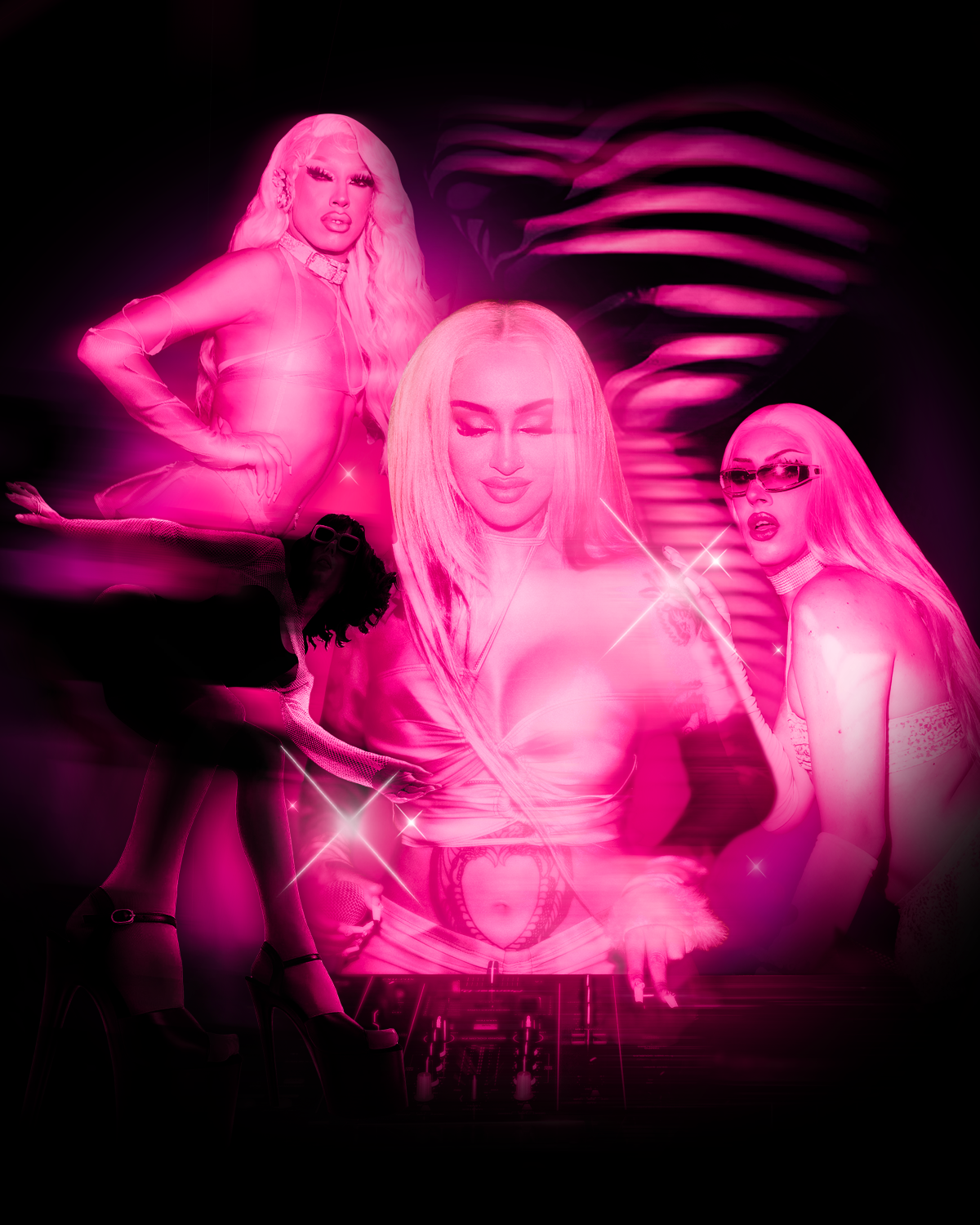
Commercial reggaeton fills stadiums now, but a decade ago, the genre was heavily restricted by machismo and uniform pop expectations. That changed when a coalition of queer artists, women, and underground misfits tore up the rulebook. Neoperreo didn't just tweak the dembow rhythm—it completely weaponized bedroom production, industrial noise, and hyper-feminized expression to carve out a permanent safe house for the displaced.
Ten years after terms like "neoperreo" first started circulating online, the movement's founders aren't watering down their sound for the charts. Figures like Tomasa del Real, DJ Lizz, and Ms Nina look back at a decade defined by rejection, fierce independence, and absolute refusal to conform. Read more on a related topic: this related article.
The Accidental Birth of an Underground Sound
Back in 2016, Valeria Cisternas—better known as Tomasa del Real—found herself on Red Bull Radio struggling to categorize her music. She wasn't making traditional Puerto Rican reggaeton, and she didn't want to appropriate a cultural lane that wasn't hers. When she tried explaining her style in English, she threw out a casual hybrid phrase: el nuevo perreo, shortened to neoperreo.
The name stuck because the sound matched the chaotic, interconnected energy of the early internet. Stripping away acoustic instruments entirely, producers built tracks on laptops using cold electronic textures, blown-out bass, and heavy Auto-Tune. Songs like Tomasa's "Bien y Mal" and Ms Nina's "Tu Sicaria" gave women and queer artists the lyrical microphone to flip the script, transforming themselves from passive objects in male-dominated tracks into active subjects of their own desire. Additional reporting by The Hollywood Reporter delves into comparable perspectives on this issue.
Reclaiming Space Under Conservative Shadows
The movement didn't emerge in a vacuum. Both Chile and Argentina carried the heavy political scars of recent military dictatorships—regimes that obsessed over social homogeneity and crushed any sign of cultural dissent. Growing up in those environments meant dealing with constant bullying and surveillance if you didn't look or act the part.
For artists like DJ Lizz (Elisa Espinoza), hyper-feminization became a deliberate armor. Drawing cues from drag culture and '80s voguing, she weaponized her appearance against street harassment.
"Men were the owners of women's sexuality, and now we're the owners of our sexuality," she notes.
When Cisternas and Espinoza started throwing the first #NeoPerreo parties in Santiago, the lines wrapped around city blocks. They brought together metalheads, goths, strippers, tattoo artists, and queer youth who had nowhere else to dance safely. It wasn't just about the music; it was a survival mechanism that created jobs, built careers, and forged a transnational digital network long before algorithmic playlists dictated musical trends.
Growing Pains and the Resistance to Sanitation
Naturally, polite society hated it. Critics dismissed the sound as abrasive and bizarre. Mainstream gatekeepers didn't know what to do with lyrics that blended explicit club culture with raw vulnerability. Yet that friction was precisely the point.
While mega-stars like Bad Bunny and Karol G have pushed reggaeton to historic heights—headlining massive festivals and Super Bowl stages—neoperreo refuses to chase that exact kind of commercial gloss. Tomasa del Real puts it plainly: it's too weird, and that is entirely the point.
The ethos has since bled into newer spaces, from alternative parties in New York like Trakata—founded by trans organizer Tani Shimizu to fundraise for top surgery while centering safe, phone-free queer dancing—to boundary-pushing artists across Latin America who reject clean aesthetics.
Ten years in, the movement's legacy isn't measured in radio hits or corporate sponsorships. It survives in the sticky, neon-lit basements where misfits finally feel at home.