You didn't burn the coal. You didn't pump millions of tons of carbon into the upper atmosphere. Yet your country is the one drowning.
That is the raw, unvarnished anger echoing through Kathmandu right now. Following the catastrophic August floods and Himalayan disasters that claimed over a thousand lives and left thousands more missing, Nepal's leadership has stopped asking for charity. They are demanding financial liability. Meanwhile, you can explore related developments here: Why The Ceuta Migrant Crisis Has Spain Boiling Over.
Global superpowers caused this mess. Now, Kathmandu wants them to pay the bill.
The Reality Behind the Himalayan Collapse
Most international coverage treats mountain floods as sudden acts of nature. They are not. They are manufactured tragedies. To explore the complete picture, we recommend the detailed report by Al Jazeera.
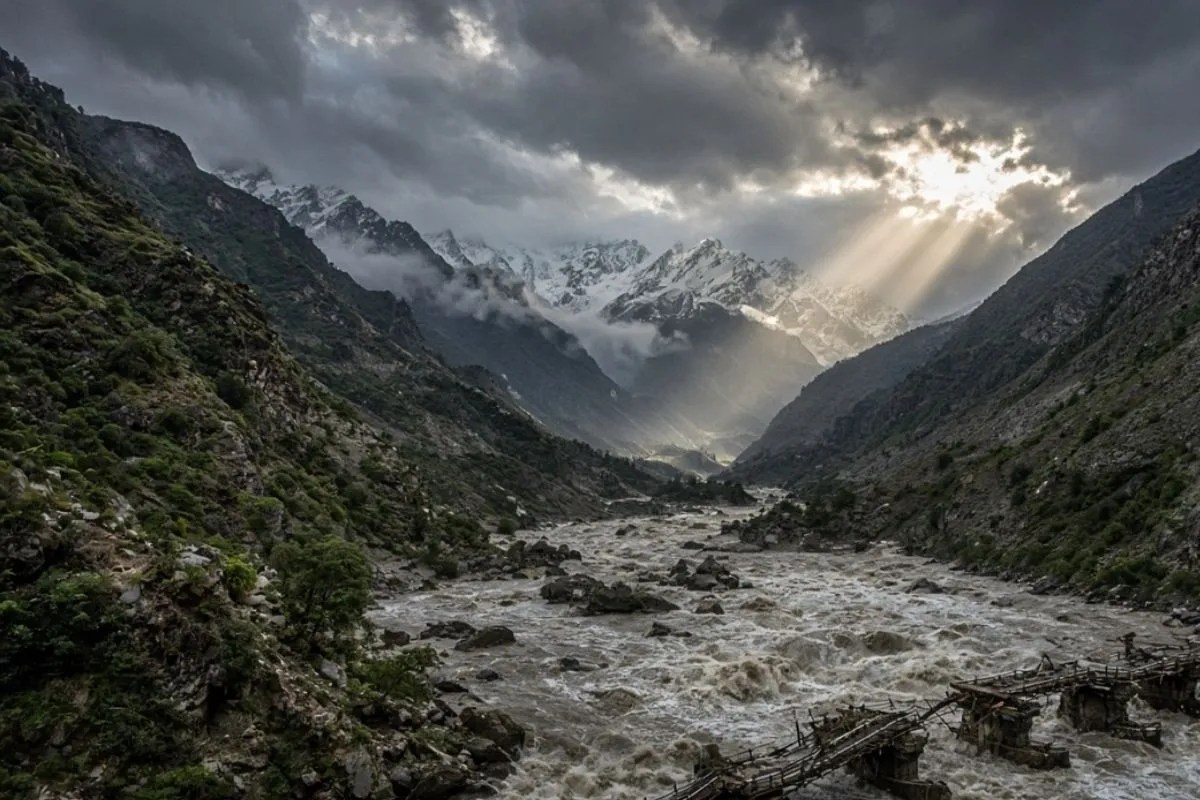
When glaciers melt at an accelerated, unnatural pace due to industrialized global heating, the structural integrity of the entire roof of the world collapses. In places like Rasuwa near the Bhote Koshi river, entire mountainsides didn't just slide—they disintegrated. Glacial lake outbursts and massive rock avalanches are the direct result of a warming planet driven by heavy industrial nations like the US, China, and India.
Nepal contributes virtually nothing to global carbon emissions. Zero point one percent. Let that sink in. Yet, the geographical layout of the Himalayas turns the country into ground zero for climate feedback loops.
Moving From Relief to Liability
For decades, wealthy nations handed out temporary aid packages after climate disasters. They sent blankets, bottled water, and a few million dollars in humanitarian relief, patting themselves on the back.
Nepal is rejecting that model entirely. Foreign Minister Shishir Khanal made it clear that basic disaster relief isn't enough anymore. When your entire infrastructure is wiped out, and reconstruction costs loom between four to five billion dollars, temporary aid is an insult.
It is time to look at climate change through the lens of tort law. If you break someone's window, you pay for the glass. If your industrial emissions melt a glacier that obliterates a downstream valley, you pay for the rebuild.
Prime Minister Balen Shah has pushed the debate straight to the international stage, demanding accountability under mechanisms like the UN Loss and Damage Fund. If wealthy nations refuse to step up, diplomatic pressure will only intensify at upcoming global summits.
The Human Cost Behind the Statistics
Numbers on a screen never tell the real story. When a flash flood sweeps away vehicles, homes, and entire communities in a matter of minutes, statistics fail.
The police records from the recent disaster are staggering: over 1,100 dead, thousands missing. In many cases, families couldn't even recover the bodies of their loved ones from the churning debris. Entire households resorted to making symbolic effigies out of straw and cloth just to perform traditional funeral rites because nothing was left to bury.
Imagine searching for your family through morgues and hospitals for weeks, only to find empty mud pits where your neighborhood used to stand. That is the daily reality for survivors in the valleys.
What Comes Next for Vulnerable Nations
Nepal's hardline stance changes the rules of engagement for climate politics. Small nations are no longer willing to play the role of silent victims in a global tragedy engineered by industrial giants.
If you are tracking international policy, watch the UN forums closely over the next year. Small island states and mountain nations are forming a unified bloc. They aren't asking for handouts. They are issuing invoices.
Look at your own consumption habits, push your local representatives to honor international climate finance commitments, and stop treating climate displacement as an accidental side effect of modern progress. It is a man-made crisis with a specific addressable bill, and the invoice is finally coming due.