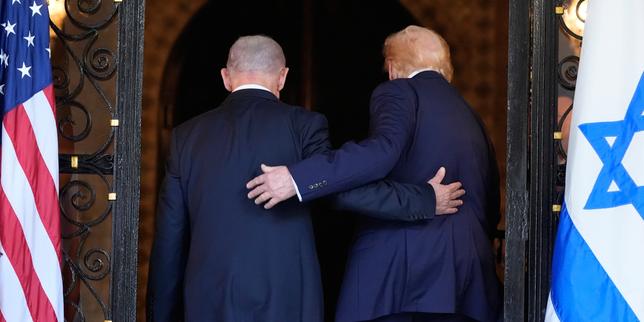
For decades, Benjamin Netanyahu had a signature political superpower. He was the guy who could manage Washington. No matter how bad things got, no matter how much the domestic crowd screamed, he could always claim he knew how to pull the levers of American power better than anyone else in Jerusalem. He played Congress like a violin. He outlasted American presidents.
Right now, that entire playbook is falling apart. Building on this topic, you can also read: What Most People Get Wrong About the 300 Billion Iran Reconstruction Fund.
The strategic shield Netanyahu built his political survival on has flipped. The news out of Washington and Tehran confirms it. The United States and Iran just brokered a major diplomatic deal, leaving Netanyahu isolated and furious. He immediately declared that the Israeli military would remain in Gaza, Lebanon, and Syria "as long as necessary." But that defiance cannot hide the fact that the White House just bypassed him completely.
The special relationship is no longer his ultimate asset. It's his heaviest political weight. Analysts at BBC News have also weighed in on this matter.
The Illusion of the Personal Relationship
A lot of political pundits thought the return of Donald Trump to the White House would give Netanyahu a blank check. It seemed logical. The first Trump term brought the Abraham Accords and the moving of the US Embassy to Jerusalem.
But that logic ignored how the "America First" doctrine actually operates. Trump is transactional. He wants deals, and he wants out of foreign entanglements. Lately, Washington has been leaning hard on Israel to scale back operations against Hezbollah in Lebanon. Trump even openly questioned Netanyahu's military judgment after strikes on Beirut threatened to derail delicate regional talks.
The real scenario unfolding right now shows a massive mismatch in priorities:
- Netanyahu's Goal: Absolute military victory across multiple fronts to keep his fragile right-wing coalition from collapsing.
- Washington's Goal: Regional stabilization, secure shipping lanes, and a diplomatic exit strategy that prevents a wider war.
When the US decided to move forward with Iran, it shattered Netanyahu's core narrative. For years, he told the Israeli public that only he could prevent a deal that normalized Tehran's regional influence. Now, the deal is done. Netanyahu looks less like the master diplomat and more like a leader stranded on a strategic island.
The Generational Cliff Inside the Alliance
The friction isn't just about the two men at the top. The underlying infrastructure of American support for Israel is shifting in ways that Netanyahu's old-school lobbying tactics can't fix.
Step inside Washington circles today, and you'll see a stark divide. The older generation of policymakers still treats funding and diplomatic cover for Israel as automatic. But younger staffers, voters, and even a rising faction of "America First" Republicans are asking hard questions about why billions of US tax dollars are tied up in an endless conflict with no clear endgame.
This isn't a progressive left phenomenon anymore. The skepticism has jumped the aisle. Younger conservative voters are increasingly isolationist. They don't want to police the Middle East, and they don't see how funding a multi-front war serves American domestic interests. Netanyahu's strategy relied on a unified, bipartisan Washington that simply doesn't exist anymore. By anchoring his political identity so firmly to American backing, he made himself vulnerable to the deep polarization of American politics.
Why the Defiance Strategy Fails at Home
Inside Israel, the realization that the Washington lifeline has frayed is causing serious panic. The Israeli public understands a fundamental truth that Netanyahu often tries to obscure: Israel cannot fight prolonged, multi-front wars without American logistics, intelligence, and ammunition resupply.
When Netanyahu publicly clashes with the White House, it doesn't look like strength to a large portion of the Israeli security establishment. It looks like reckless behavior. Former military and intelligence chiefs have repeatedly warned that burning bridges with Washington over short-term political gains is a strategic disaster.
The government's current stance—insisting that troops will stay indefinitely in Gaza, Lebanon, and Syria—is a direct attempt to project absolute control. But it plays terribly with an public that's exhausted by mobilization, an economy taking a severe beating, and families still waiting for the return of hostages. Netanyahu used to tell voters that his international stature kept Israel safe. Now, his international friction is actively keeping the country isolated.
The Cost of Strategic Stubbornness
This isn't just a rough patch in diplomacy. It's a fundamental restructuring of how the alliance works. For years, Washington gave Israel a shield at the United Nations and a bottomless supply of military hardware, expecting a degree of strategic coordination in return. Netanyahu took the shield and the weapons but discarded the coordination, betting that domestic American politics would always force the White House to cave.
He lost that bet. The US-Iran deal proves that Washington will act in its own self-interest when it decides a conflict has gone on too long.
So what happens next? If you are tracking this situation, look closely at the upcoming Israeli state budget fights and the growing pressure from the ultra-Orthodox parties in Netanyahu's coalition. They don't care about Washington; they care about domestic exemptions and funding. But without American economic stability and military predictability, Netanyahu cannot keep those domestic promises forever.
The next steps aren't about grand diplomatic speeches. If Israel wants to repair its most critical alliance, its leadership has to change how it defines victory.
First, Jerusalem needs to present a realistic "day after" plan for Gaza that doesn't involve permanent military occupation—something the White House has drawn a hard red line against. Second, the Israeli security cabinet must establish a clear regional containment strategy rather than chasing an elusive, absolute victory that its primary superpower ally no longer supports. The era of the blank check is officially over.


