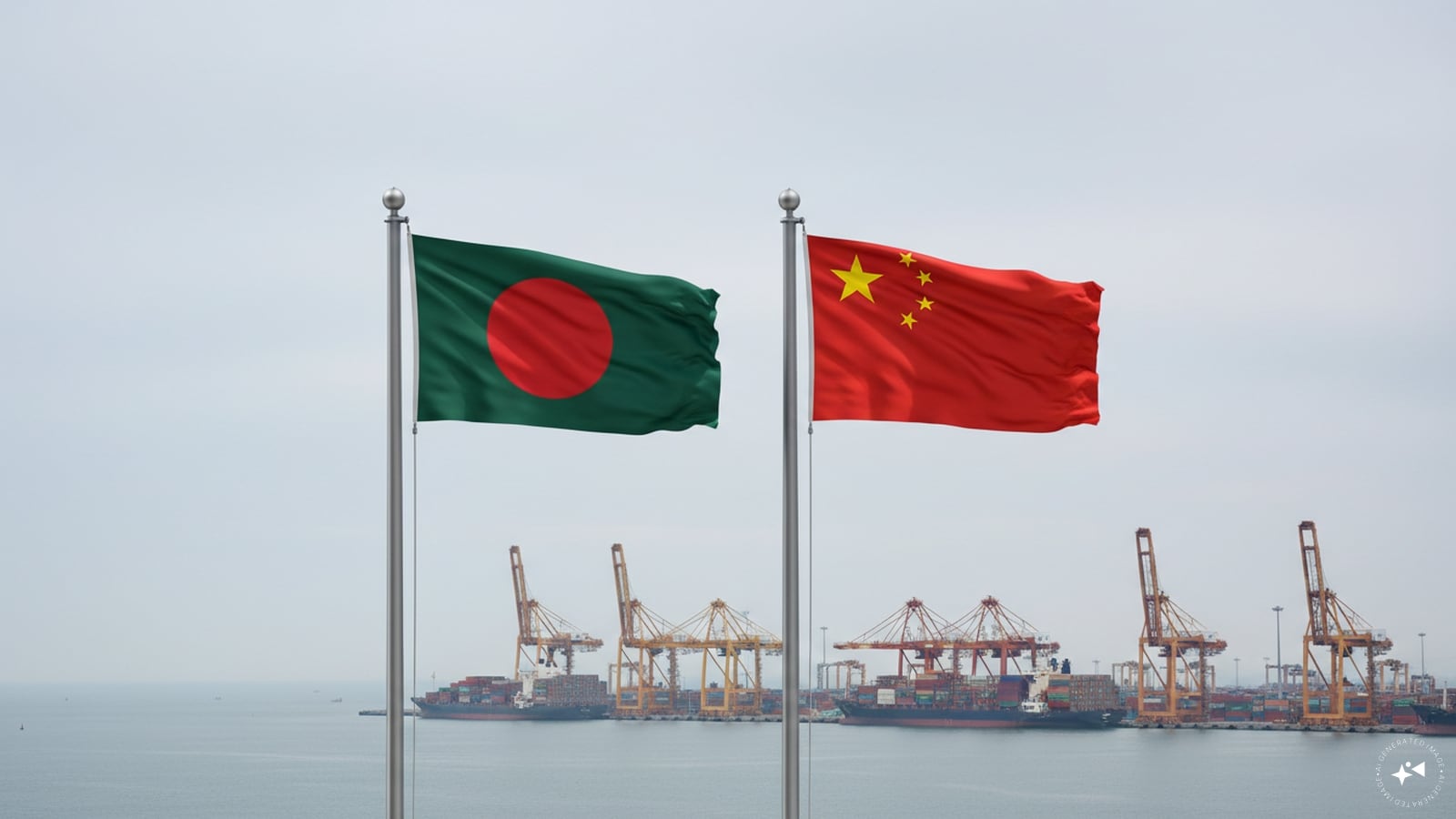
Money talks, and right now, Beijing is speaking loud and clear in Dhaka. Bangladesh just locked in a massive $335.78 million loan agreement with the Export-Import Bank of China to expand and modernize the crucial Mongla Port. If you're wondering why a shipping upgrade on the east bank of the Pasur River matters beyond local logistics, you have to look at the broader geopolitical map. This isn't just about moving cargo containers. It's a heavy-stakes financial move unfolding right near the Indian border.
Inside the Mongla Port Agreement
The numbers behind the deal tell a clear story of infrastructure ambition. The Economic Relations Division of Bangladesh's Ministry of Finance signed off on an RMB 2.404 billion loan package—roughly Tk 3,592.90 crore.
What does that money actually buy? The project focuses heavily on physical capacity. The Mongla Port Authority will build two brand-new container terminals, a dedicated container yard, a delivery yard, and an expanded cargo handling yard. Equipment is part of the package too, bringing in modern gantry cranes and specialized jetty machinery to dramatically lift throughput capacity.
The financing terms give Dhaka some breathing room. China's EXIM Bank structured the loan with a modest 2 percent interest rate spread across a 20-year repayment window, which includes a five-year grace period. For a developing economy trying to modernize its trade bottlenecks without instantly draining foreign reserves, terms like that look attractive on paper.
The Broader Shift in Regional Diplomacy
You can't separate this financial agreement from the shifting political currents in Dhaka. This deal follows closely on the heels of high-level diplomatic visits and a series of sharp strategic realignments. Just a year prior, the interim administration cancelled an Indian Economic Zone project slated for 110 acres of land near this exact same port region, citing missed deadlines and slow physical progress by the designated developer.
When you replace an Indian-backed economic zone with a Chinese-funded port expansion, eyebrows naturally raise across capitals in the region. New Delhi has long tracked Beijing’s expanding footprint across South Asia with deep caution. Strategic infrastructure projects located within striking distance of international borders carry weight that goes far beyond commercial utility.
What This Means for Trade and Regional Friction
Trade imbalances define Bangladesh's current economic reality. Government data shows massive import volumes from giants like China and India dwarf local exports, putting pressure on foreign exchange reserves and forcing leaders in Dhaka to diversify their infrastructural partners.
At the same time, friction points are piling up. Trade restrictions on agricultural goods, cotton exports, and differing border-post frameworks have kept diplomatic wires buzzing between New Delhi and Dhaka. By securing concessional loans from Beijing to build out secondary maritime gateways like Mongla—located roughly 80 kilometers west of the Indian border—Bangladesh is signaling a pragmatic, multi-directional foreign policy. They want investment wherever they can get it, regardless of where the geopolitical winds blow.
Infrastructure projects of this scale take years to fully realize, but the political message is instant. Keep an eye on how regional neighbors respond to these shifting alliances as construction breaks ground.