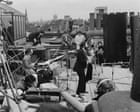
Standing on the roof of 3 Savile Row and watching tribute acts blast "Get Back" over Mayfair sounds like a dream gig for fans. It's also a planning nightmare.
As Westminster councillors prepare to weigh Apple Corps' seven-floor attraction plans at 3 Savile Row, the Beatles venue faces a proposed ban on live music on its rooftop terrace. Even though this exact roof hosted the band's legendary final public concert on January 30, 1969, modern municipal rules don't hand out nostalgia passes. If you expect tribute bands or open-air concerts up there when the doors open in 2027, you're setting yourself up for disappointment.
I've followed London's licensing battles for years, and honestly, this pushback surprises nobody who knows Mayfair. Savile Row isn't Camden or Shoreditch. It's a tight, historic pocket of bespoke tailors, quiet offices, and residential neighbors where council officers treat sound complaints like a five-alarm fire.
What's Actually on the Table at 3 Savile Row
Let's clear up a common mix-up right away. The 2027 project isn't a traditional concert hall with a stage on the chimney pots. Announced by Apple Corps in May 2026—with Sir Paul McCartney praising the plans and Ringo Starr calling it "like coming home"—the scheme turns the Grade II* listed Georgian townhouse into a seven-floor museum and visitor experience.
According to planning documents ahead of Westminster's Planning Sub-Committee vote on November 24, 2026, Apple Corps projects up to 900 weekday visits and 1,140 weekend visits, capping occupancy at 225 people inside at any given time. Visitors will explore exhibits, an interpretation of the Let It Be sessions, and access to the rooftop where John Lennon, Paul McCartney, George Harrison, and Ringo Starr played for roughly 42 minutes in 1969. There's also a planned basement café-bar slated to run until midnight seven nights a week, with a cap of 104 events per year.
Sounds reasonable on paper, right? Yet council officers have recommended strict conditions: no live music on the rooftop terrace, controls on amplified sound, and a two-metre-high acoustic barrier to keep noise down.
Why Nostalgia Doesn't Trump Noise Rules
Fans love the romance of the 1969 rooftop gig—the cold air, Ringo in Maureen's red raincoat, the lunch-hour crowd gathering below, and the police turning up over noise complaints. That history makes the building iconic. It doesn't make it a viable live venue today.
In planning law, a building's past doesn't automatically grant future rights. Changing a property's use, altering a listed roof, and getting permission for live open-air music are separate hurdles. Planning permission decides whether a use fits the area's character and amenity. A premises licence deals with entertainment, hours, and public nuisance. Even if councillors greenlight the museum and rooftop access, live rooftop gigs are a completely different beast.
Here's what usually trips up rooftop projects in central London:
- Sound travels further than people think. High up, bass and vocals carry across neighbouring roofs and into nearby windows without walls to absorb them. A two-metre acoustic barrier helps tame spillover, yet it's built to contain everyday visitor noise, not full PA systems.
- Listing constraints bite hard. Because 3 Savile Row is Grade II* listed, you can't just slap heavy soundproofing, towering baffles, or crowd-control rigging onto the structure without heritage approval.
- Crowds create friction. Savile Row runs on precision and quiet professionalism. Funneling hundreds of visitors a day—up to 1,140 on weekends—past tailors and offices already sparks scrutiny over queues, deliveries, and street congestion.
Planning Permission vs. Premises Licence: A Quick Reality Check
People often assume a council "yes" means everything in the brochure is locked in. That's rarely how it works in Westminster.
If the planning committee approves the scheme with a live-music restriction on the roof, staging live rooftop performances later would require fresh permissions or licensing variations—and face steep odds against noise and amenity objections. Even the proposed basement café-bar comes with guardrails, including an annual cap of 104 events (roughly two a week on average).
What does that mean for a visitor in 2027? You'll likely get to stand on the historic roof—using railings that date back to 1969, according to Apple Corps CEO Tom Greene—and soak in the view and the story. You probably won't be watching a live band play "Don't Let Me Down" into the London sky.
What This Means for Fans and Planners
If you're planning a Beatles trip to London around the 2027 opening or following the Beatles venue saga closely, keep your expectations grounded in reality rather than rock-and-roll myth. Heritage sites survive in busy districts by compromising, not by recreating a chaotic 1969 afternoon every weekend.
For anyone involved in cultural venues or urban development, the lesson is pretty blunt. Don't rely on fame to carry a noisy proposal through a conservative planning committee. Bring hard acoustic data, realistic crowd caps, and clear boundaries from day one.
Here's how to approach it smartly from here:
- Track the council vote and conditions. Watch Westminster's planning decision and read the exact noise and rooftop clauses rather than relying on headlines.
- Book early once tickets drop. With a 225-person capacity limit inside and heavy global interest—especially with Sam Mendes' four-film Beatles project slated for April 2028—rooftop time slots will likely sell out fast.
- Pair your visit with nearby landmarks. Walk over to Carnaby Street, check the blue plaque on the facade, or visit other London music spots so your trip doesn't hinge on one roof terrace.
Beatles Rooftop Concert Tribute
This video shows the original 1969 rooftop performance that makes the debate over live music at 3 Savile Row so meaningful to fans today.