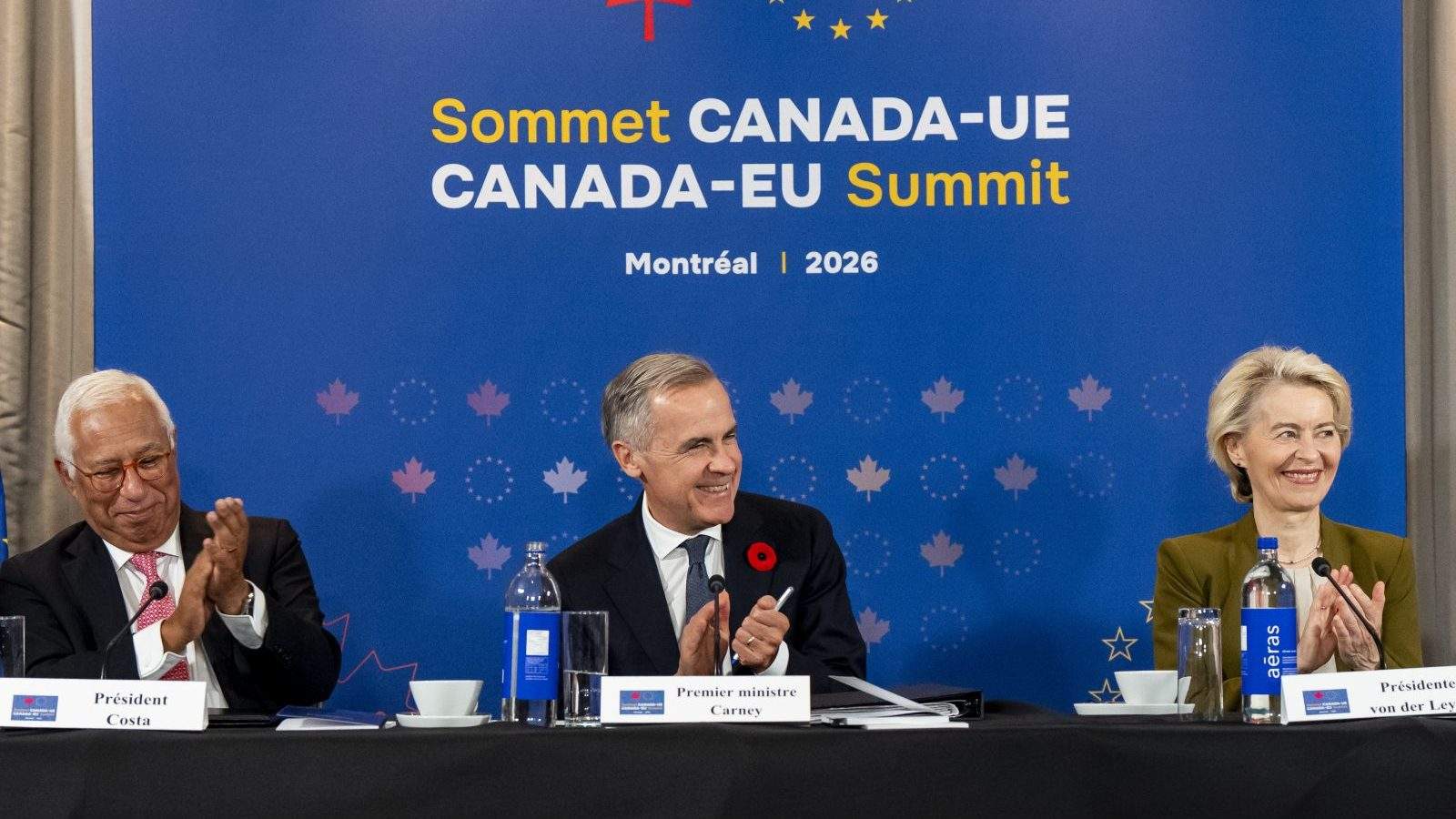
The map of global politics isn't just shifting; it's fracturing. When Canadian and European leaders step up to microphones in Montreal to talk about building a tight security and economic shield, they aren't just reciting diplomatic boilerplate. They are responding to a messy, volatile reality where old alliances feel increasingly fragile.
If you look past the standard press releases coming out of the recent Canada-EU Summit, you will find a hard-headed strategy. Both sides are trying to insulate their economies and supply chains from the whims of unpredictable superpowers. But can a middle power like Canada and a heavily bureaucratic bloc like the European Union genuinely pull off a meaningful partnership, or is this just another expensive handshake destined to gather digital dust? If you enjoyed this post, you should read: this related article.
What the Alliance for the Future Changes on the Ground
For years, the relationship between Ottawa and Brussels relied heavily on standard trade frameworks like CETA. Trade grew, sure—reaching roughly $178 billion in goods and services by 2025—but the underlying architecture remained traditional. Tariffs dropped, yet security, technology, and geopolitical threats evolved at a much faster pace than trade agreements could handle.
The newly minted Canada-EU Alliance for the Future changes the playbook by targeting sectors that actually dictate modern survival: defense hardware, critical minerals, artificial intelligence, and digital trade. For another angle on this story, refer to the latest update from The Washington Post.
Take defense procurement. Canada broke convention by becoming the first non-European country to join the EU’s Security Action for Europe initiative. That isn't just symbolic window dressing. It means real capital is moving. Montréal-based firms like Galvion are securing multimillion-dollar contracts to supply military gear to allied nations like Latvia, while other local manufacturers build specialized tactical radios.
When you tie North American industrial capacity directly into European defense pipelines, you stop relying solely on volatile domestic procurement cycles. You build an integrated defense micro-economy.
Securing the Critical Minerals Pipeline
You cannot talk about the future of tech or green energy without talking about critical minerals. China has spent decades dominating those supply chains, leaving Western democracies dangerously exposed.
The recent summit produced a concrete framework addressing this exact vulnerability. Canada signed a treaty framework with the European Investment Bank to unlock heavy-duty European financing for Canadian resource extraction and processing projects.
This is where the rubber meets the road. Mining and refining critical raw materials requires billions in upfront capital and years of regulatory clearance. By combining European investment power with Canada's vast geological deposits, both regions are building a self-sustaining loop. They want to ensure that the lithium, nickel, and cobalt powering the next generation of electric vehicles and defense systems never get held hostage by geopolitical extortion.
Digital Rules and the New Economic Reality
We are also seeing major updates to how data and digital goods cross the Atlantic. Canada and the EU formally concluded negotiations on a standalone Digital Trade Agreement.
Most people glaze over digital trade pacts, but they dictate everything from software compliance to cross-border data protection. By locking down binding commitments on digital commerce, both economies are pushing back against fragmented online rules and foreign tech surveillance.
Furthermore, Canada's integration into the European High-Performance Computing Joint Undertaking bridges supercomputing resources. This means Canadian AI researchers aren't locked out of Europe's massive technological ecosystem. They get direct access to shared computing infrastructure, speeding up innovation while keeping data security standards high.
The Skepticism Test
Of course, nobody should confuse optimism with guaranteed success. Both Ottawa and Brussels carry heavy bureaucratic baggage. European procurement rules are famously labyrinthine, and Canadian industrial projects often face staggering domestic environmental reviews and inter-provincial trade barriers.
Critics will point out that ambition on a summit stage often stalls out during implementation. There's also the challenge of public fatigue. When citizens are dealing with cost-of-living pressures at home, foreign policy declarations can feel disconnected from daily grocery bills.
Yet, leaders like Prime Minister Mark Carney and European Commission President Ursula von der Leyen are betting that voters care deeply about long-term stability and job security. When you fund massive industrial efforts—like a $2.5 billion push to scale up Canadian waterbomber production for domestic and European wildfire response—you aren't just playing geopolitics; you are protecting communities and creating thousands of high-paying manufacturing jobs.
What Comes Next for Businesses and Citizens
If you run a business or work in tech, manufacturing, or resources, this pivot demands attention. The traditional Atlantic barrier is shrinking.
- Audit your supply chains: Look at where your critical inputs or tech components originate. European investment funds will increasingly favor projects tied into this transatlantic corridor.
- Watch the digital compliance space: The new Digital Trade Agreement will change how software, cloud services, and digital platforms operate between Canadian and European markets. Get ahead of those regulatory frameworks now.
- Explore defense and aerospace funding: With Canada deeply embedded in European defense initiatives, suppliers in aerospace, cybersecurity, and hardware have an expanded playing field across European markets.
The world outside is getting colder and more protectionist. Building a bigger economic and security tent isn't a luxury anymore. It's the only way middle powers survive the storm.