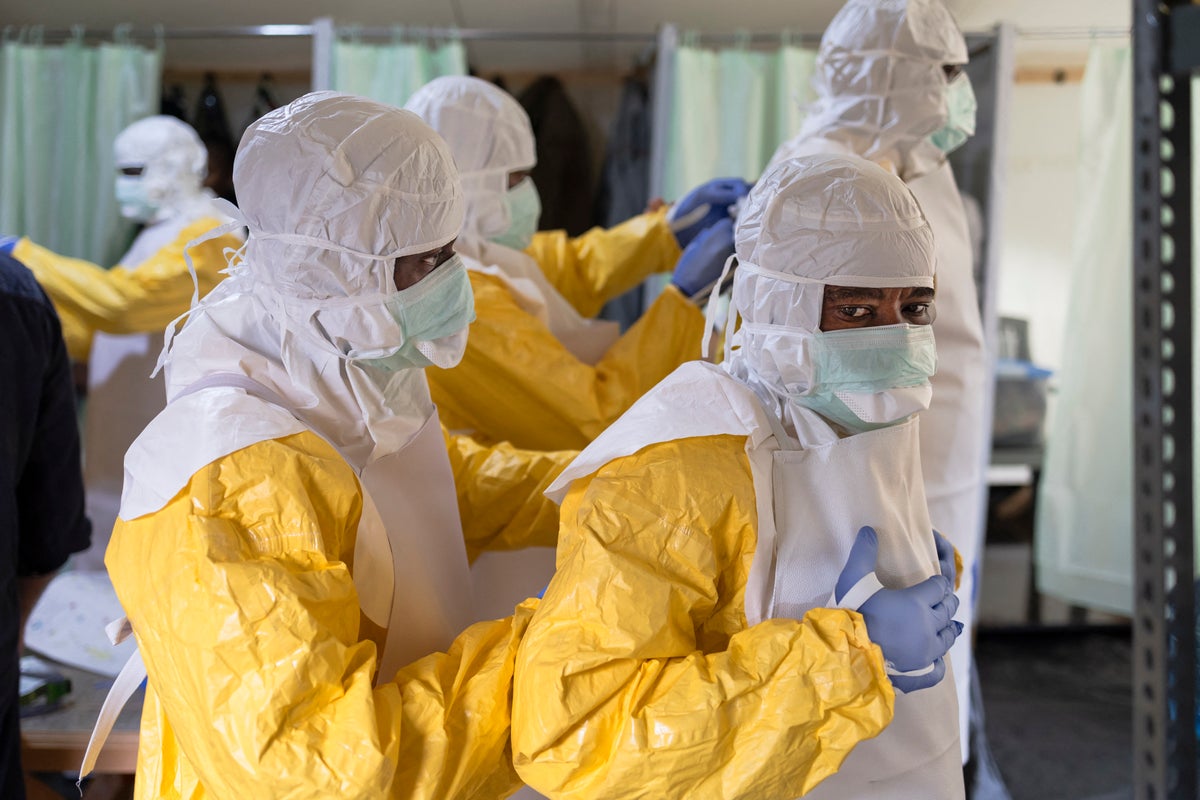
A US citizen tests positive for Ebola in the Democratic Republic of Congo, and suddenly the abstract threat of a distant virus turns into an immediate geopolitical emergency. The Centers for Disease Control and Prevention confirmed that an American humanitarian worker contracted the deadly virus in eastern Congo, setting off a scramble among federal agencies, international partners, and public health experts to figure out a treatment and evacuation plan.
This isn't an isolated mishap. It’s the second time an American has caught the virus during this specific wave, following the infection of a missionary doctor, Dr. Peter Stafford, who had to be flown to Germany under strict isolation protocols.
If you think this is just another routine outbreak that the World Health Organization will quietly contain, you're missing the terrifying shift in the data. The Africa Centres for Disease Control and Prevention recently warned that this has become the fastest-growing Ebola outbreak ever recorded on the continent. With over 1,830 confirmed cases and at least 648 deaths already logged, the situation on the ground is deteriorating rapidly. The risk to the general public back home in the United States might be labeled as low by federal agencies, but the underlying mechanics of this outbreak present a massive challenge to international health security.
The Bundibugyo Strain is a Totally Different Beast
When most people hear the word Ebola, they think of the Zaire strain. That’s the version of the virus that caused the devastating West Africa outbreak a decade ago and sparked widespread terror. Because the Zaire strain is the most common, global health organizations spent billions developing tools to fight it. We now have highly effective tools against Zaire, including Ervebo, an approved vaccine that saves lives, and targeted monoclonal antibody treatments like Inmazeb and Ebanga.
This outbreak breaks all those safety nets. The US citizen who just tested positive is infected with the Bundibugyo strain.
This variant is incredibly rare, marking only the third time in recorded history that it has caused a major outbreak since its discovery in Uganda back in 2007. The terrifying reality is simple. There is no approved vaccine for the Bundibugyo strain. There is no approved antiviral treatment. The medical toolkit we relied on during previous public health crises is completely useless here.
Treating a patient with the Bundibugyo strain means reverting to basic supportive care. Doctors can give IV fluids, balance electrolytes, maintain blood pressure, and treat secondary infections, but they can't directly kill the virus or stop its replication with a proven drug. The Biomedical Advanced Research and Development Authority is working around the clock to develop a specific monoclonal antibody therapy for Bundibugyo, but that effort is in its infancy. For the humanitarian workers currently risking their lives in the region, they're operating without a safety net.
Inside the Containment Crisis in Eastern Congo
The geography of this outbreak makes containment a logistical nightmare. The epicenter sits in Ituri province, specifically around urban centers like Bunia. Unlike rural outbreaks that naturally burn out because of isolated populations, this one is spreading through highly mobile, densely packed communities.
The first suspected case dates back to late April, when a local health worker showed symptoms and died in Bunia. Because the virus circulated for weeks without official detection, it gained a massive head start. By the time Congolese authorities declared a fresh outbreak on May 15, the virus had already crossed borders into neighboring Uganda.
Public health workers aren't just fighting biology; they're fighting an active war zone. Eastern Congo is plagued by ongoing conflicts and attacks by various armed rebel groups. When health clinics are attacked, contact tracing stops. When communities flee violence, they carry the virus with them to new villages. Health workers are laboring under extreme stress, often with little rest, minimal protective gear, and delayed pay.
When you combine a highly contagious virus, zero vaccine protection, active military conflict, and deep-seated community mistrust of outside authorities, you get a perfect storm. It explains why the death toll surpassed 600 so rapidly and why the transmission curve looks so vertical.
The Geopolitical Mess of Medical Evacuations
When an American citizen tests positive for a high-consequence pathogen like Ebola abroad, the logistics of getting them out safely are incredibly complex. You can't just put an Ebola patient on a commercial flight or a standard medical transport plane. They require specialized Aeromedical Biological Containment System units, which are essentially negative-pressure plastic tents built inside military transport aircraft to keep the virus from infecting the flight crew.
The White House tried to prepare for this exact scenario by setting up a dedicated isolation and treatment facility in Kenya. The goal was to transport exposed or infected Americans there rather than flying them all the way back to the Western hemisphere.
That plan blew up in their faces. A Kenyan court issued an order suspending the project, leaving US officials without a regional hub to manage sick expatriates.
Without the Kenya facility, the US government had to rely on European allies. When Dr. Peter Stafford tested positive after performing a surgical procedure at Nyankunde Hospital, he was evacuated to Berlin, Germany. He spent weeks in a specialized isolation ward before recovering and returning to the US. His family, including his wife and four young children, had to be quarantined and monitored separately.
The latest US citizen to test positive leaves officials scrambling yet again. The CDC and the State Department are working with the worker's humanitarian employer to coordinate another complex evacuation. Every hour of delay increases the risk to the patient and complicates the tracking of their close contacts on the ground. Six other Americans who were exposed alongside the latest case are also being monitored and moved out of the zone, showing just how deeply embedded American aid workers are in this crisis.
What This Means for Domestic Biosecurity
The threat isn't confined to Central Africa. Because the Bundibugyo strain has a long incubation period that can last up to 21 days, an exposed individual can easily board an international flight while feeling perfectly healthy, bypassing basic symptom checks at foreign airports.
To prevent the virus from quietly slipping into the country, federal authorities invoked dramatic public health powers. The CDC issued a 30-day order under Title 42, suspending the entry of specific foreign nationals who have traveled through the Democratic Republic of Congo, Uganda, or South Sudan.
For American citizens and permanent residents returning from those zones, travel is no longer simple. They are being funneled through specific major airports equipped for enhanced health screenings:
- Washington Dulles International Airport (IAD)
- Hartsfield-Jackson Atlanta International Airport (ATL)
- George Bush Intercontinental Airport (IAH)
Upon arrival, these travelers face a rigid protocol. CDC personnel escort them to isolated screening areas, check temperatures with non-contact thermometers, review detailed questionnaires about potential exposures, and look for physical signs of illness. Even if they don't show symptoms, they aren't off the hook. Travelers are automatically enrolled in a mandatory 21-day text monitoring program, where they must report their health status daily to local health departments.
Some infectious disease experts argue that travel bans and aggressive border restrictions can backfire by isolating affected nations and discouraging transparent reporting. However, given the lack of vaccines or targeted treatments for this particular strain, federal officials are choosing maximum caution to protect the domestic healthcare system from an unmanageable introduction.
The Hard Truth About Public Health Preparedness
This crisis exposes massive structural flaws in global health infrastructure. Tom Frieden, the former head of the CDC who led the agency through the massive 2014 West Africa Ebola response, has voiced deep concerns about our current capacity to handle emergencies like this. He warned that the CDC has been hollowed out by budget cuts and political battles, leaving it short-staffed and slow to respond to rapidly evolving threats.
When the West Africa outbreak was first caught a decade ago, it started with roughly 40 known cases before exploding into a disaster that claimed more than 11,300 lives. This current Bundibugyo outbreak started with hundreds of hidden cases before anyone even realized what strain they were dealing with.
The White House recently requested $1.4 billion in supplemental funding from Congress to help fund the response in Congo, Uganda, and surrounding regions. That money is desperately needed to build field laboratories, buy personal protective equipment, and fund the clinical trials that researchers just launched in the region. But funding requests take time to clear a divided legislature, and viruses don't wait for congressional votes.
Next Steps for Humanitarian Organizations and International Travelers
If you manage an international aid group, operate a medical mission, or plan essential travel to Central Africa, you cannot afford to rely on outdated safety manuals. The emergence of the Bundibugyo strain requires an immediate overhaul of your operational protocols.
First, enforce strict universal precautions during all clinical procedures. Dr. Stafford was an experienced physician who adhered to international standards, yet he was still exposed during a routine surgical operation. Assume that every patient presenting with a fever in the affected provinces is a potential Ebola case until proven otherwise. Upgrade personal protective equipment requirements for all staff, regardless of whether they work directly in an isolation ward.
Second, audit your evacuation insurance and logistical partnerships immediately. Do not assume the US government will instantly fly an aircraft to pick up an infected employee. You must have pre-arranged agreements with specialized medical transport companies that possess negative-pressure containment capabilities. Know exactly which European or domestic hospitals are capable of accepting a Bundibugyo patient, and confirm your internal protocols for tracking and isolating contacts within your organization the moment an exposure occurs.
Monitor the CDC's travel notices daily. The list of designated airports and entry restrictions can change with zero notice as the geographic footprint of the virus evolves. If your staff must return to the United States, ensure they are routed correctly through IAD, ATL, or IAH to avoid getting stuck at transit hubs, and prepare your domestic teams to support them through the mandatory 21-day post-arrival monitoring period. The window to prepare for a wider spread is closing fast, and passive observation is no longer an option.
For a deeper dive into how public health agencies track and manage high-consequence pathogens across borders, you can watch this detailed CDC screening overview which breaks down the exact logistics involved in managing international virus transmission.


