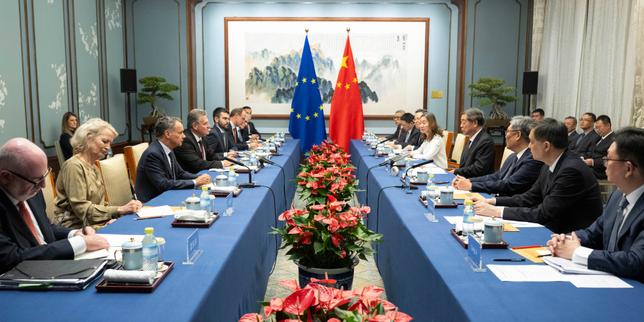
Bruxelles and Beijing just patched together another fragile arrangement to keep a full-scale trade war at bay. On Friday, October 9, 2026, the European Union and China reached a tentative understanding aimed at reining in ballooning vehicle exports, focusing tightly on hybrid models. If you think this agreement marks the end of the automotive showdown between the world's largest trading blocs, you are kidding yourself.
The core issue driving this conflict hasn't vanished. Europe is staring down an enormous trade deficit with Beijing, while Chinese manufacturers continue flooding international corridors with aggressively priced vehicles. Tariffs on purely battery-powered electric vehicles, implemented back in late 2024, pushed Chinese giants like BYD and Geely to pivot heavily toward plug-in hybrids. Those hybrids bypassed heavy duties, capturing significant market share across member states before regulators could blink.
Why the Latest Accord is Built on Quicksand
Trade negotiations between Brussels and Beijing operate on a loop of temporary truces and retaliatory threats. When the European Commission hit pure electric imports with compensatory tariffs ranging up to 35% or more depending on the brand, automakers simply adapted. They shifted their export strategies toward plug-in hybrid electric vehicles to dodge the financial penalty.
That loophole fueled explosive growth for brands that were barely visible in European capitals a few years ago. By the time regulators noticed hybrid registrations surging, the damage to domestic legacy automakers was already underway. This latest October 2026 agreement attempts to cap or moderate those specific hybrid flows, but it treats symptoms instead of structural realities.
You cannot out-negotiate an industrial overcapacity crisis with gentlemen's agreements. China produces far more vehicles than its domestic market can comfortably absorb. Exporting that surplus remains an economic necessity for Beijing, making any voluntary export restraint agreement fundamentally unstable over the long haul.
The Local Production Pivot
Chinese automakers aren't just waiting around for Brussels to lower taxes. Their playbook has evolved past simple direct exporting. Instead of shipping fully assembled cars across oceans to face mounting customs hurdles, major players are actively setting up manufacturing footprints directly inside European borders.
Building factories on European soil lets these companies sidestep import tariffs entirely while anchoring themselves securely within the local economy. When a Chinese brand manufactures vehicles inside the European Union, it benefits from local supply chains and evades the trade barriers designed to protect domestic brands.
This shift creates a strange reality for European policymakers. They wanted to protect local manufacturing jobs and prevent the continent from becoming a hollowed-out assembly hub. Yet, welcoming Chinese-owned factories onto European land risks turning domestic manufacturing centers into outposts for foreign automotive giants.
What Traditional Carmakers Get Wrong
Legacy European automotive executives keep lobbying for stricter border controls and higher tariffs as if protectionism is a permanent shield. It isn't. High tariffs buy time, but they don't buy competitiveness.
While established European brands spend their energy navigating compliance and lobbying for regulatory buffers, Chinese competitors have mastered software integration, battery supply chain economics, and rapid iteration cycles. Slapping a tariff on an affordable imported vehicle might artificially prop up local pricing for a few quarters, but it leaves European buyers paying higher prices for older technology.
If you're running a traditional car company right now, relying on political intervention to save your market share is a losing bet. The cost structures of Asian competitors are built on efficiencies that local legacy operations cannot match through taxation alone.
The Real Impact on Buyers
Consumers bear the direct cost of this diplomatic dance. Every time Brussels introduces a new layer of tariffs or a restricted quota system, retail prices tick upward. The affordable, well-equipped plug-in hybrids that started capturing consumer attention in major European markets are getting more expensive or harder to find.
Governments claim these measures protect jobs, but they also delay the broader transition by keeping greener options artificially out of reach for average households. When you price out practical low-emission choices, adoption rates stall.
This fragile compromise signed in October won't prevent the next escalation. Beijing needs export markets to absorb its manufacturing output, and Europe needs to protect its industrial base from structural collapse. Until European automakers drastically overhaul their production costs and software capabilities, no trade treaty from Brussels will stop the shift reshaping global mobility.