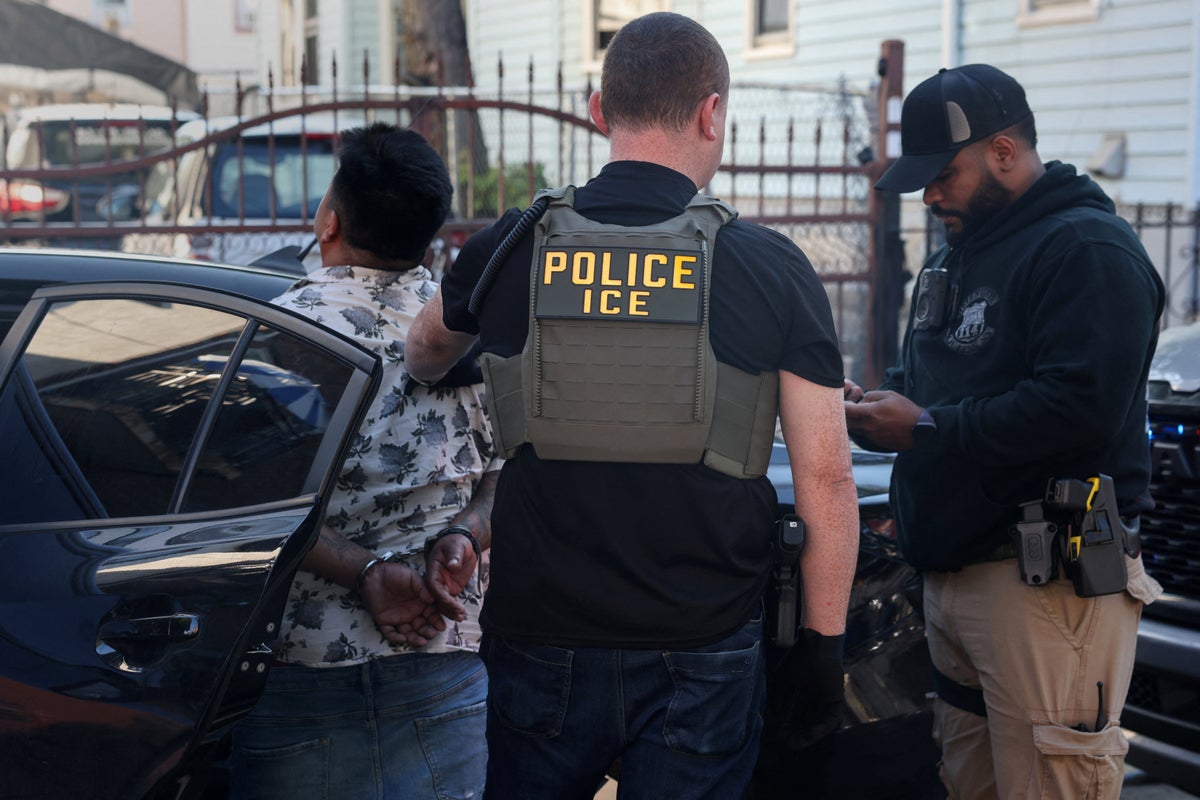
When civil rights groups look at an upcoming election, they expect typical administrative headaches—long lines, machine glitches, or registration friction. They don't usually expect to square off in federal court over armed immigration officers standing near the ballot box. But that's exactly where American politics landed when a coalition filed a sweeping federal lawsuit to keep Immigration and Customs Enforcement agents far away from voting sites.
The legal battle highlights a raw nerve in modern American democracy. Can federal law enforcement officers show up at voting locations under the guise of serving warrants or handling public safety threats? Or does their very presence cross a bright legal line into voter intimidation and suppression?
The Core of the Legal Challenge
Filed in federal district court in Washington, D.C., the lawsuit targets the Department of Homeland Security, DHS Secretary Markwayne Mullin, ICE, and acting agency head David Venturella. The plaintiffs—including the League of United Latin American Citizens (LULAC), Common Cause, UnidosUS, and the City and County of Denver—aren't waiting to see if warnings materialize. They want a proactive judicial block.
At the center of their argument is a Reconstruction-era statute: 18 U.S.C. § 592. Enacted back in 1874, the law explicitly bans armed federal troops or officers from being stationed at any place where an election is held, with a very narrow exception for repelling armed enemies of the United States.
The administration's shifting stance triggered the alarm bells. Earlier, officials suggested armed federal agents wouldn't target polling sites. Then, Department of Homeland Security leadership left the door wide open, asserting that agents could still enter polling locations to serve active warrants or respond to specific public safety threats.
For voting rights advocates, that warrant caveat is a loophole big enough to drive an armored vehicle through. If an agent executes a warrant at a busy precinct on a Tuesday in November, nobody standing in line waiting to vote can tell the difference between routine enforcement and deliberate voter suppression.
Why Local Leaders and Activists Are Fighting Back
Local municipalities like Denver joined the lawsuit because they view federal posture as a direct threat to community trust. Denver Mayor Mike Johnston didn't mince words, calling the potential stationing of agents an intimidation tactic designed to scare people away from exercising their constitutional rights.
Other civic leaders point to historical precedent and recent flashpoints. Incidents over the summer involving federal enforcement actions near voting or registration spaces in places like San Antonio, Texas, and Syracuse, New York, made local officials deeply uneasy. When federal power brushes up against local election administration, the friction creates immediate chaos for poll workers and voters alike.
Virginia Kase Solomón of Common Cause argued that no citizen should have to walk past armed federal personnel just to cast a ballot. Meanwhile, UnidosUS President Janet Murguía framed it bluntly as a strategy meant to chill turnout among Hispanic and immigrant communities by raising the specter of interrogation or detention.
What Happens Next on the Ground
With mail-in voting already underway in select states and early voting right around the corner, the clock is ticking for the courts to issue an injunction. The administration maintains that ICE conducts targeted, intelligence-driven operations and has no intention of running general patrols at polling booths. Yet, the refusal of officials to issue a total, unconditional ban on precinct-adjacent enforcement keeps the tension high.
If you're tracking how administrative policy impacts your community this season, keep an eye on local election office updates and independent legal filings. Check your regional election commission portal for verified guidelines on who is permitted inside or near voting sites, and report any suspicious disruptions immediately to local poll workers or nonpartisan legal protection hotlines.
The courtroom outcome will determine whether federal law enforcement can maintain a foothold near voting booths or if the 1874 statute will hold firm against modern political crosswinds.