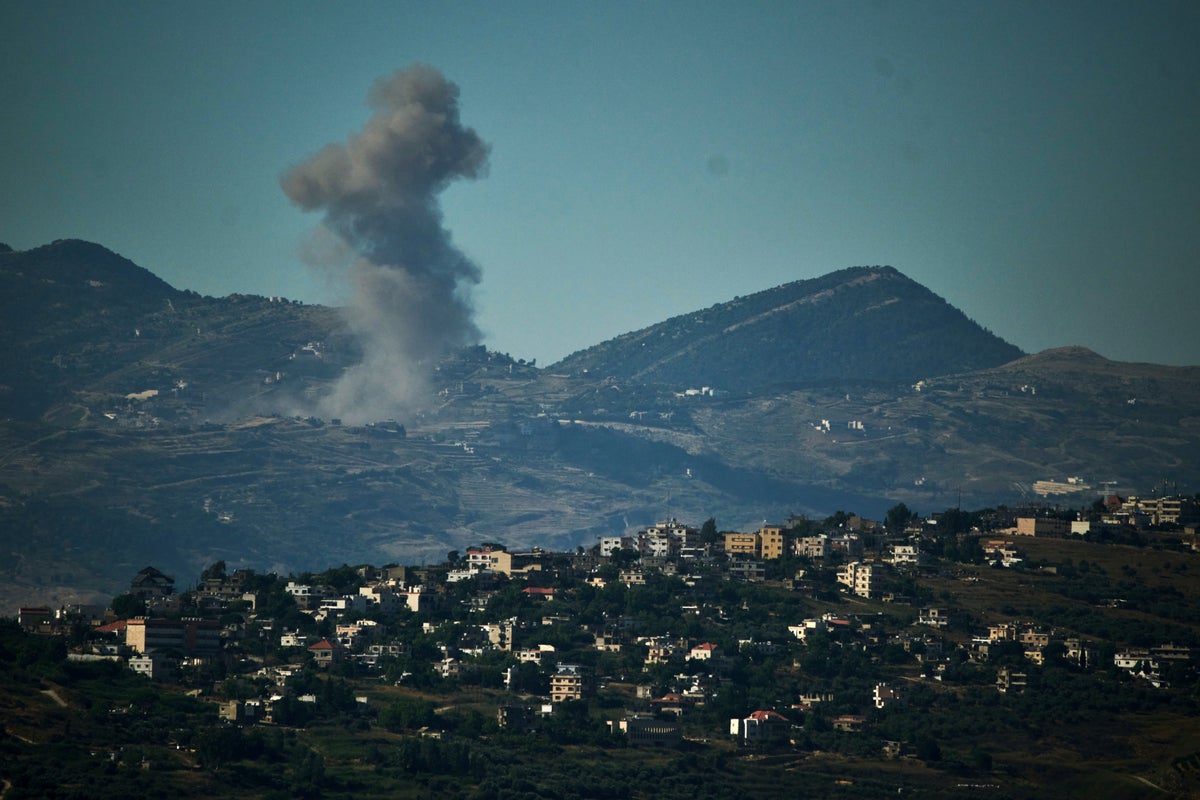
Paper peace doesn't stop real bullets. Just hours after Washington and Tehran boasted about a major diplomatic breakthrough, southern Lebanon is back in flames.
The ink was barely dry on the interim US-Iran agreement when Israeli airstrikes hammered Nabatiyeh and nearby villages. At least seven people died on Saturday morning. Two of them were children. Rescue teams are frantically clawing through concrete rubble to find survivors trapped underneath. This isn't just a localized skirmish. It's a direct threat to the fragile agreement meant to halt a broader Middle East war.
If you thought a deal signed by major world powers would automatically bring quiet to the border, you don't understand the realities on the ground. The reality is messy. It's violent. Worst of all, the two groups doing the actual killing weren't even invited to sign the peace treaty.
The Flawed Logic of Remote Control Diplomacy
The diplomatic framework sounds great on paper. Signed digitally earlier this week, the interim memorandum of understanding between the Trump administration and Iran achieved some immediate goals. It reopened the critical Strait of Hormuz. That closure had previously choked off global energy markets and sent oil prices spiking. The deal also promised to unfreeze massive Iranian assets and lift blockades on Iranian ports in exchange for a pause in nuclear developments and regional hostilities.
But Washington and Tehran made a fatal assumption. They assumed they could control their respective allies by proxy.
Neither Israel nor Hezbollah signed this deal. Why does that matter? Because both sides see this conflict as existential. They don't take orders from overseas digital signatures.
Netanyahu Refuses to Move
Israeli Prime Minister Benjamin Netanyahu didn't wait long to make his position clear. His office stayed silent on the official ceasefire announcements, but his actions spoke loudly. On Friday, Netanyahu posted on social media that Israeli forces had pounded 150 Hezbollah targets on his direct orders.
The official Israeli military stance remains unyielding. Military spokesperson Brig. Gen. Effie Defrin stated that Israeli troops are operating in a forward defense zone in southern Lebanon. They have no plans to leave. Netanyahu knows that pulling out now looks like an absolute failure to his domestic critics, who already slam the US-Iran deal as a dangerous concession that strengthens armed groups near Israel's borders.
Hezbollah Demands a Total Withdrawal
On the other side, Hezbollah isn't backing down an inch. Over fifty projectiles flew from southern Lebanon into Israeli positions overnight. The group claims these attacks target invading forces.
For Hezbollah, any ceasefire that leaves Israeli soldiers occupying Lebanese territory is a non-starter. They refuse to halt rocket fire unless Israel commits to a total withdrawal. Iran backs this stance publicly, but the actual fighters in the south are running their own operations based on immediate survival and regional pride.
Tragic Realities on the Ground in Southern Lebanon
While politicians argue about diplomatic wording, civilians pay the price. The violence on Friday alone killed at least 47 people in Lebanon and four Israeli soldiers. Saturday brought more horror.
In the village of Barish, an Israeli strike wiped out an entire family. Parents and their two children died instantly inside their home. In Arab Salim, rescue workers pulled another body from a collapsed structure. Drone strikes in Doueir and Kfar Rumman claimed the lives of a motorcyclist and a Lebanese army soldier.
The coastal city of Tyre offers a grim window into the local mindset. Israeli jets regularly fly low over the city, shaking the windows and reminding residents that peace is an illusion. People don't trust the headlines. They've seen too many broken promises over the years. Local residents state that their entire lives would change if a real ceasefire held, but nobody is packing their bags to return home just yet.
The Broad Consequences of This Interconnected War
The roots of this current escalation run back to February 28, 2026, when the US and Israel launched major strikes against targets inside Iran. That action triggered an immediate response. Hezbollah opened up a massive front, firing swaths of rockets and drones into northern Israel. Israel responded by invading and seizing significant portions of southern Lebanon.
Now, the entire diplomatic house of cards is shaking. Technical peace talks scheduled to take place in Switzerland on Friday were abruptly postponed.
Iranian officials refused to catch their flights to Switzerland. They insisted that all military action in Lebanon must stop before any face-to-face negotiations resume. US Vice President JD Vance also postponed his travel to the event. While Iranian Foreign Ministry spokesman Esmail Baghaei tried to downplay the delay by pointing out that the initial deal was signed digitally, the reality is clear. You can't negotiate a long-term nuclear and economic treaty while your allies are blowing each other up.
What Needs to Happen Next
The current strategy of treating Lebanon as a side issue to a larger US-Iran deal is failing. If you want to understand where this conflict goes next, watch these specific markers instead of political press releases.
- Watch the Troop Movements, Not the Statements: Don't believe a ceasefire is real until you see the Israeli Defense Forces physically pulling back from their forward defense zones in southern Lebanon.
- Monitor the Switzerland Travel Schedules: The moment Iranian negotiators and Vice President JD Vance actually board planes for Switzerland, you'll know that behind-the-scenes mediators from Qatar and Pakistan have successfully quieted the guns.
- Track the Strait of Hormuz Rules: Iran's Supreme National Security Council is forcing commercial vessels to submit requests to a new Persian Gulf Strait Authority. If Iran uses these rules to slow down shipping again, the economic relief from the interim deal will vanish.
Western leaders can sign all the digital agreements they want in comfortable offices. Until they force the actual combatants on the Lebanon border to agree to the terms, the war isn't over. It's just getting started.