The UK government wants 16- and 17-year-olds to log off, go to sleep, and stop scrolling through endless feeds after midnight. It sounds like a great idea on paper. Who wouldn't want teenagers getting better sleep, focusing more on their exams, and feeling less anxious?
But there's a massive catch. Also making waves lately: Why The Eu Wants To Delay Social Media For Kids.
Technology Secretary Liz Kendall recently announced this midnight-to-6am block as a "default" setting. The catch is that teenagers can turn it off with just two clicks.
Yes, you read that right. The highly publicised "midnight social media curfew" is entirely voluntary. More insights regarding the matter are detailed by Wired.
If you know anything about teenagers, you know they will bypass this in seconds. It raises a serious question. Why is the government pushing a policy that seems designed more for headlines than for actual change? This plan is basically a political sticking plaster, and it ignores the realities of how young people use technology.
The Midnight Curfew and What It Actually Means for Older Teens
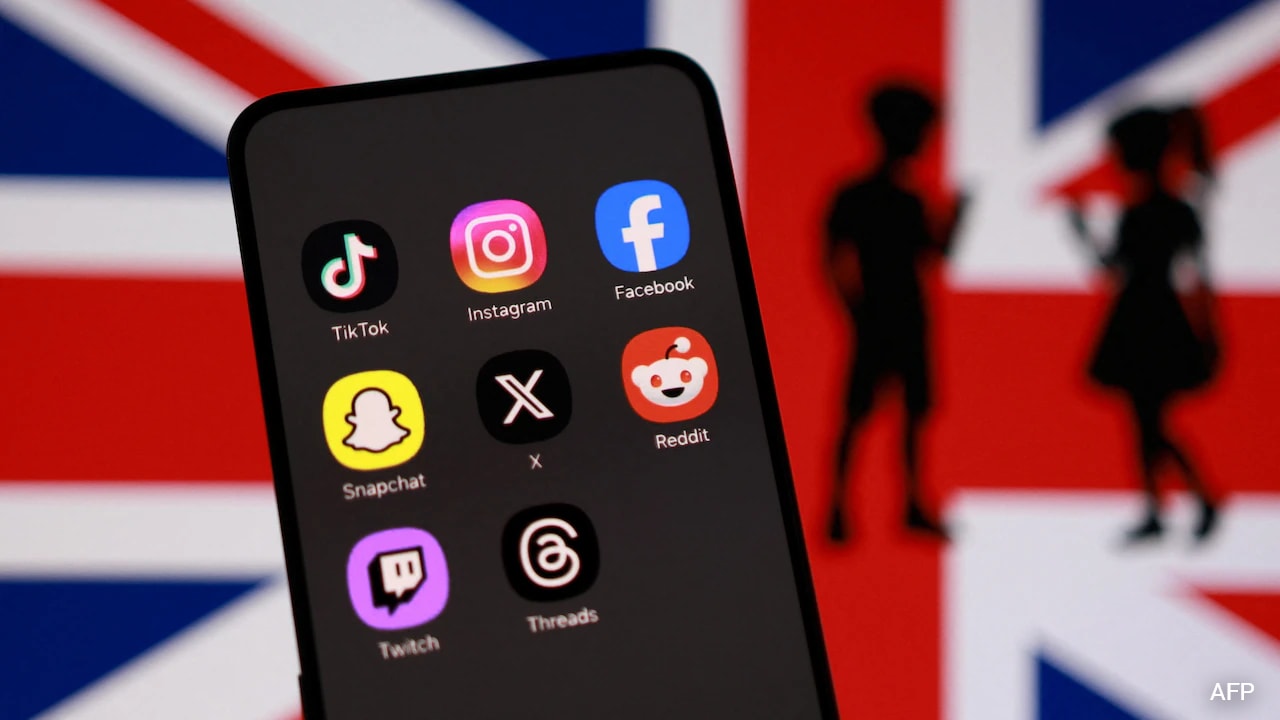
The proposed curfew is an extension of the under-16 social media ban announced by the government last month. While children under 16 face an outright ban on platforms like TikTok, Instagram, Snapchat, Facebook, and X from next spring, older teenagers are getting a softer approach.
From next spring, 16- and 17-year-olds will find these apps blocked by default between midnight and 6am.
Alongside the curfew, the government wants to disable features designed to keep users hooked. This includes infinite scrolling, algorithmic recommendations, and autoplaying videos. AI chatbots will also be required to prompt under-18s to take regular breaks, and the government is threatening to ban chatbots that offer dangerous mental health advice.
Yet, older teenagers are essentially young adults. In the UK, a 16-year-old can work, pay taxes, and leave home. The Labour government is even planning to give 16-year-olds the right to vote. Telling someone they are mature enough to choose the next prime minister but too young to manage their bedtime is a bizarre contradiction.
And because the restriction is optional, it is hard to see how it will achieve its goals. A teenager who wants to stay up late watching TikTok videos will simply click "disable" on the default setting and carry on scrolling.
Why a Voluntary Lockout is Just a Political Sticking Plaster
Critics across the political spectrum and within online safety groups have already pointed out the obvious flaws in this policy. Beeban Kidron, founder of the child rights campaign group 5Rights Foundation, called the default settings "for show and headlines, not for children." She argued the policy was cooked up by the Department for Science, Innovation and Technology (DSIT) simply to win a news cycle.
She has a point.
When you make a restriction voluntary, you shift the entire burden of enforcement back onto parents. Parents will have to negotiate with their children about keeping the curfew turned on. This sets up unnecessary arguments at home, rather than providing a solid legal framework that forces tech giants to protect kids.
Laura Trott, the shadow education secretary, described the policy as a "dog's dinner." She pointed out the hypocrisy of giving teenagers the vote while simultaneously trying to put them under a curfew they can easily switch off.
It feels like a half-hearted compromise. The government wants to look tough on big tech and sympathetic to exhausted parents. But by stopping short of making the curfew mandatory, they have created a toothless policy that pleases nobody.
The Heavy Burden on Tech Platforms and the Age Verification Nightmare
Behind the political debate lies a massive technical challenge. How are social media companies actually going to implement this?
To apply a mandatory ban to under-16s, a voluntary curfew to 16- and 17-year-olds, and no restrictions to adults, platforms must know the exact age of every single user. This means implementing strict age-verification systems.
Andy Lulham, chief operating officer at the online safety provider Verifymy, pointed out that this policy asks a huge amount of platforms technically. They now have to identify and apply entirely different rules to three distinct age groups.
This is where the plan starts to fall apart.
To prove you are over 16 or over 18, you will likely have to upload government ID or submit to biometric facial analysis. This raises massive privacy concerns for the entire population. To protect children, every adult in the UK will have to prove their age to private tech companies.
And what about the teenagers who want to bypass these rules? The government has already admitted they will not restrict the use of Virtual Private Networks (VPNs). A teenager can easily download a free VPN, change their location to a country without a curfew, and bypass the block entirely. While government research claims only a small percentage of children currently use VPNs to bypass age checks, that number will skyrocket once these bans and curfews go live.
What the Science and Government Pilots Actually Show Us
The government did not create this policy out of thin air. In May, DSIT commissioned the research firm Savanta to run a pilot study with over 300 teenagers and parents. They tested three scenarios:
- Rationing social media use to 15 minutes a day.
- A strict curfew from 9pm to 7am.
- Completely deleting social media apps.
The study found that curfews were the most manageable restrictions for families to maintain. Restricting access to platforms like Snapchat, TikTok, and Instagram led to noticeable benefits. Teenagers went to sleep earlier, felt more rested, and concentrated better at school.
But the study also revealed a darker side.
Many teenagers felt deeply isolated when cut off from their friends. Some experienced irritability and mood swings. Parents compared the initial adjustment period to a drug withdrawal.
Social media is not just entertainment for this generation. It is their primary social space. Cutting them off overnight, even with a voluntary curfew, can cause genuine distress.
By focusing solely on curfews and bans, the government is treating the symptoms of screen addiction rather than the cause. The real issue is the business model of big tech. These platforms are deliberately designed to be addictive. Turning off infinite scrolling by default is a step in the right direction, but allowing teenagers to turn it back on with two clicks makes the gesture meaningless.
Practical Next Steps for Parents Struggling with Late-Night Scrolling
Since the government's curfew is voluntary and easy to bypass, you cannot rely on state policy to manage your teenager's screen time. You have to take matters into your own hands.
If late-night scrolling is affecting your household, here are some practical steps you can take today:
- Use router-level blocks: Instead of relying on social media apps to enforce a curfew, use your home Wi-Fi router settings. Most modern routers allow you to pause internet access for specific devices at specific times. You can set the Wi-Fi to cut off on your teenager's phone at midnight, which cannot be bypassed by changing app settings.
- Keep devices out of bedrooms: Establish a household rule that all phones, tablets, and laptops must be charged in a central location overnight, such as the kitchen. This removes the temptation of midnight scrolling altogether.
- Focus on the features, not just the apps: Sit down with your teenager and manually turn off autoplay and notification settings. Show them how these features are designed to manipulate their attention. If they understand how the technology works, they are more likely to cooperate.
- Offer alternatives: A sudden digital detox can feel isolating. Encourage offline activities in the evening, like reading, drawing, or playing board games, to help them wind down naturally without a screen.
The transition from Starmer's administration to incoming Prime Minister Andy Burnham means the finer details of this policy are still up in the air. But one thing is clear. A voluntary curfew will not solve the teenage sleep crisis. It is up to parents and young people to navigate this digital landscape themselves.