Imagine sitting at home on a Friday evening, and federal agents knock on your door to hand you a grand jury subpoena because of a story you wrote. That just happened to four of the most prominent national security and investigative journalists in the country. The Trump administration is pulling out all the stops to find out who leaked information about the security flaws of the new Air Force One presidential jet.
This is not just another minor skirmish between a president and the media. It is a massive escalation that threatens the foundational mechanics of how independent national security journalism works. If the government can force journalists to name sources who expose defense vulnerabilities, those sources disappear completely. You might also find this connected article interesting: भारत-न्यूजीलैंड की रणनीतिक साझेदारी चीन की दादागीरी का जवाब क्यों है.
The story began when New York Times reporters Julian E. Barnes, Eric Lipton, Tyler Pager, and Eric Schmitt published details about a highly unusual game of presidential musical chairs in the sky. Now, they face a Wednesday deadline to appear before a federal grand jury in Manhattan. The administration wants names, and they want them fast.
The Mystery Flight and the Missing Anti Missile Systems
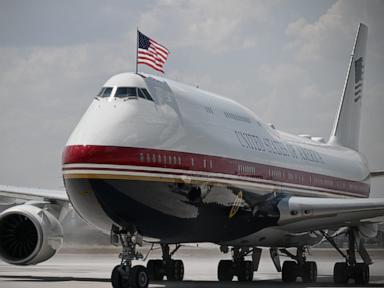
To understand why the Department of Justice is moving with such speed, you have to look at what happened during the president's recent trip to a NATO summit in Turkey. The president flew there on the brand-new Air Force One. This plane is a Boeing 747-8 that was gifted to Trump by the government of Qatar. It underwent a massive, $400 million retrofit to turn it into a flying command center. It just entered active service last week. As discussed in latest articles by NPR, the effects are widespread.
Then things got weird.
Instead of flying home on the new Qatari jet, the president departed for a stop at Mildenhall, a Royal Air Force base in Suffolk, England, using one of the older-model Air Force One jets. Both planes ended up sitting on the tarmac at Mildenhall. For the final flight back to Joint Base Andrews in Maryland, the president swapped back to the newer plane.
The New York Times dug into why this sudden plane swap occurred. Citing anonymous sources, the paper revealed that the U.S. Secret Service specifically urged the president to drop the new jet temporarily due to collapsing ceasefires and spiking military tensions with Iran. Why? Because the newly retrofitted Qatari plane allegedly lacked some of the most basic, advanced defensive systems installed on the older fleet. Most notably, it lacked sophisticated anti-missile capabilities.
The administration was furious. White House spokesman Steven Cheung fired back, claiming the new plane features top-tier security protocols. He stated that the administration uses distraction and misdirection to handle threats from America's enemies. Trump himself claimed on social media that the Mildenhall stop was simply a morale boost to let service members see the new plane. He flatly denied any security panic regarding Iran.
But the administration's aggressive legal retaliation tells a very different story. You do not send federal agents to reporters' homes over a harmless PR tour. You send them when someone leaked real, sensitive technical gaps in the commander-in-chief's primary transport plane.
Knocking on Doors and Forcing Testimony
Serving subpoenas directly to journalists at their personal residences is an intense tactic. David McCraw, the top lawyer for The New York Times, noted that federal law enforcement appearing on journalists' doorsteps should shock anyone who cares about constitutional protections.
The four targeted journalists are not rookies. Eric Schmitt and Eric Lipton are veteran investigative beasts with multiple Pulitzer Prizes between them. Julian Barnes and Tyler Pager are deeply sourced reporters who cover intelligence agencies and the White House daily. They know how to protect their sources. They also know exactly what kind of legal buzzsaw they are walking into.
The Department of Justice wants these four individuals to sit under oath before a grand jury in Manhattan. Grand jury proceedings are secret. There are no judges or defense attorneys in the room to protect you from aggressive prosecutors. The objective is singular: extract the identity of the government insiders who revealed the lack of anti-missile defenses on the Qatari jet.
This is part of a broader, harsher pattern. Earlier this year, the Justice Department issued similar subpoenas to journalists at The Washington Post and The Wall Street Journal. The government eventually blinked and withdrew those demands after massive blowback. This time feels different. The stakes involve the immediate physical safety of the president and a highly controversial, foreign-gifted aircraft. The administration seems determined to push the issue to the absolute limit.
The Legal Reality of Press Shield Fights
Let us talk about how this actually plays out in court. People often think journalists have a blanket legal right to keep sources secret. They do not.
There is no federal shield law in the United States. While dozens of states have laws protecting reporters from revealing sources, federal courts do not recognize a comprehensive reporter's privilege. The landmark Supreme Court ruling on this remains Branzburg v. Hayes, a 1972 decision that established that journalists do not have a First Amendment right to refuse to testify before a grand jury if they witnessed a crime or have direct evidence of one.
When national security info leaks, the government treats the leak itself as the crime. They are not prosecuting the New York Times reporters for publishing the piece. Instead, they are investigating the government employee who violated their non-disclosure agreements or security clearances by talking to the Times. The reporters are treated as central witnesses to that crime.
If the Times reporters refuse to speak on Wednesday, a federal judge could hold them in civil contempt. That can carry massive fines for the newspaper or even jail time for the individual journalists until they comply or until the grand jury term expires. It sounds extreme because it is. We have seen it happen before with journalists like Judith Miller in the mid-2000s, who spent 85 days in jail for refusing to identify a source.
Why This Matters Beyond the White House
You might wonder why you should care about an inside-baseball legal war between elite journalists and the executive branch.
Independent reporting on the military and the executive branch relies almost entirely on people inside the system who notice things going wrong. If a foreign-gifted aircraft worth hundreds of millions of dollars is put into service without the necessary security countermeasures to protect a sitting U.S. president during an international crisis, the public has a right to know. The military chain of command and the Secret Service must be accountable.
When the government uses grand juries to hunt down sources, it creates an intense chilling effect. The next whistleblower who notices a massive defense flaw, a financial kickback, or an abuse of power will think twice before picking up an encrypted messaging app. They will see federal agents showing up at reporters' houses and decide it is not worth risking their career or their freedom.
The administration's defense is that they must protect operational security. They argue that telling the world a presidential plane lacks anti-missile capabilities invites an attack from adversaries like Iran. That is a legitimate national security argument. But historically, governments frequently abuse the label of national security to cover up embarrassing logistical failures, bureaucratic incompetence, or political miscalculations.
What Happens Next
The timeline here is incredibly compressed. The subpoenas dropped on Friday, and the grand jury date is Wednesday. The New York Times legal team is currently working through the weekend to file urgent motions to quash the subpoenas in federal court.
Here is what to watch for over the next 72 hours:
- Look for whether the Justice Department stands its ground or experiences internal pushback from career attorneys who worry about the institutional damage of jailing journalists.
- Watch for joint statements of solidarity from other major news organizations, which will likely file amicus briefs to support the Times.
- Observe whether any lawmakers in Congress use this moment to renew the push for a federal press shield law, an effort that has stalled repeatedly over the years.
The Times has made its position clear through David McCraw. They view this as an assault on basic constitutional norms. The reporters will almost certainly refuse to name names on Wednesday, setting up a massive constitutional showdown in Manhattan federal court. Stick around, because this legal battle is going to get ugly very quickly.