You step into a vehicle with no one behind the wheel. The doors click shut. You feel a strange sense of absolute freedom. There is no driver to judge your music taste, stare at you through the rearview mirror, or eavesdrop on your phone conversations. It feels like a private sanctuary on wheels.
That sense of total privacy is a complete illusion. Your self-driving car is watching you, listening to you, and it has a direct line to local law enforcement. For another look, check out: this related article.
We saw exactly how this plays out in San Mateo, California. Two 15-year-olds decided to use a Waymo robotaxi as their personal playground. They sneaked some alcohol on board and started firing Orbeez water bead guns out of the windows at passersby. To the teens, it probably felt like a victimless prank in a driverless bubble. To the vehicle's remote support team, it was a high-risk situation unfolding in real-time.
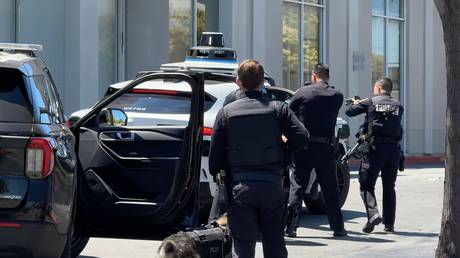
The vehicle did not just sit there passively. The remote monitoring team tracked the entire sequence, dialed the San Mateo Police Department, and gave officers a play-by-play update. Then, they remotely locked the teens down by steering the car into a parking lot and disabling it. The tech company even used a clever trick, broadcasting a voice message to the passengers claiming the car was experiencing "technical difficulties" to keep them calm and contained until five police officers and a K-9 unit surrounded the vehicle. Related insight regarding this has been shared by Engadget.
The San Mateo Police later posted a cheeky warning on Facebook that summed up the new reality perfectly. Parents, do you know where your kids are? Waymo does.
The Inner Workings of the Rolling Panopticon
Most passengers do not think about what it takes to run an autonomous fleet. They see the spinning lidar units on the roof and the sleek screens inside. They completely ignore the small black lenses pointed directly at the passenger cabin.
Autonomous vehicle operations depend heavily on interior monitoring. Tech companies do not just deploy these multi-million-dollar fleets and hope for the best. They guard them aggressively. The interior sensors serve a handful of everyday purposes, like checking if a passenger left a wallet behind or verifying if someone spilled coffee all over the leather seats. If a car detects a mess, it pulls itself out of service for cleaning.
The real shift happens when the system flags unusual behavior. Autonomous vehicles use complex software to monitor cabin activity. If the system detects sudden movements, loud altercations, or window tampering, it triggers an immediate alert. A human specialist in a remote command center instantly pulls up the live video and audio feed from your ride.
That is exactly what happened during the San Mateo incident. The moment those teenagers started leaning out of the windows and handling objects that looked like firearms, human operators took total control of the vehicle’s itinerary. You are never truly alone in these vehicles. Someone is always sitting in a virtual control room, ready to act as a digital chaperone.
The Clear Line Between Comfort and Surveillance
Autonomous ride-hailing companies are transparent about this if you bother to read the legal agreements. Their support documentation explicitly states that while they do not use facial recognition or biometric identification to track your identity, they absolutely will pull up live video feeds during a trip if urgent circumstances arise.
The problem is how we define an urgent circumstance. It clearly includes property damage, passenger medical emergencies, or criminal acts. But the boundary remains fluid. The lack of a physical driver creates a psychological trap. It makes passengers let their guard down, assuming that what happens inside the vehicle stays inside the vehicle.
Consider how traditional ride-hailing works. If you misbehave in an Uber or a Lyft, the human driver might yell at you, kick you out on the curb, or give you a one-star rating. They rarely have a direct, automated link to a corporate command center that can instantly coordinate a high-risk traffic stop with local police units. Autonomous vehicles remove the human element of negotiation or de-escalation. The car simply executes a programmatic safety protocol. It locks you in, takes you off the main road, and delivers you to the authorities.
The Growing Legal Power of the Smart Car
The shift toward connected vehicle surveillance goes far beyond tech companies protecting their hardware. The legal landscape is shifting rapidly to give these vehicles more authority and accountability on public streets.
Look at what is happening in California. A state law taking effect in the summer of 2026 completely changes how law enforcement interacts with driverless fleets. For years, police officers faced a bizarre legal loophole. If an autonomous vehicle made a dangerous illegal U-turn or cut off a pedestrian, the officer could pull the vehicle over but could not actually issue a standard moving violation ticket because there was no human driver to receive it.
The new legislation requires autonomous vehicle operators to report every single traffic encounter to the Department of Motor Vehicles. It also gives first responders advanced geofencing capabilities. Firefighters and police officers can now broadcast direct digital commands to any autonomous car in the area, forcing it to route away from active crime scenes, fires, or emergency zones within two minutes.
This deep integration between tech platforms and city infrastructure means your rides are becoming extensions of municipal management. The vehicles are designed to cooperate completely with state authority. If a police car pulls up behind an autonomous vehicle with its emergency lights flashing, the car recognizes the sirens and visual patterns immediately. It signals, pulls over to a safe curb, unlocks its doors, and automatically rolls down its windows so the officer can speak directly to a remote corporate representative over the cabin speakers.
The Illusion of Passenger Privacy
We need to talk about the massive double standard in how we view privacy in modern transportation. If a city government decided to install high-definition microphones and live-streaming cameras inside every public bus or subway car, pointing directly at individual seats, there would be massive public protests. Civil liberties groups would file injunctions immediately.
When a private technology company does the exact same thing inside a fleet of robotaxis, passengers accept it willingly. They sign away their rights with a quick tap on a smartphone screen before opening the car door.
This creates a major conflict between user expectation and technical reality. People choose autonomous rides because they want to avoid the awkwardness or perceived danger of getting into a car with a stranger. They want a predictable, solitary environment. The irony is that by avoiding a single human driver, you are trading up for an array of cameras, data logs, and remote corporate observers who can analyze your behavior at any moment.
The Real Risks of Connected Car Data
The data does not just disappear when your ride ends. Every trip creates a massive digital footprint. The vehicle records your exact pickup and drop-off times, your physical weight distribution on the seats, your voice volume, and your real-time reactions to traffic events.
While companies promise they only use this data to improve safety and system performance, the presence of these records makes them an incredibly attractive target for legal departments and law enforcement. Police departments are already realizing that autonomous vehicles are rolling eyewitnesses. If a crime occurs on a city street, a passing robotaxi likely caught the whole thing on its external 360-degree cameras.
Now, we see that the internal cameras are just as potent. If you are involved in a legal dispute, an accident, or an unexpected incident inside an autonomous cabin, those video files will be subpoenaed. Your private moments inside that vehicle can easily become state evidence.
Survival Steps for the Autonomous Vehicle Era
The driverless revolution is not slowing down. These vehicles are expanding into more cities every month. If you plan on using these services, you need to abandon the idea that the cabin is a private room. You need to treat it like a highly secure corporate office.
First, stop doing anything inside an autonomous vehicle that you would not do in plain view of a security guard. Do not change clothes, do not engage in intense personal arguments, and certainly do not bring anything on board that violates the platform's terms of service. The system is calibrated to notice anomalies.
Second, check your local laws regarding vehicle surveillance and data retention. Understand that the moment you book a ride, you are consenting to be recorded. If you value absolute confidentiality for a sensitive business conversation or a deeply personal call, a connected robotaxi is arguably the worst place to have it.
Finally, remember that the car always values the fleet over the passenger. If the vehicle's internal logic or remote support team decides your behavior poses even a minor risk to the car or the brand's public image, it will terminate your trip immediately. It will not argue with you. It will simply pull over, lock the wheels, and wait for the police to sort it out.
The era of the anonymous taxi ride is officially dead. The robotaxis won, and they are keeping a very close eye on you.
Local news coverage of the San Mateo robotaxi incident