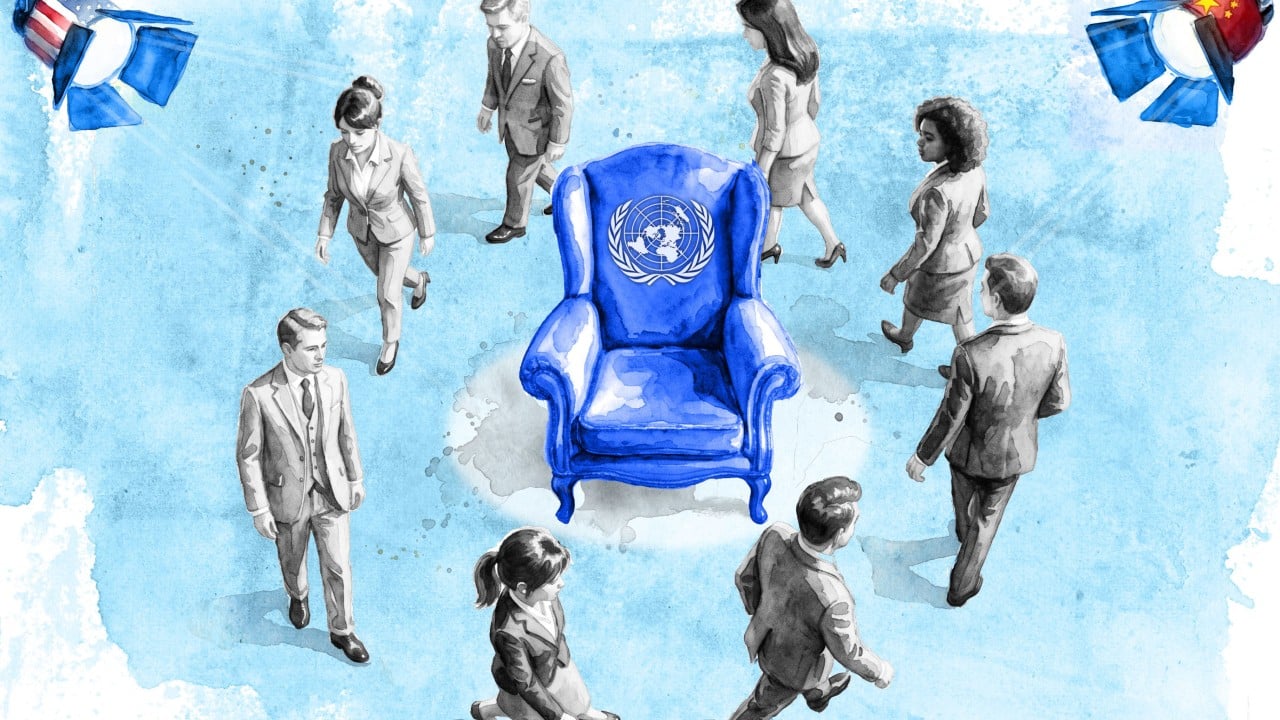
The race to lead the United Nations is hitting its critical phase, and ignoring it is a luxury the world doesn't have. António Guterres is stepping down, leaving behind an institution fracturing under intense geopolitical strain, active conflicts, and chronic budget shortages. The person chosen to replace him on January 1, 2027, will either steady a listing ship or watch international diplomacy completely unravel.
You hear a lot of cynicism about the UN. People call it a glorified talk shop. Sometimes they're right. But when international supply chains break, nuclear agreements stall, or regional wars threaten to expand, the world still looks to Turtle Bay for answers. That's why the current selection process matters far beyond diplomatic circles.
The Current State of the Race
The diplomatic machinery in New York is grinding through its early selection stages. Recent Security Council straw polls put figures like UNCTAD chief Rebeca Grynspan, Guyana's permanent representative Carolyn Rodrigues-Birkett, and IAEA Director-General Rafael Grossi at the forefront of early evaluations. Other notable contenders, including former Chilean president Michelle Bachelet and former Senegal president Macky Sall, have shaped the early dialogue through open interactive town halls and vision statement presentations.
Yet, candidate resumes only tell half the story. The real battle is happening behind closed doors among the P5 permanent members of the Security Council—the US, China, Russia, the UK, and France. Any single veto can torpedo a frontrunner.
What the Candidates Are Missing
Most coverage treats this election like a standard corporate CEO hire. It's not. The next secretary-general faces institutional inertia that would break a normal administrator.
Look at the financial reality. The organization has faced severe liquidity crises driven by member states withholding dues. When major powers treat financial obligations as optional political leverage, the secretariat can't plan long-term humanitarian interventions.
Candidates talk endlessly about sustainable development goals and multilateral cooperation. They rarely address the elephant in the room: systemic paralysis. If the next chief cannot navigate the widening chasm between Washington and Beijing, structural reform is dead on arrival.
The Weight of Global Crises
The incoming chief inherits a diplomatic landscape vastly different from the one Guterres stepped into a decade ago. Active conflicts in the Middle East, profound fractures over international law, and escalating great-power competition mean the margin for error is effectively zero.
A weak secretary-general will default to bureaucratic neutrality, issuing polite statements while actual conflicts rage unchecked. A strong leader must be willing to call out powerful nations, even when it costs them political capital.
What Happens Next
The selection timeline will accelerate as straw polls narrow the field, eventually forcing the Security Council to send a single recommendation to the General Assembly.
Pay attention to how the final candidates address enforcement mechanisms and institutional accountability. If the winner is selected purely on the basis of who offends the fewest veto-wielding capitals, expect more of the same institutional gridlock. Demand better scrutiny from your news feeds, track the voting records behind closed doors, and hold your national representatives accountable for the mandate they endorse.