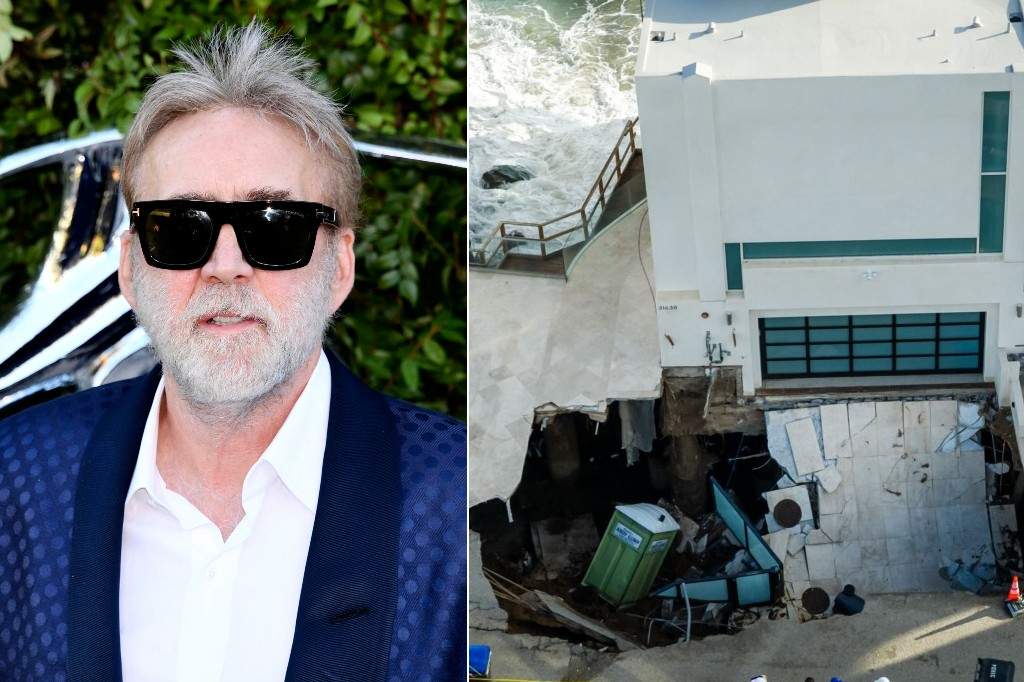
When a massive 60-foot-wide sinkhole swallows the driveway of your multimillion-dollar beachfront property, your life tends to get complicated pretty quickly. For Nicolas Cage, that sudden geological nightmare translated into a temporary hotel existence—and a casual phrase at a pop-culture convention that instantly divided the internet.
Speaking at Los Angeles Comic Con, the 62-year-old actor dropped a line about his living situation while explaining why he wouldn't be handing out candy for Halloween. The backlash arrived on schedule. But beneath the predictable social media outrage lies a stranger reality about coastal vulnerability, celebrity real estate, and what happens when nature decides to reclaim a luxury zip code.
How a Malibu Paradise Disappeared Overnight
The trouble started back in September, when severe coastal weather whipped up by the remnants of a tropical system slammed the Southern California coastline. In Malibu, where luxury homes sit precariously between jagged bluffs and the Pacific Ocean, the ground gave way. A colossal crater measuring roughly 25 feet deep and spanning up to 60 feet opened up right on a private residential street popular with celebrities.
Cage had purchased the four-story, 4,000-square-foot beachfront property in 2024 for a cool $10.5 million. By the time city officials finished inspecting the damage, the driveway had vanished, parts of the deck were compromised, and an adjacent gas leak forced emergency crews to scramble.
Malibu authorities slapped red tags on several neighboring structures, issuing evacuation orders for over thirty properties. For Cage, returning home wasn't just unsafe; it was structurally impossible. Enter the hotel circuit.
The Comment That Sparked a Culture War
During an on-stage panel at Comic Con on October 31, Cage was asked about his spooky season plans. He mentioned wanting to take his young daughter trick-or-treating in Santa Monica, but added a candid remark about his domestic setup:
"I'm currently a little bit homeless," Cage told the crowd, explaining that he was living out of hotels because of the Malibu disaster.
The internet did what the internet does best. Within hours, clips circulated across platforms like Reddit and X, triggering a predictable debate. Critics pointed out the obvious gap between an Oscar-winning actor staying in luxury accommodations and actual unhoused individuals facing systemic housing insecurity. Words like "tone-deaf" and "out of touch" floated through comment sections.
At the same time, defenders argued that people were deliberately stripping the quote of its context. Cage wasn't whining about poverty; he was using colloquial phrasing to describe the unsettling feeling of being displaced from a permanent residence. Losing access to the place where you keep your routine, your neighborhood traditions, and your family space genuinely stings—no matter how many zeroes are in your bank account.
The Real Crisis Hitting California Coastlines
The internet fixation on a celebrity's choice of words misses the larger, scarier picture unfolding along the Pacific Coast. Sinkholes and coastal erosion in Malibu aren't isolated anomalies. Rising sea levels, shifting El Niño weather patterns, and intense winter swells are turning prime coastal real estate into high-risk zones.
When infrastructure collapses, it doesn't just affect movie stars. Entire neighborhoods lose utility lines, road access gets cut off, and local emergency services struggle to navigate compromised streets. Municipalities are left grappling with millions of dollars in infrastructure repairs, while property owners face nightmarish battles with insurance companies over whether ground collapse and water erosion fall under standard coverage.
For homeowners in these zones, the path forward involves endless permitting, geological surveys, and massive reinforcement costs. Even with an actor's net worth, fixing a destroyed foundation carved out by a massive crater takes months of bureaucratic red tape and engineering feats.
Moving Past the Headlines
Nicolas Cage will undoubtedly sort out his housing situation long before typical residents facing structural displacement ever could. Yet the incident highlights a universal truth about sudden property loss. Whether your house costs ten million dollars or two hundred thousand dollars, watching the ground beneath your driveway slide into a massive abyss alters your sense of stability overnight.
Next time severe weather warnings hit the Southern California coast, the real estate market in places like Malibu will face yet another reality check about living right on the edge of the Pacific.