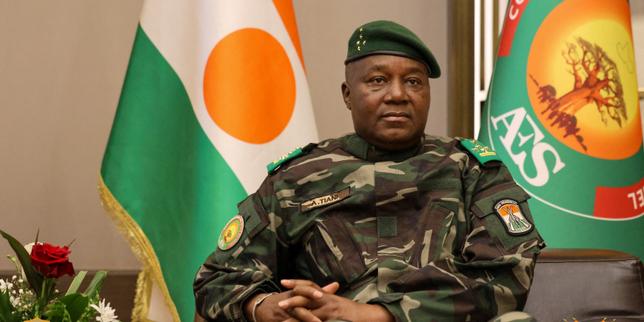
The global justice system just took a massive hit. On June 18, 2026, the military government of Niger officially handed its written notification of withdrawal to the United Nations, starting a twelve-month countdown to legally sever ties with the International Criminal Court.
People who look at this from Washington, Paris, or The Hague will tell you it's just a rogue junta trying to escape accountability for human rights abuses. That's a lazy take. It completely ignores decades of built-up frustration across the African continent regarding how international law actually operates. You might also find this related coverage insightful: Why The Us Iran Peace Mou Matters More To India Than You Think.
When General Abdourahamane Tiani's government submitted that letter, it wasn't acting in a vacuum. Niger is now the third nation to complete a formal exit from the Rome Statute, trailing only Burundi and the Philippines. This move fulfills a joint pact made last September by the Alliance of Sahel States, a newly formed bloc comprising Niger, Mali, and Burkina Faso.
The real question isn't why they left. The real question is why anyone expected them to stay. As discussed in latest articles by BBC News, the implications are worth noting.
The Reality of Selective Justice
Let's look at the numbers. The Hague has spent the better part of two decades focusing almost exclusively on African leaders. For years, African heads of state argued that the court functioned as a political tool rather than an objective judicial body. They called it selective justice. They weren't wrong.
When the ICC was founded in 2002, it raised incredible hopes among people who genuinely wanted an end to global impunity. But look at what actually happened over the next twenty-four years. Powerful Western nations simply opted out. The United States didn't ratify the treaty. Russia didn't. China didn't. Israel didn't.
So you have a global court where the world's biggest military powers are completely immune to prosecution by design, while prosecutors repeatedly target leaders from weaker developing countries. The letter sent by Niger to the UN explicitly highlights this hypocrisy, stating that while the court raised great hopes, it has been systematically misused and exploited.
It's easy to dismiss these statements as cynical propaganda from a military regime. But if you talk to legal scholars across West Africa, they'll tell you the exact same thing. The court lost its moral authority long before the 2023 coup in Niamey.
Breaking Down the Twelve Month Transition
Let's get into the mechanics of how this exit actually works. Under Article 127 of the Rome Statute, a country cannot just pack its bags and leave overnight. The official paperwork landed at the UN on June 18, 2026, which means Niger remains legally bound by its treaty obligations until June 18, 2027.
What does that mean in practice?
- Niger must still cooperate with any ongoing ICC investigations during this one-year window.
- The court retains full jurisdiction over any war crimes, crimes against humanity, or genocides committed on Nigerien territory prior to June 2027.
- Any current cases or preliminary examinations cannot simply be erased by submitting a withdrawal letter.
In reality, this transitional year will likely be a diplomatic stalemate. The military junta has already expelled French forces, ended security partnerships with the European Union, and ordered US troops out of their strategic drone base in Agadez. It's highly unlikely that Niamey will cooperate with prosecutors from The Hague over the next twelve months. They've already moved on.
The Rise of the Alliance of Sahel States
You can't understand Niger's exit without understanding the broader political realignment happening in the Sahel. Niger, Mali, and Burkina Faso have completely broken away from the traditional West African geopolitical order. They didn't just quit the ICC. They also walked out of ECOWAS, the regional economic bloc, accusing it of being manipulated by France.
These three countries have faced relentless insurgencies from jihadist groups linked to al-Qaeda and the Islamic State. The security situation is brutal. Just earlier this month, gunmen launched a massive assault on the main airport in Niamey, killing over thirty people. It was the second major strike on that urban hub this year. That airport isn't just a commercial runway. It serves as the military's command center, housing its air force base, surveillance drones, and the joint headquarters for the regional alliance.
When the Western press covers these attacks, they focus heavily on the tactical losses. What they miss is how these security failures drive the political shift. The juntas argue that Western security assistance failed to stop the bloodshed for a decade, so they are throwing out the old playbook. They're embracing Russia for military hardware and Wagner-style security deployments.
The ICC's decision to issue an arrest warrant for Vladimir Putin over the war in Ukraine created an impossible situation for these Sahelian governments. How can you build a deep military alliance with Moscow while remaining a member of a court that demands Putin's arrest? You can't. Quitting the ICC was the logical next step in their pivot toward a multipolar world.
The Plan for a Sahelian Criminal Court
What replaces the ICC in West Africa? The Alliance of Sahel States announced they aren't abandoning criminal justice altogether. Instead, they plan to create a regional, endogenously managed Sahelian criminal court.
The idea sounds noble on paper. They want to handle their own problems using local legal frameworks that align with their societal values. They claim this will stop foreign powers from using human rights as a geopolitical weapon.
But let's be honest about the risks here. Human rights organizations like the FIDH have voiced immense concern over this strategy. The armies of Niger, Mali, and Burkina Faso are routinely accused of severe abuses against civilians during counter-insurgency operations. Eliminating international oversight means local victims have nowhere left to turn if their own governments commit atrocities. A homegrown court run by military regimes is highly unlikely to investigate its own generals.
This is the central paradox of the current African sovereignty movement. The critique of Western bias is entirely valid, but the alternative being constructed often leaves ordinary citizens completely unprotected.
What Most Analysts Get Wrong About African Withdrawals
Mainstream commentators love to predict that this will spark a massive wave of exits across the continent. They've been making this prediction since Burundi left in 2016. They said it when South Africa and Gambia threatened to leave, though both countries later reversed those decisions.
They're misreading the room. Most African nations are not about to leave the ICC. Out of 193 UN member states, 125 remain part of the Rome Statute, and a significant chunk of them are African. Countries like Senegal, Ghana, and Kenya have deeply integrated international law into their foreign policy. They see value in the court as a tool of last resort, even if they agree it needs structural reform.
The Sahel is an exception, not the rule. The exit of Niger, Mali, and Burkina Faso is driven by a unique mix of military rule, existential security crises, and a total rupture with Western diplomacy. It's a localized rebellion against the post-colonial order, not a continent-wide evacuation.
Actionable Next Steps for Tracking the Sahel Shift
If you are a policy analyst, investor, or security researcher trying to navigate what this means for West Africa over the next year, stop watching The Hague. The real action is happening on the ground in the region.
First, watch the legal evolution of the Alliance of Sahel States. Track whether they actually draft a charter for their proposed Sahelian criminal court or if it remains a rhetorical talking point to justify their exit.
Second, monitor the diplomatic status of Mali and Burkina Faso. While Niger has officially filed its paperwork with the UN, the timeline for its neighbors' formal submissions needs close attention. The judicial fallout will depend heavily on whether all three states coordinate their departure dates or act independently.
Finally, evaluate how this affects regional security operations. The total removal of international legal constraints could alter how the joint Sahelian forces conduct operations against jihadist factions in the tri-border region. Watch the civilian casualty data coming out of regional monitoring groups. That's where the real impact of this legal divorce will be felt.