Twelve people are dead in Tatarstan. Thirty-nine others carry shrapnel wounds and burns.
A massive swarm of long-range drones struck Nizhnekamsk, a key Russian industrial hub sitting roughly 1,200 kilometers east of the Ukrainian border. This isn't just another border skirmish. It’s a stark milestone in how modern conflicts are fought, proving that extreme geographic distance no longer offers absolute safety.
If you've been following the war casually, you might think strikes are limited to frontline trenches. You'd be wrong. Ukraine's strategy of launching deep-penetration drone attacks has completely rewritten the playbook. Nizhnekamsk houses massive petrochemical plants and the advanced TANECO oil refinery owned by Tatneft, a facility that processes millions of tons of crude annually. When industrial zones thousands of miles away from the front lines become active combat zones, the psychological and economic toll on Russia shifts dramatically.
The Strategy Behind Deep Inside Russia Strikes
Why target Nizhnekamsk? Simple math and economic pressure.
Ukraine's leadership faces a brutal numbers game. They can't match Russia's massive conventional manpower or endless artillery stockpiles. Instead, they've doubled down on asymmetric warfare. By using domestically manufactured long-range drones, Kyiv is systematically targeting Russia's primary revenue engine: oil refineries and fuel depots.
Refineries aren't easy to fix. When a strike hits specialized distillation columns or cracking units, specialized parts are hard to source under international trade restrictions. The goal is straightforward. Starve the Russian military machine of refined fuel, disrupt domestic supply chains, and make the Russian public feel the direct consequences of the ongoing invasion.
Regional head Rustam Minnikhanov confirmed that the morning assault hit both industrial and civilian sectors. While military analysts focus on the burning refineries, the human cost on the ground remains severe. Civilian infrastructure caught in the crossfire proves that air defense blankets cannot cover every square mile of Russia's massive territory.
How the Geography of War is Shrinking
Twelve hundred kilometers used to be a safe buffer. Not anymore.
Ukrainian engineers have pushed drone ranges far beyond previous operational limits, with some experimental designs stretching up to 2,000 kilometers into regions like Siberia. This technological leap catches air defense networks off guard. Traditional radar systems are often optimized to track fast-moving ballistic missiles or conventional fighter jets, not low-flying, propeller-driven or jet-assisted suicide drones weaving through civilian air corridors at low altitudes.
The psychological impact inside Russia is shifting. For years, state media framed the conflict as a distant, controlled military operation happening far away from everyday citizens. Strikes deep in Tatarstan tear down that illusion. When smoke billows over industrial cities thousands of miles from the border, domestic complacency shatters.
What Happens Next
The escalation cycle is spinning faster.
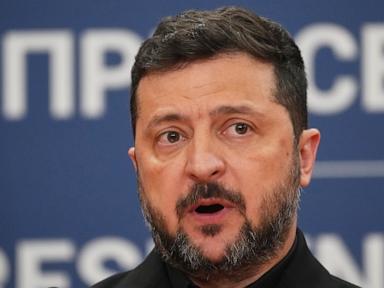
President Volodymyr Zelenskyy made it clear that every Russian missile hitting Ukrainian power grids and civilian apartments will be met with a direct reciprocal response inside Russian territory. As long as the Kremlin refuses to halt its invasion, long-range drone campaigns will expand.
You're looking at a new normal in military strategy. Air defense is no longer about protecting a static front line. It's about trying to shield an entire nation's vital infrastructure from silent, low-cost aerial threats coming from thousands of miles away.
Watch the energy markets closely. Watch the repair timelines for these refineries. The outcome of this war won't just be decided in the trenches of the Donbas. It will be decided right here, in the industrial heartlands deep inside Russia, where every successful strike forces a complete recalculation of military risk.
/media/movies/covers/2026/05/cats_aN0SAZJ.png)