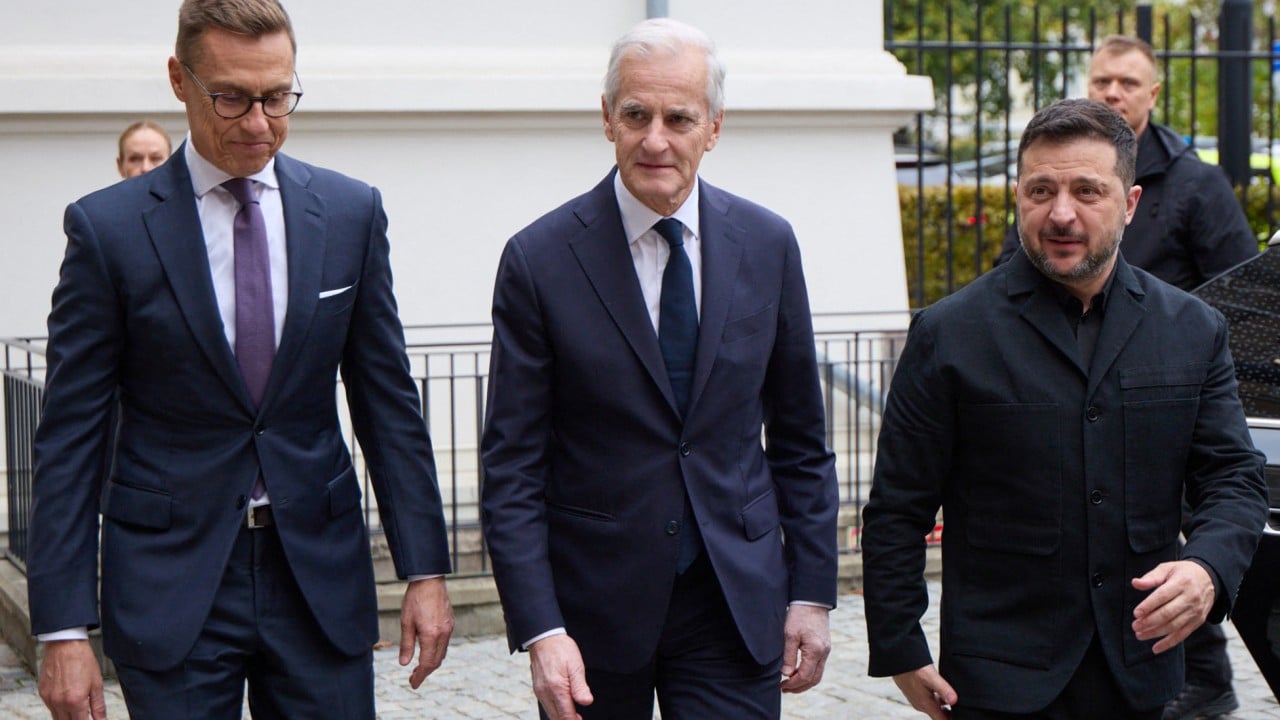
For years, the official script in Brussels and most European capitals was simple. You don't talk to Vladimir Putin. Isolation was supposed to break the Kremlin's resolve, keep the Western alliance rock solid, and show moral clarity. Then Finnish President Alexander Stubb and Norwegian Prime Minister Jonas Gahr Støre picked up the phone.
That single 90-minute conversation didn't just rattle diplomatic circles; it exposed deep fractures in a continent that has spent years pretending it speaks with one voice.
Geography Changes the Rules of Diplomacy
If you sit in Madrid or Copenhagen, Russia feels like a distant geopolitical threat handled through sanctions, defense packages, and stern press releases. If you share a long, jagged border with Russia, reality looks entirely different.
Finland and Norway live next door to the bear. When the war in Ukraine drags on with massive human and material costs, the security calculus for frontline states changes. Stubb made this crystal clear after the call wrapped up, noting that regional stability depends directly on how this conflict eventually settles.
You can't move your country across the map. When Washington is driving separate diplomatic efforts and other international channels are moving, Nordic leaders decided they couldn't afford to be passive passengers on someone else's bus. They wanted direct input ahead of potential peace discussions, such as those discussed around Abu Dhabi.
The Backlash Within the Western Tent
Unsurprisingly, the phone call didn't sit well with everyone in Europe. Danish Prime Minister Mette Frederiksen publicly criticized the move, arguing that Europe needs to stick together rather than letting individual nations go solo. Other EU members privately echoed that breaking the diplomatic quarantine hands Moscow a propaganda victory.
The underlying fear in Brussels is loss of control. If every frontline state decides to run its own parallel channel to the Kremlin, the unified EU sanctions regime and diplomatic stance start to look porous. Putin has long tried to bypass Brussels to deal directly with individual capitals or Washington. Giving him that satisfaction feels, to many European hawks, like a dangerous strategic error.
Yet Støre defended the action with brutal pragmatism. He pointed out that relying solely on the US administration to talk to Russian leadership leaves European interests dangerously exposed.
What the Critics Miss About Frontline Realism
Critics call the Nordic outreach naive. They argue that Putin only respects force and that talking to him before battlefield dynamics shift fundamentally is a waste of breath. A Kremlin insider even leaked that Putin made it clear during the call that Russia won't compromise on capturing the entire Donbas region.
So why do it? Because intelligence gathering and direct signaling are entirely different from appeasement. Finland and Norway didn't drop their support for Kyiv; both leaders immediately briefed Ukrainian President Volodymyr Zelenskyy after speaking with Moscow. They made sure their positions on a "just peace" were stated right to the top.
Diplomacy isn't just about rewarding friends. Sometimes it's about looking your adversary in the eye, testing their bottom lines yourself, and ensuring your own backyard isn't surprised by backdoor deals brokered entirely by superpowers across the Atlantic.
European unity was never as monolithic as press conferences suggested. The Nordic outreach simply ripped the band-aid off a reality that everyone knew existed: when national survival is on the line, countries sharing a border with Russia will ultimately do what they think keeps their people safe.
Stop pretending Europe can freeze out Moscow forever while others negotiate. The diplomatic landscape has shifted, and the illusion of a single voice is gone for good.