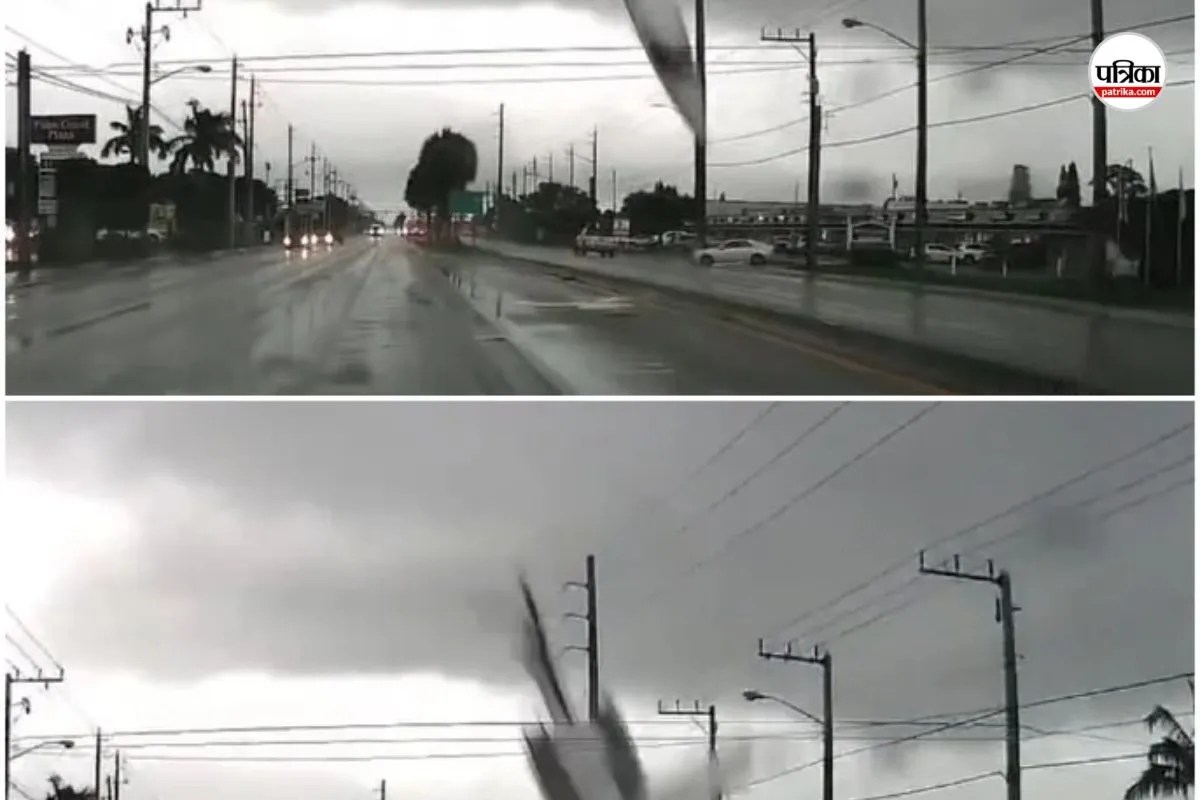
A peaceful Sunday flight turned into a catastrophic disaster when a private business jet plummeted out of the sky in Palm Beach County, Florida. All nine people on board perished, leaving investigators scrambling to piece together how a routine cross-country trip went fatally wrong in a matter of seconds.
When the National Transportation Safety Board opened its investigation into the crash of the Learjet 60, initial radar data and cockpit communications painted a terrifying picture. You don't just lose an aircraft like that without a violent catalyst. As the agency digs deeper into the wreckage, early physical evidence points toward a terrifying reality: the plane may have begun breaking apart before it ever smashed into the ground.
Inside the Final Moments of Flight N722BD
The journey started normally enough. The twin-engine Learjet departed Austin-Bergstrom International Airport in Texas, carrying two crew members and seven passengers bound for the Bahamas. Everything was fine until the aircraft reached cruise altitude over South Florida, right as nasty regional weather systems started flexing their muscles.
According to initial updates from NTSB board members, the flight crew radioed air traffic control to report light clear ice and moderate turbulence while cruising at 35,000 feet. They were dealing with altitude deviations of around 700 feet, which signaled that the air was getting uncomfortably punchy.
The pilots did what any trained aviators would do. They requested a climb to 37,000 feet to get above the mess. Air traffic control cleared them immediately.
Less than thirty seconds later, the situation completely unraveled.
The plane didn't make its climb. Instead, it entered a steep, violent descent, triggering an emergency. Radio traffic captured the crew fighting an overspeed condition as the vertical descent rate rocketed past 20,000 feet per minute—with some tracking data peaking at an astonishing 32,000 feet per minute before signals dropped. Dashcam footage from the ground showed the jet plunging nose-first before erupting into a massive fireball near a roadway.
Why Ice and Turbulence Prove Deadly at High Altitudes
People assume modern business jets are immune to bad weather. They aren't. While commercial airliners and corporate jets are built to handle rough skies, a toxic mix of severe updrafts, hidden convective activity, and high-altitude icing can push any airframe past its structural limits.
When a plane encounters clear ice at high speeds and sub-zero temperatures, aerodynamic profiles change instantly. Lift decreases. Drag spikes. If you combine heavy turbulence with an unmanaged overspeed condition during a sudden descent, the structural stress on the wings and tail assembly becomes immense.
NTSB officials confirmed that physical pieces of the wreckage indicate an in-flight breakup occurred. That means structural components like the tail or stabilizer may have torn away before the final impact. Once an aircraft loses its structural integrity in mid-air, aerodynamic control vanishes entirely. Pilots become passengers in a falling metal tube.
The Human Toll and Ongoing Investigation
The human cost of this tragedy is devastating. Among the nine victims were a local technology entrepreneur, his wife, their two young children, family friends, their nanny, and the flight crew, which included 20-year-old co-pilot Nathalia Gadelha. The impact also damaged local infrastructure and caused minor injuries to someone traveling on the ground, reminding everyone on the highway how close disaster came to a larger residential catastrophe.
Recovering the remaining components from the impact crater remains a grueling logistical hurdle for federal investigators. Teams are sifting through fragmented debris scattered near Palm Springs and Greenacres, hunting for clues in flight data recorders and cockpit voice logs.
Aviation safety experts will spend months analyzing weather radar feeds, maintenance logs, and flight recorder inputs to determine whether mechanical failure, pilot workload under sudden stress, or extreme weather forces triggered the dive. Until the final report drops, this tragedy stands as a sobering reminder of how quickly nature can overpower human engineering at 35,000 feet.