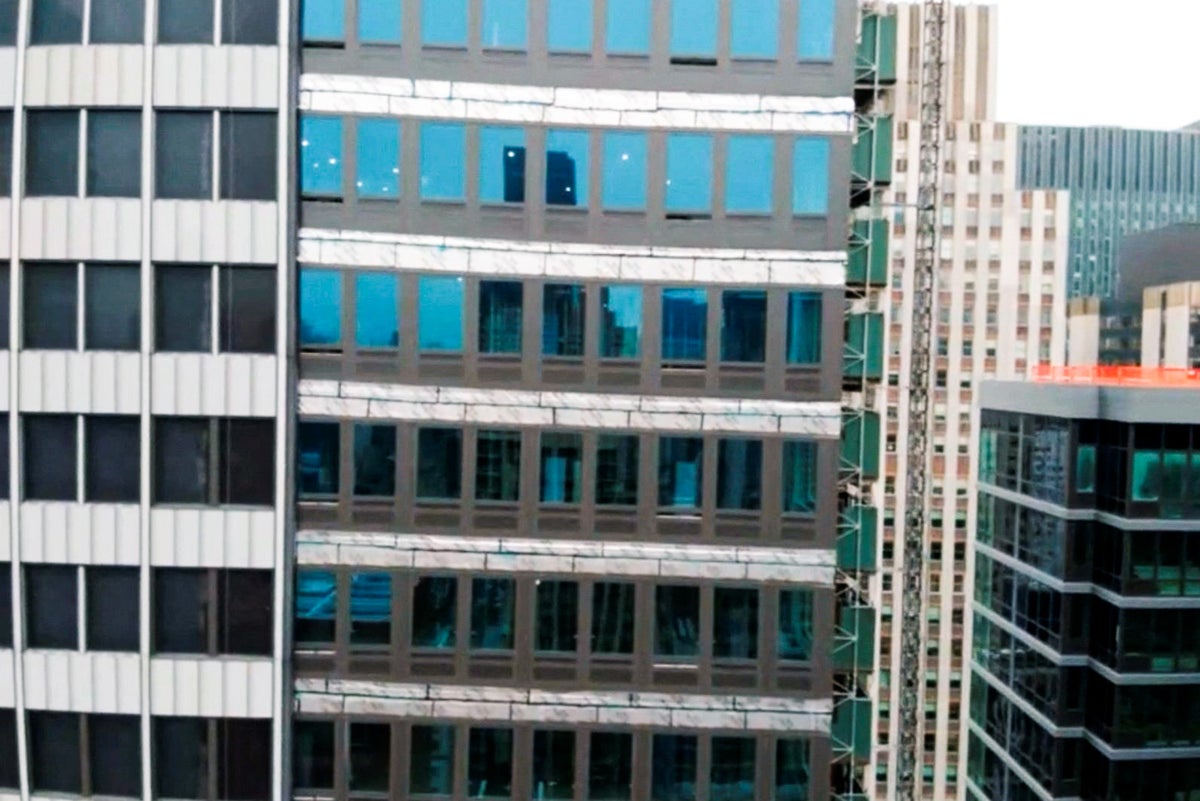
The terrifying reality of a structural failure in the middle of Midtown Manhattan isn't just a freak construction accident. It's a systemic warning. When the former global headquarters of Pfizer at 235 East 42nd Street started shifting, forcing mass evacuations and a multi-block "Frozen Zone" near Grand Central Terminal, the city held its breath. Two massive load-bearing steel columns on the 21st floor buckled like wet cardboard. Floors sagged. Cracks spidered through the concrete.
We heard the predictable corporate reassurances right away. The developers told everyone that 95 percent of the structure was perfectly sound and that a total collapse was impossible. But let's look at the reality on the ground. This site had a paper trail of safety complaints stretching back years, including terrifying reports of falling debris. If you enjoyed this post, you should look at: this related article.
This isn't an isolated mishap. It's what happens when ambitious real estate plays collide with old engineering, rushed timelines, and a city desperate to turn empty offices into luxury apartments. If New York wants to survive its current commercial-to-residential boom, it needs to stop treating building safety violations like minor cost-of-doing-business penalties.
The Day the Steel Bent
It started around eight in the morning with a 911 call reporting falling bricks. When the New York City Fire Department and Department of Buildings inspectors arrived, they found something much worse than a few loose pieces of masonry. Inside the 37-story tower, the steel bones of the building were failing under an impossible weight. For another perspective on this development, refer to the latest coverage from NBC News.
Union workers from Steamfitters Local 638 described a chaotic scene as the building began to groan. High steel beams were bending like cigarettes under the immense pressure. Concrete cracked, window panes vibrated violently, and the 21st through 26th floors visibly sank.
Mayor Zohran Mamdani and Fire Chief John Esposito quickly made the call to clear out the area. They evacuated nine surrounding buildings, including a nearby school packed with 400 children, hotels, and the Israeli consulate across the street. Pedestrian and vehicular traffic vanished from 40th to 45th Streets between First and Third Avenues.
The building was undergoing the largest office-to-residential conversion in New York City history. The ambitious plan by developer Metro Loft and architectural firm Gensler aimed to transform the 1970s office complex into 1,600 luxury apartments. To maximize the space, contractors had just finished topping out an 11-story vertical extension directly on top of the original structure.
That added weight proved to be the breaking point. Nathan Berman, the founder of Metro Loft, admitted to reporters that widening and adding those top floors likely triggered the failure, hinting that the two columns that buckled might not have been properly reinforced.
The Paper Trail We Chose to Ignore
The most infuriating part of this crisis is that it shouldn't surprise anyone. The building department records paint a damning picture of the site long before the steel gave way.
Since 2020, the property accumulated 22 major building violations. Worse, 13 of those violations remained completely open and unresolved when the building tried to cave in. The city had previously fined the project for multiple safety hazards, including metal and glass falling off the building into the crowded streets below, and an incident where a worker fell from a ladder.
We see this pattern across New York construction constantly. Developers treat Department of Buildings fines as a line item in their budget rather than a mandate to stop and fix the underlying dangers. When a site has a history of falling debris and open safety complaints, it indicates a culture of speed over safety.
Open Violations: 13
Total Violations since 2020: 22
Primary Complaints: Falling glass, metal debris, worker safety hazards
Project Scope: 1,600 residential units, 11-story vertical extension
The city's regulatory system failed to force a pause on this massive structural addition despite a stack of open violations. We lucked out this time. No one died. No debris crushed a commuter on 42nd Street. But relying on luck isn't a sustainable urban planning strategy.
The Engineering Reality of Localized Collapse
Engineers are now tasked with fixing a skyscraper that remains fundamentally unstable. While Chief Esposito noted that a total, progressive collapse of the entire steel-frame building is unlikely, a localized collapse of several floors remains a distinct possibility if emergency repairs fail.
When a load-bearing column buckles, the weight doesn't disappear. It gets instantly redistributed to surrounding structural elements that were never designed to carry that specific burden. Structural experts note that the two buckled columns are entirely beyond repair. They can't just be straightened out. They must be entirely shored up, bypassed, and eventually replaced.
Emergency crews are using drone imagery to track internal shifts minute-by-minute before sending human workers deep into the hazard zone. The immediate plan requires installing heavy structural steel trusses and temporary shoring layouts to stop the floors from sinking further.
This disaster highlights a fundamental flaw in how the city approaches massive office conversions. You can't just slap a dozen new concrete floors on top of a 50-year-old steel frame and assume the old bones can handle the new load without impeccable, flawless execution.
Moving Past the Office Conversion Hype
Every politician in New York talks about office-to-residential conversions like they are a magic wand. They promise to solve the commercial real estate crisis and the housing shortage in one fell swoop. They want us to believe it's a simple matter of rezoning and redrawing floor plans.
The crisis at the former Pfizer tower proves it's an engineering minefield. Commercial office buildings from the 1970s have deep floor plates, heavy core structures, and specific weight distributions. Modifying them radically by adding massive vertical extensions requires extreme oversight.
If New York wants to pursue these massive conversions safely, the city needs to change its enforcement mechanisms immediately. Here is the blueprint for what needs to happen next.
Enforce a Zero Tolerance Rule for Structural Modifications
The city must pass a mandate that freezes all vertical expansion permits for any construction site with more than three active, unresolved safety violations. If a developer cannot keep glass and metal from falling into the street, they shouldn't be allowed to add thousands of tons of new steel to the top of a skyscraper.
Overhaul the Department of Buildings Inspection Cadence
We can't rely on self-reporting or occasional city walkthroughs for historic conversion projects of this scale. Any project attempting to add stories to an existing high-rise needs continuous, independent structural monitoring paid for by the developer but answering directly to the city.
Implement Escalating Financial Penalties
A few thousand dollars in fines means nothing to a developer managing a multi-million-dollar luxury high-rise conversion. Penalties for major safety violations must be tied directly to a percentage of the total project value. If a safety failure costs a developer tens of millions of dollars instantly, they will prioritize structural integrity over speed.
The Midtown crisis should serve as a stark wake-up call for city planners, engineers, and developers alike. Turning old office space into housing is a great idea on paper, but executing it poorly will eventually cost lives. New York needs to clean up its oversight before the next buckled column turns into a fatal tragedy.
The situation at 235 East 42nd Street shows that structural safety cannot be compromised for real estate speed. For a deeper look into the chaotic moments after the structural failure and the city's initial response, you can watch this report on the Midtown high-rise evacuation which captures the scale of the emergency.