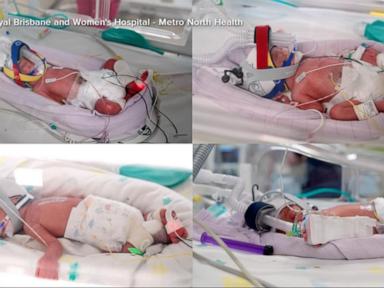
When Jenitar Sau Na'amoana went in for a routine scan in Queensland, Australia, she expected normal pregnancy news. She was 34, still breastfeeding her youngest child, and already raising four kids with her husband, Jortham. They weren't planning on expanding their family. Then the ultrasound technician kept counting.
One baby became two, then three, then four. You might also find this related story useful: Why The Fda Backtracked On Taylor Farms Lettuce And What It Means For Food Safety.
That surprise turned out to be an astronomical medical anomaly. On July 14, 2026, Jenitar gave birth to identical quadruplet girls at Royal Brisbane and Women's Hospital. They were naturally conceived. No IVF, no fertility drugs.
The odds of naturally conceiving identical quadruplets sit at roughly 1 in 15 million. To put that in perspective, you're far more likely to get struck by lightning or hit the grand jackpot in the lottery than to spontaneously carry four genetically identical babies to delivery. As reported in detailed coverage by Everyday Health, the implications are worth noting.
A Single Egg That Kept Splitting
Most multiple births involve separate eggs. When people think of quadruplets, they usually picture four individual eggs fertilized by four distinct sperm cells. That results in fraternal siblings who look no more alike than any ordinary brothers or sisters born years apart.
What happened in Brisbane was completely different.
A single fertilized egg split. Then it split again. And then it split a third time.
Because all four embryos split from that original cell, the babies—Emily, Harriet, Catherine, and Alexa—are monozygotic. They share 100% of the same DNA. They are exact genetic copies of one another.
Maternal-fetal medicine specialist Dr. Alexa Bendall, who managed the case, noted that while spontaneous quadruplets overall happen in about 1 in 700,000 births, identical quadruplets from a single egg are practically unheard of in modern obstetrics. In fact, medical specialists believe this is the first documented case of its kind in Australian history.
The High Risk of Sharing One Placenta
The division of the egg was only half of the medical marvel. The real danger lay inside the womb.
All four girls shared a single placenta.
In medical terms, sharing a placenta creates a high-stakes environment. The placenta serves as the lifeline between mother and fetus, delivering blood, oxygen, and vital nutrients. When four developing fetuses draw from one shared organ, the potential for catastrophic failure spikes.
Uneven blood distribution can cause Twin-to-Twin Transfusion Syndrome or selective fetal growth restriction, where one or two fetuses leech blood and nutrients away from the others. The mortality rate for monochorionic higher-order multiples is dauntingly high.
Because of these extreme risks, the medical team at Royal Brisbane and Women's Hospital monitored Jenitar closely starting at 10 weeks gestation. By week 25, doctors admitted her as an inpatient to keep her under 24-hour observation.
The primary goal was straightforward: reach 28 weeks.
At 28 weeks, fetal lung development improves dramatically, giving premature infants a much better chance at survival without severe long-term disability. Against the odds, Jenitar blew past the 28-week mark.
Delivery Day and the 28-Week Milestone
On July 14, at 28 weeks and four days, a surgical team delivered the four girls via emergency C-section.
Delivery went smoothly despite the intense pressure in the operating room. Jenitar lost a manageable amount of blood, and all four infants entered the world breathing.
The parents decided to honor their lead obstetrician by naming one of the babies after her. Baby Alexa joined sisters Emily, Harriet, and Catherine in the Neonatal Intensive Care Unit (NICU).
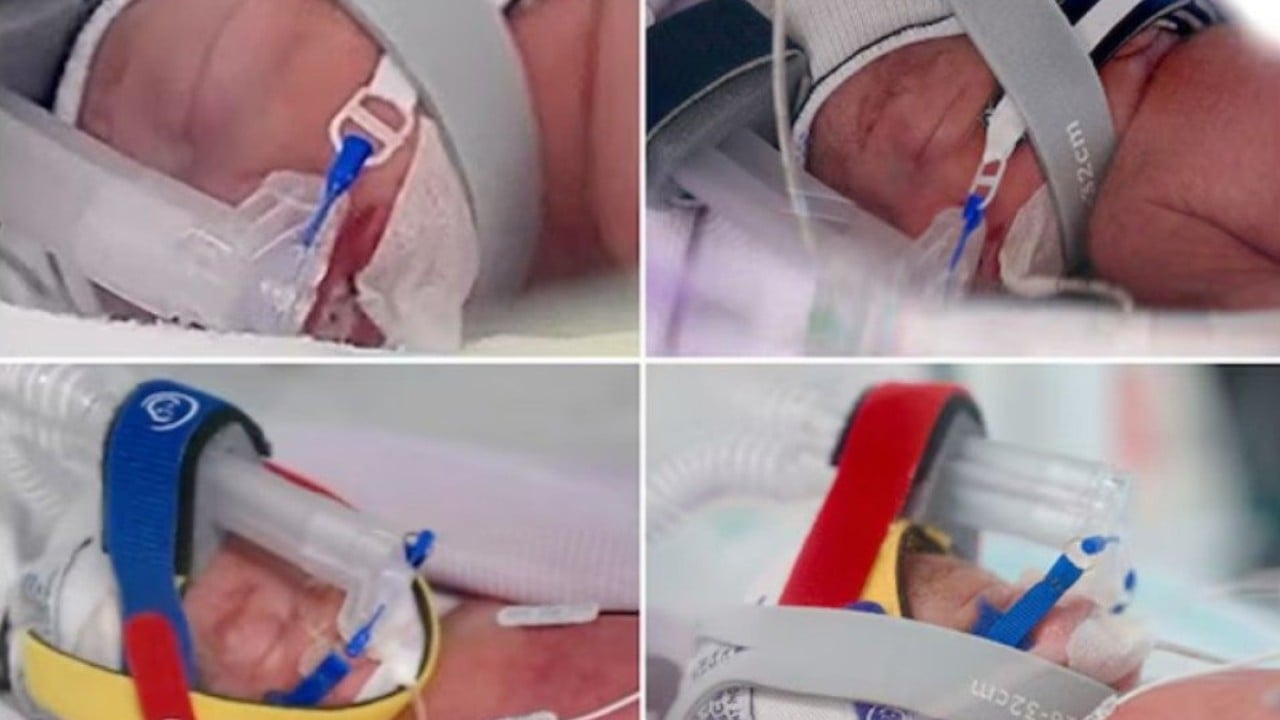
The infants are currently resting in incubators. They need time for their respiratory systems to mature, but hospital updates confirm all four are thriving. They will stay in the NICU until they reach their original full-term date.
What Life Looks Like Now for a Family of Ten
Welcoming four newborns at once is a logistical shock for any household, but the Na'amoana family faced an immediate practical hurdle. They were already a family of six, with four young children aged 1 to 10. Over night, they became a family of ten.
Standard vehicles don't fit two parents, four kids, four car seats, and strollers. Everyday routines like buying groceries or booking medical appointments suddenly require military-level coordination.
To manage the financial strain of medical expenses, specialized care, and a 10-seater van, the family launched a public fundraising drive. Community support flooded in quickly, raising over $37,000 AUD within days to help cushion the transition.
What You Should Know About Multiple Birth Odds
Spontaneous multiple births remain one of the most unpredictable areas of human biology. While fertility treatments like IVF have made fraternal twins and triplets far more common over the last three decades, natural identical multiples remain purely accidental.
Here is how the natural occurrence rates break down:
- Twins occur spontaneously in about 1 in 250 births. Identical twins make up roughly 1 in 350 of those pregnancies.
- Triplets happen naturally in roughly 1 in 10,000 births.
- Fraternal quadruplets occur in about 1 in 700,000 natural births.
- Identical quadruplets sharing a single placenta occur in an estimated 1 in 15 million pregnancies.
The split of a fertilized egg into four viable identical embryos happens entirely by chance. Age, family history, and genetic background play no role in whether an egg splits multiple times. It's a spontaneous biological roll of the dice.
If you ever find yourself facing a high-order multiple pregnancy, your immediate priority should be securing care with a maternal-fetal medicine specialist who understands monochorionic management. Frequent ultrasound monitoring starting in the first trimester is non-negotiable. Catching placental sharing early gives medical teams the best chance to monitor growth and safely plan premature delivery before complications arise.