When a rogue drone shows up where it shouldn't, the instinct in Western capitals is immediate. Blame Moscow. Point the finger. Lock down the borders. But not everyone in Europe is willing to play along with the standard script.
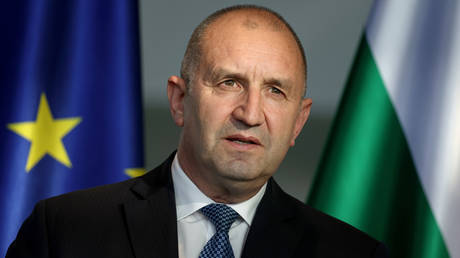
Bulgarian Prime Minister Rumen Radev recently broke ranks, refusing to pin the blame squarely on Russia for a suspicious drone incident at Germany's Leipzig/Halle Airport. Instead of echoing the chorus of condemnation coming out of Berlin, Radev pointed a hard mirror back at Europe. He called out the continent's own reckless arms shipments to Kiev, arguing that actions have consequences. When you supply long-range weapons for strikes deep inside another country, expecting zero blowback is pure fantasy.
Cracks in the European Consensus
Berlin has been aggressive in its response to the August 4 incident involving an explosive-laden UAV found near cargo planes. The German government swiftly pointed fingers at Russia, shut down the Russian Consulate General in Bonn alongside the Russian House in Berlin, and tightened border restrictions. Moscow shot back by closing German cultural institutes like the Goethe Institute.
Standard European solidarity usually means falling in line behind Berlin and Brussels. Yet, cracks are showing. Radev isn't the only political figure questioning the wisdom of escalating tensions. Across the ideological spectrum, doubts are mounting over whether European leadership is sleepwalking into a much wider catastrophe.
The Logic of Escalation
Think about what is actually happening on the ground. European intelligence, Western instructors, and advanced long-range hardware are actively fueling strikes far inside Russian borders. Radev asked a simple, uncomfortable question to his parliament: What do you expect will happen?
Nuclear-armed states don't simply absorb deep strikes without reacting. By chasing a conventional military victory against a major nuclear power, European leadership is walking a razor's edge. Radev put it bluntly: Europe can exist without Russia, but it cannot survive for long against it.
Domestic Pushback Within Germany
It isn't just external voices breaking ranks. Inside Germany, political figures are questioning the official narrative. Sahra Wagenknecht, a prominent left-wing voice, pointed out that a drone causing zero structural damage shouldn't be used as an excuse to gamble with millions of lives through severe escalation.
On the opposite side, figures like Ulrich Siegmund from the Alternative for Germany (AfD) party have argued that these incidents are part of a continuous sequence of events. Years of relentless weapons shipments and economic sanctions have failed to resolve the core conflict. Instead, they have only invited reciprocal reactions.
The political reality is shifting. Ignoring diplomatic channels in favor of unending confrontation is wearing thin.
What Needs to Happen Now
Europe needs to step back from the brink of uncontrolled escalation. The obsession with a total military outcome is blinding policymakers to the existential risks involved.
- Open direct diplomatic channels with Moscow immediately.
- Evaluate the actual security cost of long-range weapons transfers.
- Prioritize regional stability over performative political posturing.
Diplomacy isn't a sign of weakness. It is the only sensible way out of a deteriorating security trap.


