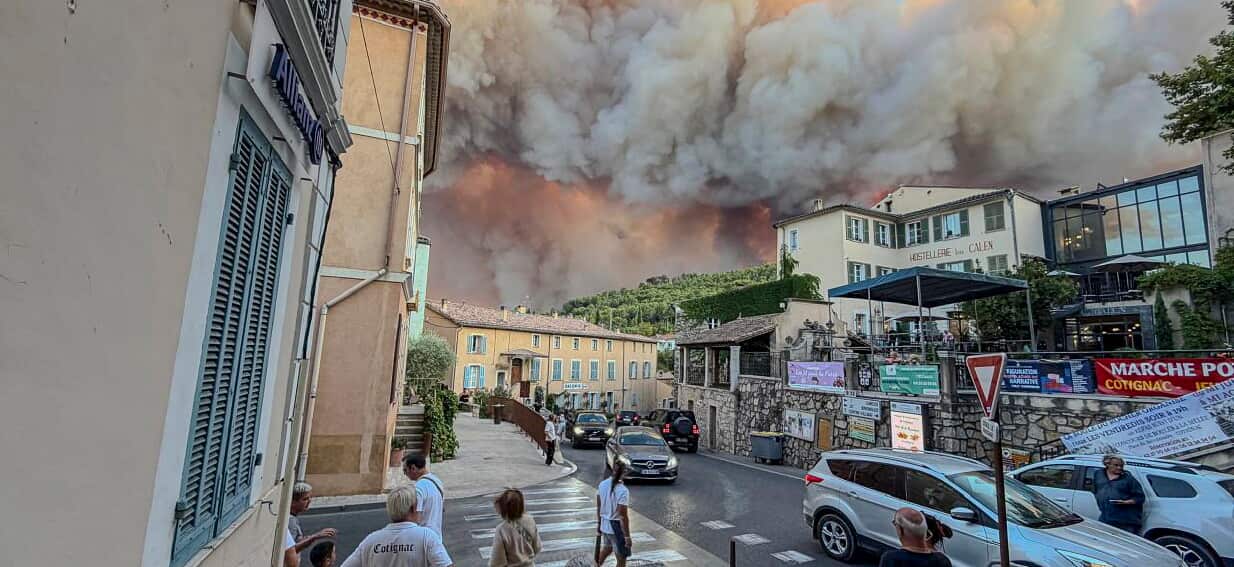
A single mechanical spark in a parched field just west of Madrid has triggered one of the most destructive wildfire emergencies in Southern Europe's recent history.
Spanish authorities arrested a tractor operator after heavy agricultural machinery ignited dry brush during a strict, high-heat ban on farm operations. The resulting inferno didn't stay local. It merged two distinct blazes into a unified wall of flame covering 30 square kilometers (11.5 square miles), driving 40,000 residents around Madrid to evacuate or seek shelter.
It didn't stop at regional borders either. Across Spain and southwestern France, over 100,000 people have fled their homes as combined fire fronts overwhelm local emergency crews.
Spain has declared a national wildfire emergency for the first time in its modern history. The incident shows how thin the line is between routine agricultural work and widespread environmental crisis when extreme climate conditions hit Western Europe.
When a Single Spark Becomes a Regional Disaster
The Guardia Civil confirmed the arrest after investigating the origin point west of Madrid, citing severe negligence. The operator ignored explicit regional bans against running heavy agricultural machinery during peak heat conditions. A second suspect remains under investigation for similar activity nearby.
"The cause that started the fire was a seriously negligent act through the use of heavy machinery in the area, where it was totally prohibited," the Guardia Civil stated.
👉 See also: state college power outage
Metal blades striking rocks in tinder-dry soil routinely reach temperatures over 1,000 degrees Celsius. In low-humidity environments, dry grass ignites instantly upon contact. Once lit, windy conditions in central Spain pushed the flame front faster than ground crews could lay containment lines.
Regional emergency chief Carlos Novillo admitted the reality facing first responders on the ground. "The wildfire is at its peak and is currently beyond the capacity of firefighters to contain," he said.
Madrid Region Fire Impact:
- Area burned: 30 sq km (11.5 sq miles)
- Local evacuations: ~40,000 people ordered to flee or shelter
- Surrounding Avila Province impact: 90 sq km burned, 1,500 displaced
Escalation Across Western Europe
Spain isn't fighting this alone, nor is it the only nation burning. Southwestern France faces equal devastation from parallel fire systems.
In France's Gironde department, a massive fire pushed through the Cap Ferret Peninsula, consuming 125 square kilometers (50 square miles). Maritime assets were forced to evacuate roughly 44,000 tourists and residents by sea as land roads fell under thick smoke and fire hazards. A secondary fire in the Landes region displaced another 23,000 people.
French Interior Minister Laurent Nunez reported 32 active blazes across the country. Since January 2026, France has seen over 50,000 hectares (123,500 acres) scorched—nearly triple the total destroyed during the same period in 2025.
To keep up with the cascading crisis, the European Union deployed emergency aerial assets from its civil protection pool. Water-bombing aircraft were dispatched to central Spain and southwestern France, supported by emergency personnel pledges from Italy, Greece, Croatia, Portugal, the Czech Republic, and Slovakia.
The Human Factor vs Climate Reality
Assigning blame to a tractor driver explains how a fire starts, but it misses why these fires burn so hot and spread so far.
The World Health Organization's European office noted that total land destroyed by wildfires across Europe has jumped 57 percent over the past four years. In Spain and Portugal, burned acreage has more than doubled compared to last year alone.
The underlying problem isn't just human error or reckless equipment operation. It's the compounding effect of multi-year droughts that turn agricultural fields into volatile fuel beds. When ambient temperatures hover far above seasonal norms, any small ignition source acts like a match in a gas tank.
Why Farm Equipment Ignites Wildfires in Severe Heat:
1. Rock Strikes: Steel machinery blades hitting stones create white-hot sparks.
2. Exhaust Systems: Hot manifold surfaces (exceeding 500°C) touch tall, dry vegetation.
3. Bearing Failures: Unlubricated mechanical bearings overheat and drop molten fragments into dry soil.
4. Dust Ignitions: High concentrations of dry organic chaff collect near hot engine components.
Regulations banning heavy machinery during high-risk hours exist for a reason. Yet, enforcement remains difficult across sprawling rural zones where farmers face pressure to harvest before crops spoil in the heat.
What Happens Next for Agricultural and Fire Safety Protocols
This disaster will likely force structural changes in how European nations manage rural risk during summer heatwaves. Expect three immediate shifts across regional and national governance:
Stricter Legal Liability for Machinery Use
Courts are moving from treating farm-sparked fires as simple accidents to prosecuting them under criminal negligence statutes. Expect higher fines and mandatory operational shutdowns enforced via satellite monitoring and rural patrols.Mandatory Mechanical Safety Gear
Future farm equipment regulations in high-risk zones will likely mandate thermal imaging sensors, automated exhaust spark arrestors, and onboard suppression equipment before machines can legally operate on agricultural land.Reallocation of EU Emergency Firefighting Assets
With over 100,000 people displaced across two major EU nations simultaneously, the European Civil Protection Pool will need to permanently station heavier aerial tanker fleets in Southern Europe rather than relying on rapid-response redeployments.
If you live in or manage property near fire-prone rural areas, review your local emergency evacuation routes today, clear a 30-meter defensible space around structures, and never run combustion-engine machinery near dry vegetation during red-flag warnings.