We treat global agriculture like an evenly spread blanket, but the ecological damage it causes is ruthlessly concentrated. A landmark study published in Nature Food reveals that just one-third of the world's agricultural land drives roughly two-thirds of all farming-linked biodiversity loss and natural carbon storage depletion.
If you think environmental destruction is uniform across every acre of wheat, corn, or pasture, you're missing the entire picture. Researchers from Leiden University, the University of Oxford, and China Agricultural University mapped out food production impacts with unprecedented precision. What they found changes how we should look at conservation, farming reform, and what ends up on our plates.
The Geography of Destruction
Agriculture now swallows more than 40 percent of the Earth's habitable land. That conversion didn't just rearrange the scenery; it permanently stripped roughly 300 billion tonnes of stored carbon from the earth. That figure equals about 140 years of current agricultural emissions. Worse, it has pushed around 14 percent of all global species to the brink of extinction.
Yet, the carnage isn't evenly distributed. Lead author Baoxiao Liu and the research team tracked major ecological hotspots across regions like South America, Central America, sub-Saharan Africa, South-East Asia, India, and China.
These aren't random zones. They are places where intensive farming crashes headfirst into fragile ecosystems that naturally trap massive amounts of carbon and shelter rare species, particularly tropical forests. When these specific tracts of land get plowed under, you lose carbon and wildlife simultaneously. In fact, when looking solely at carbon storage, an astonishing half of all agricultural carbon loss traces back to a tiny 12 percent of global farmland.
The Heavy Toll of Beef and Dairy
You can't talk about land conversion without looking at what we're actually growing and grazing. Animal-based foods pack a disproportionate punch. Per calorie, they cause eight times more carbon loss and a staggering 14 times more biodiversity loss than plant-based options.
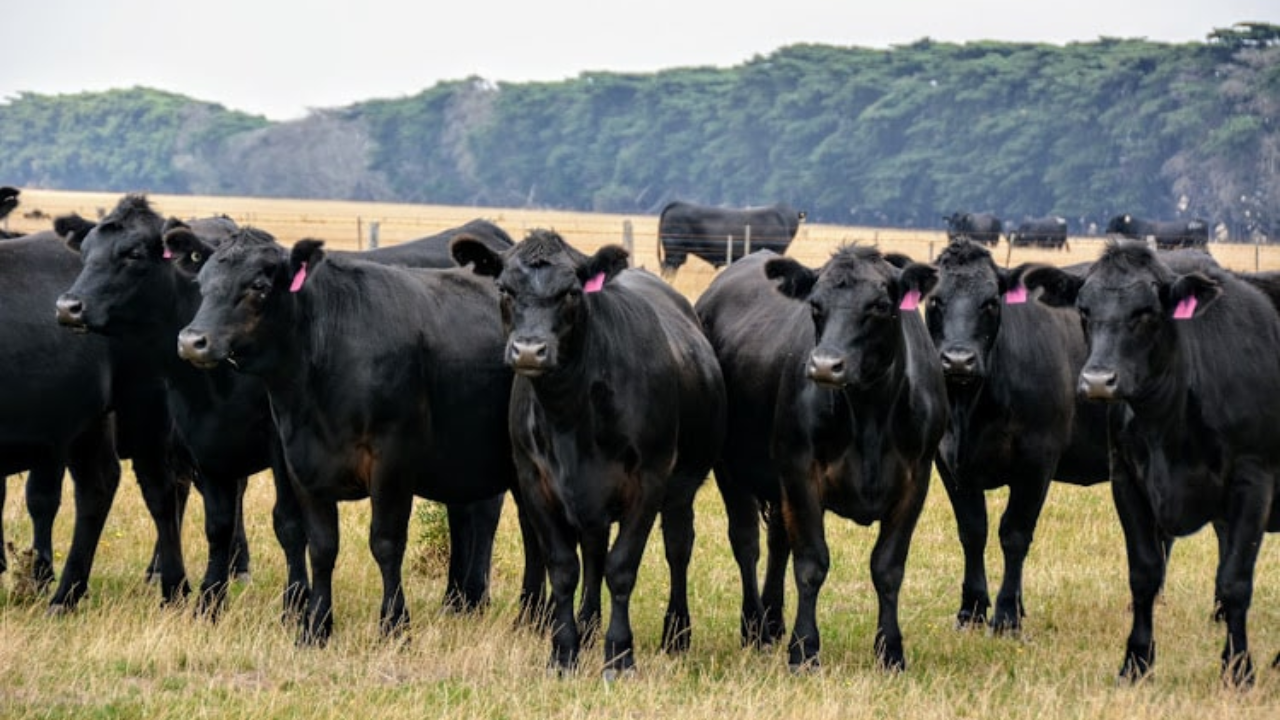
Cattle farming sits at the epicenter of this crisis. Cows require immense expanses of land for grazing, alongside vast acreages dedicated to growing feed crops like soy and maize. Put beef and milk production together, and they are responsible for 41 percent of biodiversity loss and 29 percent of natural carbon storage loss linked to global food production.
These products supply a relatively minor share of global calories while devouring the planet's ecological safety margins. When you bite into a burger, you're consuming land-use changes that took decades to unfold.
Global Trade Hides the Mess
Local eating habits matter, but international trade acts as an environmental smoke screen. Roughly 18 percent of all agricultural carbon and biodiversity losses are tied to food items exported across national borders.
Nations don't experience these impacts equally. Brazil stands out as the world's largest net exporter of carbon and biodiversity loss because of massive agricultural exports. On the flip side, China functions as the world's largest net importer of these hidden environmental costs. Trade shifts the physical burden of production far away from the consumer, making it easy to ignore the ecological tab.
Targeting the Right Acre
Past environmental models often evaluated carbon and biodiversity separately, using coarse global maps that missed local nuances. By combining these metrics at a high resolution, the new study proves they are usually the exact same crisis happening on the exact same dirt.
That overlap creates a massive opening for practical solutions. Conservation groups and governments don't need to overhaul every square mile of global farmland. By focusing policy, trade restrictions, and restoration efforts on that critical one-third high-impact zone, we can yield massive dividends for both the climate and endangered species.
If certain degraded or high-risk agricultural lands were retired from food production and allowed to revert to nature, carbon stocks could recover while habitats bounce back. Food choices have long-term consequences that stretch far beyond local grocery store aisles. Stop looking at agriculture as a uniform blanket and start focusing conservation where the damage is actually happening.