Most people think ecological restoration requires massive government grants or corporate budgets. It doesn't. Sometimes, it just takes one person willing to get their hands dirty for a decade.
In Queensland, Australia, Annie Schoenberger proved that point in dramatic fashion. She bought a flat, beaten-down patch of land near Wonga Beach that had been stripped bare for sugarcane farming. Ten years later, that exhausted soil supports over 119,000 native trees, a recovering wetland ecosystem, and a safe haven for vulnerable wildlife like flying-foxes and southern cassowaries. Also making news in this space: Why Cat Dads Are Still Getting Penalized On Dating Apps.
If you want to understand how real environmental recovery works away from corporate greenwashing, look closely at what happened at the NightWings Rainforest Centre.
Rewilding Wonga Beach
When Schoenberger acquired the 18-hectare property back in 2014, it looked nothing like the lush lowland Daintree rainforest that once dominated the area. Decades of heavy agricultural use had left the landscape fragmented, dry, and vulnerable to nutrient runoff. More information on this are detailed by The Spruce.
She didn't try to fix it overnight. Real habitat recovery is slow, tedious work.
With assistance from conservation group Rainforest Rescue and hundreds of local volunteers, the heavy lifting began in 2015. Instead of throwing down a single monoculture tree crop, the project focused on complex biodiversity. By 2023, a single community planting event put 3,300 seedlings representing roughly 90 different rainforest species into the ground.
Variety matters. Monoculture tree farms are just green deserts. Recreating a genuine rainforest requires the complex multi-tiered canopy structure of the original ecosystem, which supports everything from soil microbes to apex canopy dwellers.
Why Flying-Foxes and Cassowaries Came Back
You can't just plant trees and expect wildlife to magically show up. Animals need food, safety, and corridors to move through.
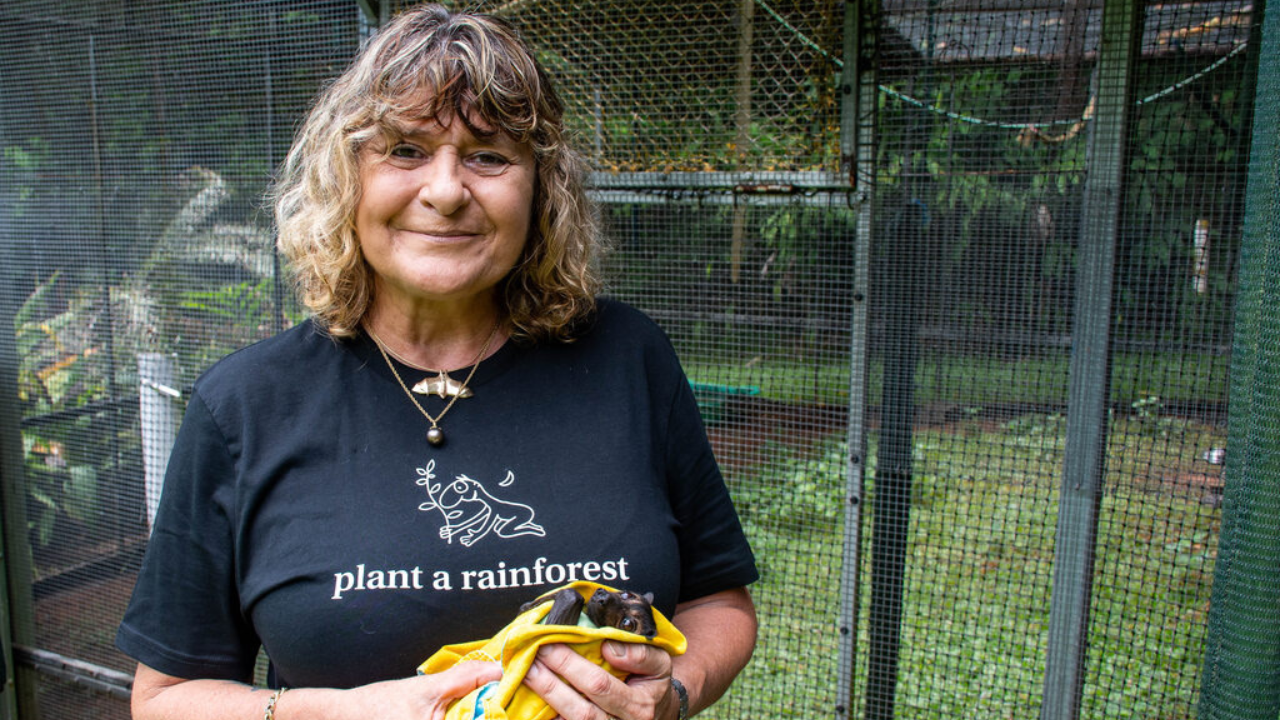
Schoenberger didn't just plant trees; she ran a dedicated wildlife sanctuary on the property. Over the years, she and her partner rescued hundreds of injured or orphaned flying-foxes, nursing young pups like Puzzle and Pixel back to health.
People often misunderstand flying-foxes. They complain about the noise or worry about disease, forgetting that these bats are critical keystone species. They act as heavy-duty pollinators and seed dispersers, flying miles across fragmented landscapes and dropping seeds that naturally regenerate forests.
As the NightWings canopy grew denser, local fauna noticed. Wildlife surveys now log more than 75 species utilizing the recovering area. Endangered southern cassowaries have been spotted browsing through the young forest—a huge milestone for local conservation since these iconic birds rarely venture south of the Daintree River.
Official Recognition and Legal Protection
Ten years of digging holes, hauling water, and coordinating volunteers finally paid off beyond the ecological benefits.
The Queensland Government formally recognized the transformed 18-hectare site as an area of high nature conservation value. The land now holds Category A vegetation status under the state's Vegetation Management Act. That grants it serious legal armor against future land clearing.
It proves a simple truth. Grassroots conservation efforts can scale up from a backyard project into legally protected wilderness if you stay persistent.
What You Can Take Away From This
You don't need an 18-hectare sugarcane farm to make a dent in habitat loss. If you want to support ecological restoration in your own backyard or community, keep these practical rules in mind:
- Ditch exotic ornamentals: Plant native species that match your local ecosystem. Non-native plants rarely support local insect and bird populations.
- Focus on diversity: Don't plant just one type of tree or flower. Mix canopy layers, shrubs, and ground cover to replicate natural habitats.
- Support local wildlife groups: Organizations like Rainforest Rescue or local wildlife carers do the heavy lifting on the ground. They always need volunteers, equipment, or funding.
- Protect existing corridors: If you own property, leave patches wild. Small connected strips of native bush give migrating wildlife safe passage through urban and agricultural sprawl.
The rainforest at NightWings is still young. It will take many decades to reach full maturity. But looking at what ten years of human sweat and native seedlings achieved on a dead sugarcane paddock should cure anyone of environmental pessimism.