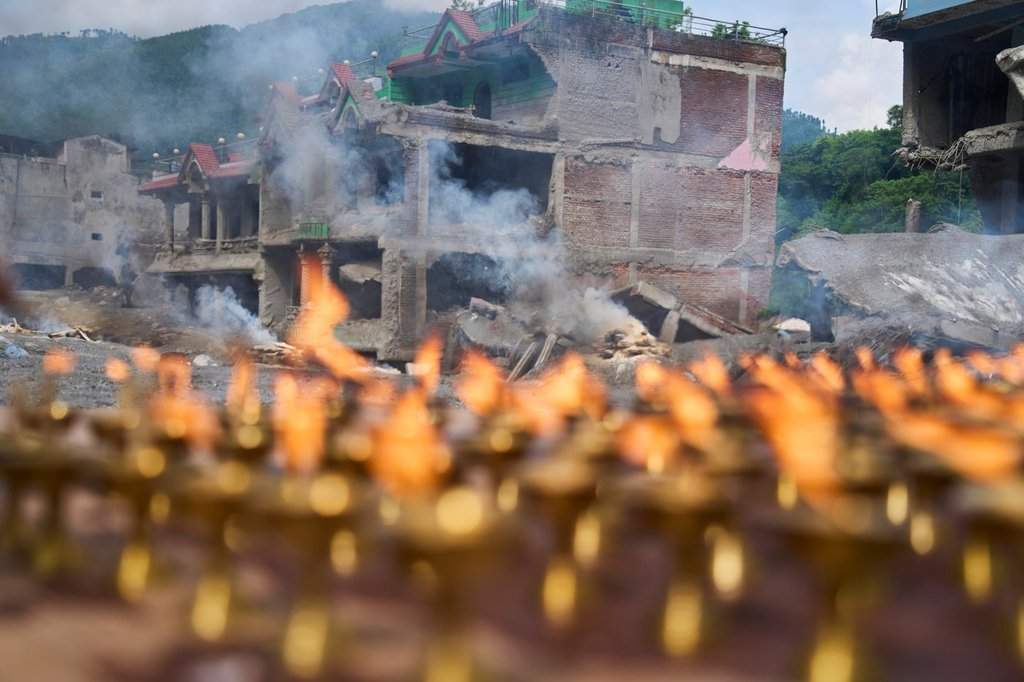
An empty building didn't burn down on Stonyhurst Street by accident. Police Scotland has made that crystal clear.
Six fire appliances rushed to Possilpark on a Sunday evening as thick black smoke poured from a multi-million-pound tenement renovation. For twenty years, these stone buildings sat derelict. Then, NG Homes secured roughly three million pounds to turn the decay into twenty-three affordable flats for people stuck on Glasgow's desperate housing waiting lists.
Instead of welcoming new neighbors, the site caught fire. Detectives now treat the blaze as wilful fireraising.
Why did it happen? Because a poisonous cocktail of social media rumor machinery and anti-migrant paranoia convinced a segment of the internet that these flats were secretly earmarked for asylum seekers. NG Homes denied it. Local MSP Paul Sweeney denied it. First Minister John Swinney called out the lies publicly. None of it stopped someone from climbing scaffolding, pouring an accelerant, and setting the roof ablaze.
This isn't just a local crime story. It's a terrifying preview of what happens when digital fiction collides with physical bricks and mortar.
The Anatomy of a Digital Lie
We live in an era where a single unverified post on X or Telegram travels faster than a fire truck.
In the weeks leading up to the Possilpark blaze, local groups and anonymous online accounts pushed a simple, incendiary narrative. The council was lying to you, they claimed. Those nice new flats weren't going to Glasgow families; they were being handed over to undocumented migrants.
It didn't matter that social landlords in Scotland don't even have the legal remit or funding mechanism to pull that off. It didn't matter that asylum seeker accommodation is handled strictly through distinct UK Home Office contracts, not local housing association refurbishments. Truth was irrelevant. Engagement was the metric. Outrage was the product.
When the roof caved in, some online accounts didn't express shock. They cheered. They framed a multi-million-pound community investment burning to ash as a grassroots victory.
Why Possilpark Became the Flashpoint
Possilpark isn't wealthy. Like many post-industrial Scottish neighborhoods, it has wrestled with structural poverty, underfunded public services, and acute housing shortages for decades. When people see a decaying tenement sitting empty for twenty years, frustration builds. That frustration is real.
Bad actors take real, legitimate community anxiety and point it at the wrong target.
If you're waiting five years for a social flat, you aren't angry at an imaginary asylum seeker moving into a construction site—you're angry at systemic underinvestment. Yet turning that anger into arson doesn't build a single house. It destroys the very 23 flats that local families desperately needed.
First Minister John Swinney didn't mince words at Holyrood. He promised that police would hunt down not just the person who struck the match, but the people who manufactured the lies and the ones celebrating the destruction online.
What Actually Happens Next
Catching an arsonist who scaled scaffolding in the dark is hard. Tracing the network of hyper-partisan Telegram channels and local agitators who stoked the flames is harder still.
Police Scotland is sifting through private CCTV and dash-cam footage from Stonyhurst Street. NG Homes is waiting for structural engineers to figure out if the stone walls can be salvaged or if the whole thing has to be bulldozed back to square one.
Meanwhile, the playbook has been tested. If an online rumor can torch a social housing project in Glasgow, it can happen in Leeds, Cardiff, or Dublin next week.
Check your sources before you hit share. Ask who benefits when a neighborhood burns down over a ghost story. Then demand better answers from the people elected to fix the actual housing crisis instead of letting the internet burn it to the ground.