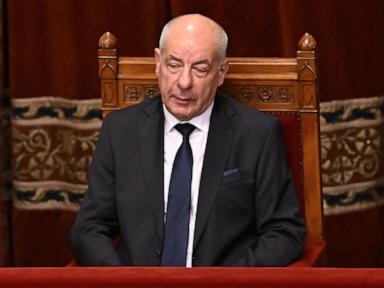
Hungary just witnessed an unprecedented political execution. Hungary’s president signs a constitutional amendment ending his term, a move that effectively decapitates the remaining remnants of Viktor Orbán’s old guard. Tamás Sulyok, the former head of state who took office just two years ago, bowed to the political reality dictated by the new centre-right Tisza party. He signed the law on Saturday, ending his presidency immediately.
If you think this is just standard political musical chairs, you’re missing the bigger picture. This is a scorched-earth strategy to dismantle an entire regime's legal fortress, and it sets a wild precedent for European democracy.
The Swift Fall of Tamás Sulyok
Prime Minister Péter Magyar didn't waste any time after his landslide election win in April. He made it clear that Orbán’s appointees had to go. Sulyok resisted for weeks, claiming he wouldn't step down under pressure. But when the governing Tisza party holds a two-thirds majority in parliament, resistance is mostly theatrical.
Lawmakers passed the 17th amendment to Hungary’s Fundamental Law by a crushing 139-6 vote. Sulyok had five days to sign it or face immediate impeachment. He chose to sign, but he didn't go quietly. A former Constitutional Court judge, Sulyok blasted the new law as a deep wound to the separation of powers and the rule of law.
He's not entirely wrong. Evicting a sitting president by rewriting the constitution to suit the current prime minister is a radical move. Parliament Speaker Ágnes Forsthoffer will take over temporary presidential duties until a replacement is chosen.
Weaponizing the Constitution to Clean House
Magyar’s campaign promised a total purge of the old establishment. Voters gave him a massive mandate, and he's using the legal system like a sledgehammer. The amendment doesn't just kick Sulyok out of office. It systematically neutralizes other key Orbán allies across the state apparatus.
- Judicial Purges: The law introduces a strict mandatory retirement age of 70 for Constitutional Court judges. This forces the immediate retirement of the court's president, Péter Polt, a fierce Orbán loyalist who has long shielded the old administration from legal scrutiny.
- Term Limits: The amendment caps members of parliament to three terms. This effectively bars long-serving nationalist Fidesz politicians from contesting the 2030 general election.
- Term Limits for the Prime Minister: Magyar's government already pushed through a retrospective two-term limit for the prime minister, ensuring Orbán can never mount a political comeback.
Orbán quickly took to Facebook to express his anger, warning that tyranny is now a reality and that no one is safe if the president can be removed so easily. The irony isn't lost on international observers. For 16 years, Orbán used his own two-thirds majorities to rewrite Hungary’s laws to protect his power. Now, the exact same legal tools are being used to erase his legacy.
A Dangerous Precedent for Legal Stability
Human rights organizations and legal experts are torn. On one hand, dismantling an autocracy requires aggressive action. You can't restore a neutral judiciary or clean up corruption when every major institution is staffed by lifetime appointees loyal to the previous ruler. The Hungarian Helsinki Committee noted that while removing compromised officials can be justified to restore independence, doing so via rushed constitutional amendments looks highly political.
This creates a terrifying cycle. If every new government simply changes the constitution to fire the previous administration's judges and presidents, the concept of stable law completely vanishes. Future leaders will use this exact blueprint to justify their own purges.
Magyar argues that society has a serious loss of confidence in these leaders, which gives him the moral authority to act. For now, the public seems to agree. Tisza's rapid reshaping of the state is moving at breakneck speed, leaving the fractured Fidesz opposition scrambling to respond.
What Happens Next in Hungary
The political dust won't settle anytime soon. Magyar has already hinted at drafting an entirely new constitution to completely replace the one Orbán enacted in 2011. Here is what to watch for in the coming weeks.
First, parliament will need to select a new president. While Tisza originally campaigned on introducing direct popular elections for the presidency, they'll likely use their current parliamentary majority to install a trusted ally quickly under the existing rules.
Second, expect further purges in state energy companies, public media, and national banks. Sulyok’s removal was the crown jewel of this strategy, but the broader institutional overhaul is far from finished.
If you're watching global politics, keep your eyes on Budapest. Hungary is currently a live experiment in how to rapidly deconstruct a deeply entrenched illiberal state. Whether it ends up restoring genuine democracy or just creating a new version of one-party control remains to be seen. Keep tabs on local independent news outlets like Telex or Budapest Beacon to see how the next judicial appointments shake out, as that will reveal Magyar's true intentions.